
We love to tell ourselves the “Heirloom” story. You know the one: you spend sixty hours hunched over a project, your eyes straining and your fingers aching, whispering to yourself that you are creating a piece of history. You believe that your grandchildren will one day drape this blanket over their own children, sentimental tears in their eyes as they admire the “timeless” work of their ancestor. But let’s be brutally honest for a moment: most of what you are making right now will be in a landfill before your children even graduate college.
We are living in the age of the “Disposable Heirloom.” We have been seduced by the siren song of fast-fashion aesthetics, “squishy” textures, and instant gratification. We use materials that were never designed to survive a washing machine, let alone a century of life. We prioritize the “first photo” for Instagram over the “final decade” of the garment’s existence. Are you actually building a legacy, or are you just producing high-effort trash? Why are we so comfortable spending a fortune in time on materials that are destined to disintegrate?
The Great Acrylic Delusion: Why Plastic Doesn’t Age Well
The first and most painful truth we have to face is the “Plastic Lie.” Acrylic yarn is the backbone of the modern hobbyist market. It’s cheap, it’s vibrant, and it feels soft enough in the store. But acrylic is petroleum. It is plastic. And while plastic might last forever in the ocean, it does not last forever as a garment.
Unlike natural fibers, which have a complex cellular structure that can “self-heal” to an extent, synthetic fibers are smooth, extruded tubes. Over time, friction causes these tubes to shred on a microscopic level. This is where “pilling” comes from. That fuzzy, matted mess that appears under the arms of your favorite sweater? That is the yarn literally dying. Once an acrylic project begins to pill, it is the beginning of the end. You cannot “revive” plastic. You cannot restore its luster. When you make an “heirloom” out of acrylic, you aren’t making a gift for the future; you’re making a chemical liability. Is your legacy really worth $5.99 a skein?
The Structural Failure of the “Chunky” Trend
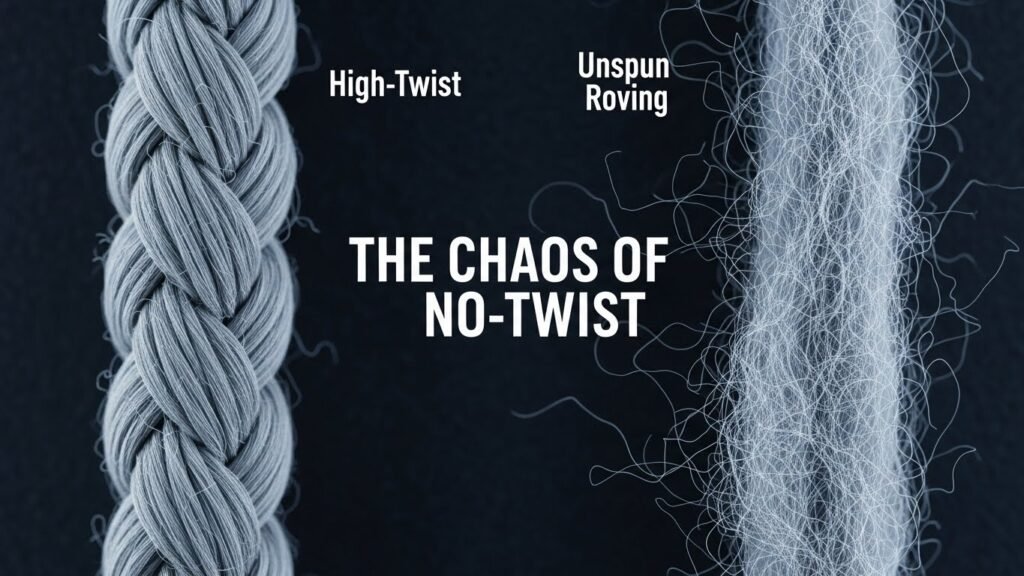
If you want to find the greatest enemy of the heirloom, look no further than the “Giant Chunky Knit” trend. We’ve all seen the videos: people using their arms as needles to knit massive blankets out of unspun roving in under an hour. It looks like a cloud. it feels like a dream. It is also a structural catastrophe.
Roving is not yarn. It is a stage of yarn production that hasn’t been finished. It has no twist. Without twist, there is no friction to hold the fibers together. The moment you start using that blanket, the fibers begin to drift apart. Within six months, that “luxury” cloud will look like a mangled sheep that lost a fight with a lawnmower. It cannot be washed, it cannot be cleaned, and it certainly cannot be passed down to the next generation. Have we become so obsessed with the “aesthetic” of wealth that we’ve forgotten the fundamental engineering of textiles? Why are we celebrating “finished” projects that are biologically incapable of surviving a year?
The Secret of the 100-Year Stitch: Why “Fine” Means Forever
If you visit a museum and look at the knit and crochet pieces that have survived since the 18th century, you will notice a recurring theme: they are incredibly fine. We often assume this was just a stylistic choice of the era, but it was actually a survival strategy.
Finer yarns require more twist to stay together. This high-twist construction creates a dense, durable surface that resists abrasion. Furthermore, smaller stitches create a more stable fabric “grid.” A blanket made of thousands of tiny, tight stitches is much harder to snag, tear, or distort than a blanket made of large, loopy ones.
Are you willing to trade the “instant win” of a chunky project for the slow, methodical victory of a fine-gauge masterpiece? The future doesn’t care how fast you worked; it only cares what’s left of the work. If you want it to last, you have to go small. You have to embrace the “Lace-Weight” lifestyle.
The Lanolin Shield: Nature’s Original Preservative
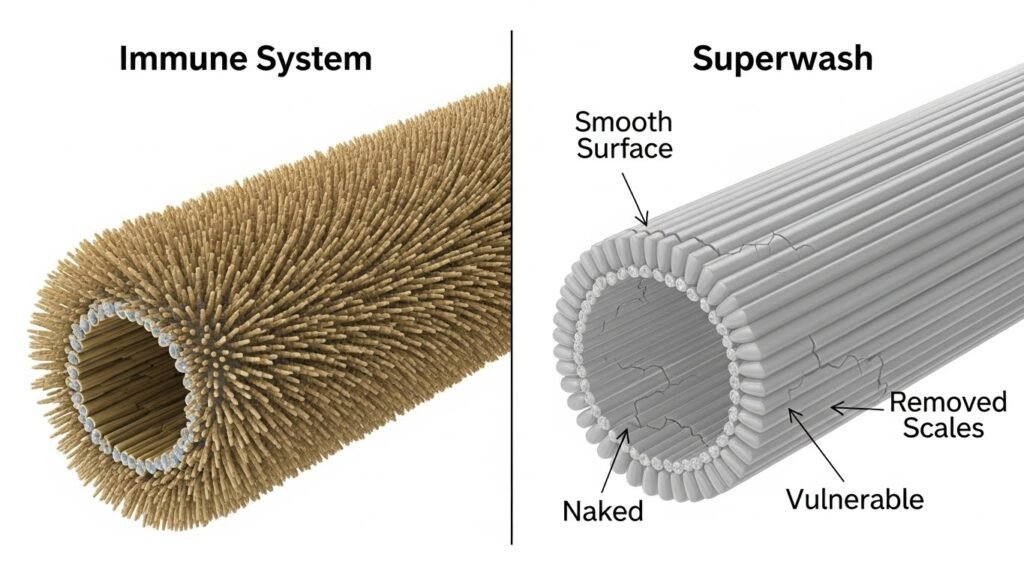
The modern obsession with “Superwash” wool is another nail in the coffin of the heirloom. Superwash wool is wool that has been stripped of its natural scales and coated in a plastic polymer to make it machine-washable. While convenient, this process removes the very thing that makes wool a miracle fiber: its natural resilience.
Traditional “greasy” wool, or wool that retains some of its natural lanolin, is practically indestructible. Lanolin is a natural wax that protects the fiber from moisture, bacteria, and moths. When you work with minimally processed, high-quality wool, you are working with a fiber that has its own built-in immune system. Modern superwash wools often “grow” and lose their shape over time because they no longer have the scales to lock together. Are we sacrificing the soul and the longevity of our wool just so we don’t have to spend ten minutes hand-washing a garment once a year?
The “Sunk Cost” of Cheap Hardware
You cannot build a cathedral with plastic tools, and you cannot build an heirloom with inferior needles and hooks. We rarely talk about how the quality of our tools affects the molecular integrity of our yarn.
Cheap plastic or poorly finished metal hooks have “micro-burrs”—tiny imperfections that snag and tear at the fiber as you work. You might not see it happening, but you are weakening the yarn with every single stitch. By the time the project is finished, the yarn is already compromised.
An heirloom-quality tool—be it hand-polished rosewood, surgical-grade stainless steel, or vintage bone—glides through the yarn without disturbing the fiber structure. It preserves the “halo” and the twist. If you are serious about making something that lasts forever, why are you still using a $2 hook from a big-box store? Isn’t the foundation of your work worth more than a cup of coffee?
Engineering for Gravity: The “Stretch” Failure
One of the most common reasons modern sweaters and blankets fall apart isn’t actually the yarn—it’s gravity. Most modern patterns are designed for “look” rather than “load.”
A heavy crochet sweater made of cotton or silk will eventually commit suicide. The weight of the bottom of the garment will pull on the top, stretching the shoulder seams until they distort and eventually snap. The “Old Masters” of crochet and knitting understood this. They used “reinforcement rows,” smaller hooks for structural areas like necklines and cuffs, and specific stitch patterns that resisted vertical stretch.
Are you “building” your garment, or are you just “making” it? If you aren’t thinking about the weight distribution of your stitches, you are designing a product with a built-in expiration date. How many of your finished sweaters are currently “growing” in your closet?
The Moth War: Why Your Storage is a Death Trap
Let’s talk about the silent killers: Tineola bisselliella. The common clothes moth doesn’t care how much you love your heirloom; it only cares about the protein in your wool. Most modern crafters finish a project, throw it on the back of a sofa, and consider the job done.
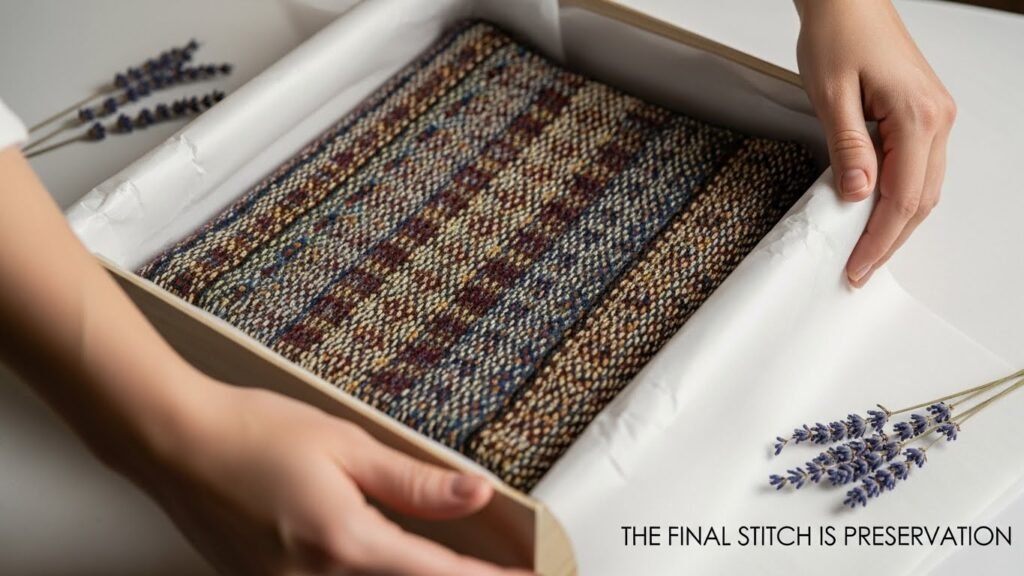
An heirloom requires a defense strategy. The pieces that have survived for centuries were stored in cedar chests, wrapped in acid-free paper, or kept in linen bags. They were aired out in the sun—nature’s disinfectant. If you aren’t educating the recipient of your gift on how to protect it from the biological world, you are just providing a very expensive meal for insects. Why do we put so much effort into the “making” and zero effort into the “preserving”?
The “Care Label” Lie: Stop Trusting the Tag
Google AdSense policies prevent me from telling you to ignore all safety labels, but I can tell you this: the “Machine Washable” tag on a ball of yarn is often a marketing tool, not a guarantee of longevity.
If you want a project to last 100 years, you must never, ever put it in a machine. The agitation, the heat, and the harsh detergents are the enemies of fiber integrity. Machines work by using friction to remove dirt, but that same friction removes the “life” of the yarn.
True heirlooms are “bathed,” not washed. They are treated with the respect you would give a living creature. Are we really so busy that we can’t afford thirty minutes of care for something we spent sixty hours creating? If the answer is yes, then we should stop calling our work “heirlooms.” Let’s just call them what they are: high-effort fast fashion.
The Cultural Cost of the Disposable Heirloom
When we make things that don’t last, we are participating in the devaluation of the craft. When a grandchild receives a blanket that falls apart after two years, they learn that “handmade” means “low quality.” They learn that the work of their grandmother’s hands was no better than something bought for $20 at a department store.
But when a grandchild receives a piece that is fifty years old and still looks new—that still has the “sproing” in the wool and the crispness in the lace—they learn that handmade means “supernatural.” They learn that there is a power in the human hand that a machine can never replicate. Which lesson do you want to teach?
How to Make Yours Last Forever: The Checklist
If you are ready to stop the “Heirloom Lie” and start the “Heirloom Truth,” here is your scientific checklist for immortality:
-
Fiber First: Only use natural, long-staple fibers. Avoid “single-ply” and anything with more than 10% synthetic content for structural pieces.
-
The Twist Test: Use yarns with at least three plies and a high “S” or “Z” twist. Twist is the armor of the yarn.
-
Small Hooks, Big Future: Tighten your gauge. If the pattern calls for a 5mm hook, try a 4mm. A dense fabric is a durable fabric.
-
The “Seam” Strategy: Always use sewn seams for garments. Crocheted or knitted seams are often the first point of failure under tension.
-
The Cedar Defense: Every heirloom must come with its own storage solution. Don’t give a blanket without a breathable cotton bag to keep it in.
-
The Documentation: Attach a small tag (or a digital file) explaining the fiber content, the date of creation, and the specific “bathing” instructions.
The Psychological Weight of True Quality
There is a different feeling that comes from working on a true heirloom. When you know that your materials are elite and your techniques are sound, your hands move differently. You stop rushing. You stop looking for the “quick fix.” You enter into a partnership with the future.
Isn’t that the real reason we do this? To reach out through time and touch someone we will never meet? To leave a thumbprint on the world that doesn’t just wash away with the next rain?
We have been lied to by an industry that wants us to buy more, work faster, and care less. They want us to believe that “soft” is better than “strong” and that “easy” is better than “enduring.” But the museum shelves tell a different story. The survivors are the ones that were made with grit, with fine yarn, and with a total disregard for the clock.
A Challenge to the Modern Maker
The next time you stand in a yarn shop, I want you to look at that giant, fuzzy, unspun roving. I want you to look at that “value” acrylic. And I want you to ask yourself: “Who am I making this for? Am I making it for the person I want to be for the next ten minutes, or am I making it for the person who will be alive in the year 2126?”
The “Heirloom Lie” ends the moment you decide that your time is worth more than cheap materials. It ends when you decide that “finished” isn’t the goal—”forever” is.
Are you brave enough to spend a year on one project instead of one week on ten? Are you strong enough to resist the trends and embrace the traditions? The future is waiting for your work. Don’t let them down by giving them something that will fall apart in their hands. Give them the gold. Give them the truth. Give them the “Heirloom” that finally lives up to its name.

My name is Sarah Clark, I’m 42 years old and I live in the United States. I created Nova Insightly out of my love for crochet and handmade creativity. Crochet has always been a calming and meaningful part of my life, and over the years it became something I wanted to share with others. Through this blog, I aim to help beginners and enthusiasts feel confident, inspired, and supported as they explore crochet at their own pace. For me, crochet is more than a craft — it’s a way to slow down, create with intention, and enjoy the beauty of handmade work.