
How many “lonely” skeins do you have hiding in the dark corners of your stash? We’ve all been there. You were wandering through a boutique yarn shop, or perhaps scrolling through a dyer’s limited-edition drop, and you fell in love. You bought that one, exquisite, expensive skein of hand-painted silk or cashmere-infused wool. You told yourself it was “inspiration,” but now it sits there, a beautiful burden, mocking you. You’re terrified to wind it because you’re convinced that one skein isn’t enough to make anything “real.” You’ve been lied to by the industry that insists you need a sweater’s worth of yardage to achieve artistic legitimacy.
What if I told you that the most powerful, stylish, and technically impressive projects in the world of fiber arts are born from the constraint of a single ball? The “One-Skein Miracle” isn’t about making a tiny, useless coaster or a misshapen headband. It is about a radical efficiency of design. It’s about the mathematical thrill of “Yarn Chicken”—that high-stakes game where you pray the last inch of yarn finishes the last stitch of your bind-off. Are you ready to stop hoarding your best fibers for a “someday” that never comes and start creating masterpieces today? Or are you going to let that $40 skein become a very expensive snack for moths?
The Psychology of the Single Skein: Why Less is More
In a world of “super-sized” everything, we have lost the art of the delicate. We think that value is measured in weight and volume. But in fashion, the most impactful pieces are often the smallest accents. A single skein of luxury yarn is a concentrated dose of color and texture. When you spread that color across a five-skein cardigan, the impact is diluted. When you concentrate it into a one-skein accessory, it becomes a focal point. It becomes a statement.
Why do we feel the need to bury our best materials in massive projects that take months to finish? The “One-Skein Miracle” offers instant gratification combined with high-end results. It allows you to experiment with fibers you could never afford in sweater quantities—vicuña, pure silk, qiviut. It’s the difference between buying a gallon of cheap house wine and enjoying a single, perfect glass of vintage Bordeaux. Which one leaves a lasting impression on your soul?
The Mathematics of Yardage: Know Your Limits
To pull off a miracle, you have to know your numbers. The most common tragedy in the crafting world is the “90% Finished” project. You have four inches left of your lace shawl, and you realize you have two inches left of yarn. To avoid this heartbreak, you must master the relationship between weight, yardage, and stitch density.
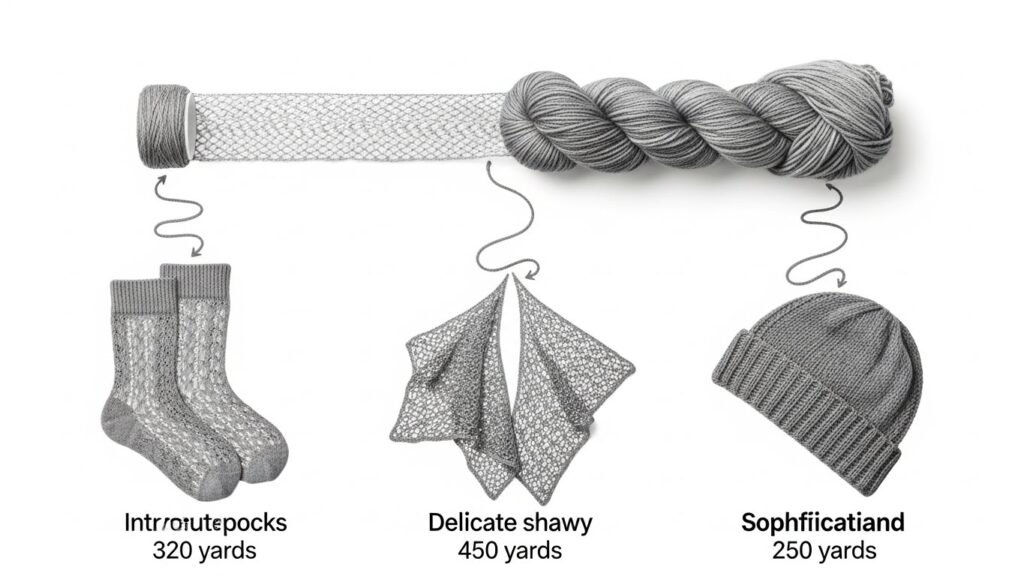
A standard 100g skein of fingering weight yarn usually offers between 380 and 420 yards. In the hands of a master, that is an ocean of possibility. But if you’re using a chunky weight, 100g might only give you 80 yards. The miracle happens when you match the project to the yardage with surgical precision. Have you ever actually measured how many yards your favorite “comfort stitch” consumes? If you haven’t, you aren’t designing; you’re just gambling.
The “Air” Strategy: Using Lace to Stretch Your Yarn
If you want to make a single skein look like three, you have to embrace the hole. Lace is the ultimate yarn-saver. By using yarn-overs and large-gauge needles or hooks, you are essentially “knitting with air.”
A one-skein lace shawl is perhaps the most impressive item in a maker’s wardrobe. Because the fabric is so open, a single 400-yard skein can create a garment with a five-foot wingspan. But this requires a shift in mindset. You have to stop viewing “holes” as gaps in the fabric and start viewing them as structural elements. The lace doesn’t just save yarn; it creates drape, movement, and a level of sophistication that a solid fabric can never achieve. Why are you working so hard to create a dense, heavy fabric when you could be creating a light-as-a-feather masterpiece?
Project 1: The “Luxury-Limit” Silk Cloche
Most hats are boring. They are functional beanies designed to hide a bad hair day. But a one-skein cloche made from a silk or bamboo blend is a piece of millinery art. Because the project is small, you can focus on “Stitch Architecture.”
Use a high-twist yarn and a hook size smaller than recommended to create a stiff, structural fabric that holds its shape. Incorporate a single, dramatic cable or a cluster of “popcorn” stitches on one side. The result is a piece that looks like it was plucked from a 1920s Parisian storefront. It’s a project that takes four hours but looks like it took forty. Are you making hats to stay warm, or are you making them to start conversations?
Project 2: The “Anatomy” Lace Socks
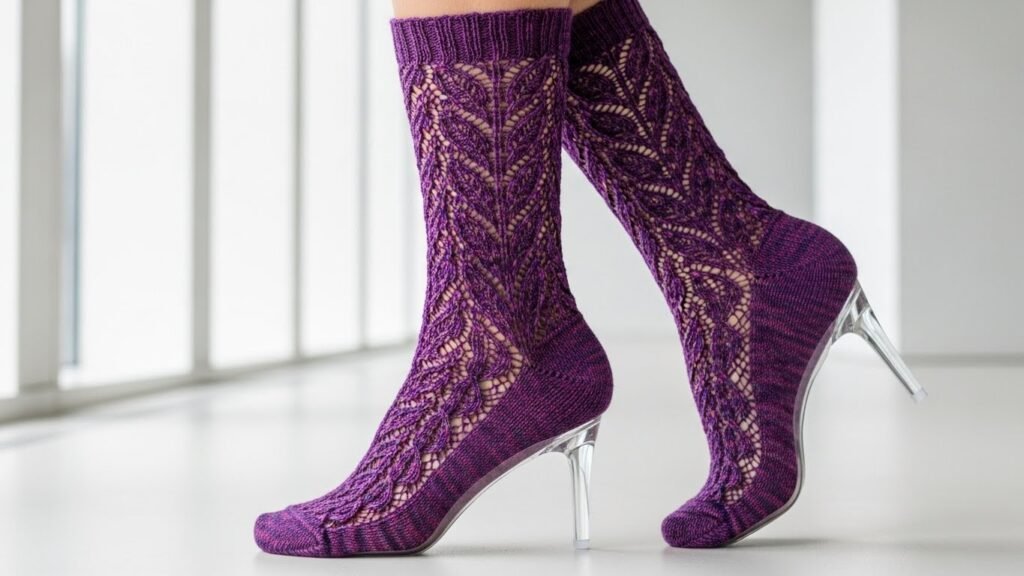
Socks are the traditional home of the single skein, but we aren’t talking about “plain-jane” vanilla socks. We are talking about “Anatomy” socks. These are projects where the stitch pattern mimics the musculature and bone structure of the foot.
By using a single skein of high-twist wool-nylon blend, you can execute complex traveling cables or intricate Estonian lace. Because you only have one skein, you are forced to be clever with the cuffs and toes. Perhaps you use a “contrast” scrap for the heels to ensure every inch of your precious main yarn is visible on the leg. This isn’t just a sock; it’s an engineering feat. Why do we hide our most technical skills inside our shoes?
Project 3: The “Feather-Weight” Shoulderette
A shawl is great, but a “shoulderette”—a smaller, more structured wrap—is the true one-skein miracle. Using a single skein of mohair-silk blend, you can create a garment that weighs less than an ounce but provides the warmth of a coat.
The secret here is the Solomon’s Knot (or Lover’s Knot). This stitch creates a giant, diamond-shaped mesh that uses almost zero yarn. You can turn 200 yards into a sprawling, elegant wrap that glows under evening lights. This is the “smoke and mirrors” of the fiber world. It looks like a massive investment of material, but it’s actually a triumph of geometry over volume. Have you ever felt the sheer power of wearing something that is 90% air and 100% style?
The “Yarn Chicken” Survival Guide: How to Win Every Time
If you are going to attempt a one-skein miracle, you will eventually face the dreaded Yarn Chicken. You are on the final row, and your yarn tail is getting shorter and shorter. This is where the amateurs panic and the professionals pivot.
-
The Scale is Your Best Friend: Weigh your yarn before you start. Weigh it again halfway through. If you’ve used 50% of your yarn and you aren’t 50% through the pattern, you need to adjust your gauge or shorten the project immediately.
-
The “Emergency” Bind-Off: If you’re running out, switch to a simpler, less yarn-intensive bind-off. A basic knit-two-together bind-off uses much less yarn than a stretchy “Jeny’s Surprisingly Stretchy” bind-off.
-
Change the Hook/Needle Size: If you see you’re going to run short, go down a size for the last few rows. It will tighten the fabric and buy you those extra few inches of length.
Are you playing the game, or is the yarn playing you? Winning Yarn Chicken isn’t luck; it’s cold, calculated resource management.
The Ethical Imperative of the One-Skein Project
In an age of climate crisis and overconsumption, the one-skein miracle is a moral choice. It’s a rejection of the “more is better” philosophy that leads to overflowing craft rooms and discarded WIPs (Works in Progress).
By focusing on one-skein projects, you are forced to be more intentional. You spend more time researching the perfect pattern for that specific fiber. You treat the yarn with more respect. You waste nothing. A one-skein project is a closed loop of creativity. It starts with a single seed and grows into a complete fruit. How much lighter would your conscience feel if you finished every single skein you bought before buying another?
The “Mystery Ball” Trap: Why One Skein is Safer Than Ten
We’ve all seen the “bargain” bags of ten skeins for the price of one. We buy them thinking we’ll make a blanket, but usually, they sit there because the color is just slightly “off” or the texture is uninspiring.
A single skein of premium yarn is a safe investment. If the color is bold, it’s only an accent. If the texture is wild, it’s only a small dose. You aren’t committing to a three-month relationship with a fiber you might grow to hate. You’re having a one-night stand with excellence. Why are you tethering yourself to mediocre “sweater quantities” when you could be having a series of brilliant, one-skein flings?
Advanced Technique: The “Faux-Skein” Stretch
What if you have a pattern that requires 500 yards, but your miracle skein only has 400? This is where the “High-End Hybrid” technique comes in. You can “stretch” your one-skein miracle by introducing a second, cheaper “utility” yarn.
The trick is to use the luxury yarn for the “touch-points”—the cuffs, the collar, the lace border—and use a matching, budget-friendly solid for the body. When done correctly, the eye is so drawn to the luxury fiber that it “assumes” the entire garment is made of the same material. It’s a visual illusion used by the world’s top fashion houses. Are you a purist, or are you a pragmatist? The “Faux-Skein” stretch allows you to have the luxury experience on a budget-store reality.
Reclaiming the “Gift” of the Single Skein
Many of us receive a single skein as a gift from a well-meaning friend who doesn’t know how much yarn a sweater actually takes. We tuck it away, feeling a bit guilty that we can’t use it for something “significant.”
It’s time to change the definition of significant. A pair of hand-knitted silk socks that make you feel like a queen every Tuesday is significant. A mohair cowl that turns a boring winter coat into a runway look is significant. A single, perfect lace ornament that hangs in your window and catches the light is significant.
Don’t let the “Smallness” of the project fool you. The most powerful miracles often come in the smallest packages. Your single skeins aren’t “leftovers”; they are the “leads.” They are the stars of the show, waiting for a stage that is just the right size.
Conclusion: The Freedom of the Finish
The greatest benefit of the one-skein miracle isn’t the yardage or the cost—it’s the “Finish.” There is a profound psychological freedom in casting off a project in a week rather than a year. It clears the mental clutter. It builds your confidence. It allows you to move on to the next color, the next fiber, the next miracle.
Go to your stash right now. Find that one skein you’ve been “saving.” The one that feels too precious to use but too lonely to start. Hold it in your hands. Feel its potential. Stop waiting for the “perfect” giant project that will probably end up in a bag under your bed.
The miracle is already there, inside the twist of the fiber. It’s waiting for you to realize that one is enough. One is plenty. One is a masterpiece.
What will you create before the yarn runs out? Will you make a legacy, or will you just make a pile of “somedays”? The last yard is coming—make sure every inch before it was a stroke of genius.

My name is Sarah Clark, I’m 42 years old and I live in the United States. I created Nova Insightly out of my love for crochet and handmade creativity. Crochet has always been a calming and meaningful part of my life, and over the years it became something I wanted to share with others. Through this blog, I aim to help beginners and enthusiasts feel confident, inspired, and supported as they explore crochet at their own pace. For me, crochet is more than a craft — it’s a way to slow down, create with intention, and enjoy the beauty of handmade work.