
I didn’t start crochet the “right” way. I didn’t memorize stitch names first. I didn’t practice perfect chains for hours. I didn’t even understand what tension really meant. What I did instead would probably make many experienced crocheters shake their heads. And yet, oddly enough, that messy, unconventional beginning is exactly what made everything click faster than I ever expected.
Looking back, I realize something important: beginners are often taught crochet in a way that looks logical on paper but feels painfully slow in real life. Clean steps. Strict rules. Endless repetition before creating anything meaningful. But is that really how humans learn best? Or is it just how instructions are traditionally written?
If you’re new to crochet and already feeling overwhelmed, bored, or stuck, it might not be because you’re doing it wrong. It might be because you’re being taught “correctly” in a way that doesn’t actually help you learn.
Why the “Right Way” Almost Made Me Quit
When most people start crochet, they’re told to begin with the basics. Chains. Rows of single crochet. Straight edges. Perfect tension. Only after mastering these are you “allowed” to make real projects.
That sounds reasonable. It also sounds incredibly discouraging.
The Problem With Starting Too Perfect
I remember staring at my practice rows, wondering why anyone enjoyed this. The stitches were uneven. The fabric curled. My hands felt stiff. And worst of all, nothing I made felt useful.
Was this really what crochet was supposed to feel like?
The pressure to be precise from the beginning creates a silent fear: the fear of doing it wrong. Every mistake feels like proof that you’re not cut out for this craft. Every uneven edge feels like failure.
But beginners don’t need perfection. They need momentum.
Why Practice-Only Learning Fails Beginners
Practicing stitches in isolation removes context. You’re repeating movements without understanding their purpose. It’s like learning to type by pressing random keys without ever writing a sentence.
Without meaning, motivation fades quickly.
I didn’t need cleaner stitches. I needed a reason to keep going.
The Emotional Side No One Talks About
Crochet isn’t just mechanical. It’s emotional. Beginners are quietly asking themselves questions they rarely say out loud. Why does this look so bad? Why does everyone else make it look easy? Why am I not improving faster?
The “right way” rarely answers those questions. It just tells you to practice more.
The “Wrong” Way I Started (And Why It Worked)
Instead of following the traditional beginner path, I did something that’s often discouraged: I jumped straight into small, imperfect projects.
Not complicated ones. Not impressive ones. But real ones.
I Made Things Before I Felt Ready
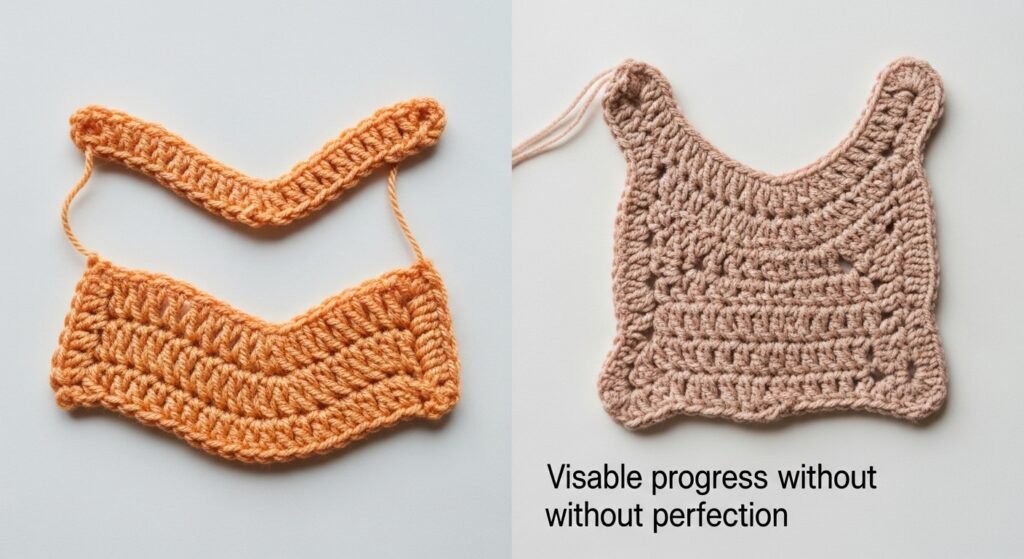
My first projects were messy. A misshapen coaster. A lopsided square. A scarf that changed width halfway through.
But they were finished.
Finishing something changes your relationship with learning. Suddenly, crochet wasn’t an abstract skill. It was a process that led to an object. Something tangible. Something mine.
That sense of completion created motivation no practice swatch ever could.
I Let Mistakes Exist Instead of Erasing Them
I didn’t frog every error. Sometimes I didn’t even notice them until much later. And when I did, I realized something surprising: the project still worked.
It still functioned. It still held together. It still served its purpose.
That realization is powerful. It teaches beginners that mistakes are not disasters. They’re part of the fabric.
I Learned Skills in Context
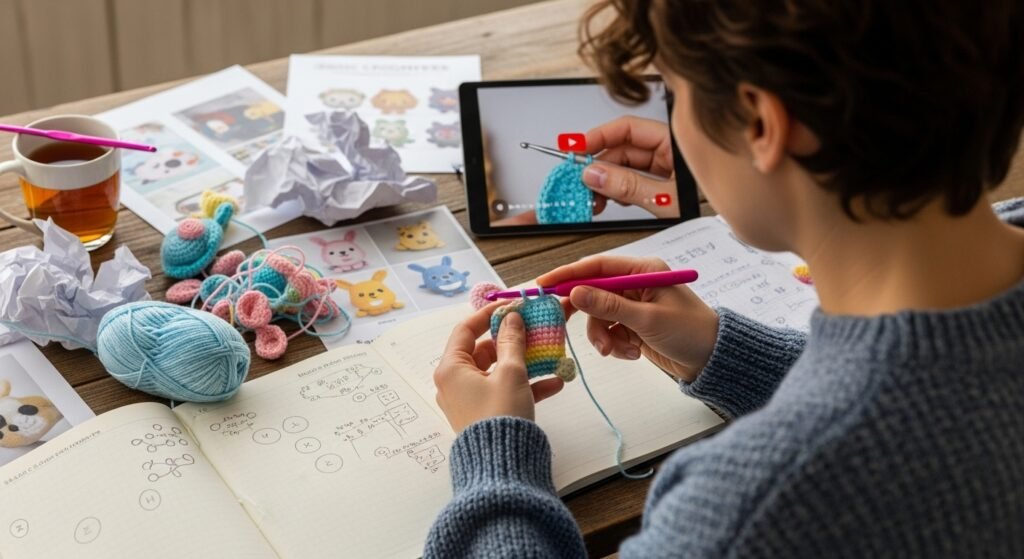
Instead of memorizing stitches, I learned them as solutions. Why did my edges pull in? Why did my fabric feel stiff? Why did holes appear?
Each question had a practical answer. And because the answer solved a real problem, it stuck.
This approach turned learning into problem-solving rather than rule-following.
What This Approach Teaches Beginners Faster
Starting the “wrong” way didn’t make me reckless. It made me curious. And curiosity accelerates learning.
Understanding Comes Before Precision
When you understand why something happens, precision follows naturally. Tension improves because you feel it, not because you’re forcing it. Stitch consistency develops because your hands recognize patterns.
Precision without understanding is fragile. Understanding builds resilience.
Confidence Grows Through Completion
Every finished project, no matter how flawed, builds confidence. Confidence encourages experimentation. Experimentation leads to growth.
Beginners who never finish anything rarely feel motivated to continue.
You Learn What Actually Matters
Not every rule matters equally. Some mistakes barely affect the outcome. Others matter a lot.
The “wrong” way teaches prioritization. You learn which details are crucial and which ones are negotiable. That discernment is a hallmark of experienced crocheters.
How Beginners Can Apply This Without Feeling Lost
This approach doesn’t mean abandoning guidance. It means reframing it.
Start With Small, Purposeful Projects
Choose projects that:
- Use basic stitches
- Are small enough to finish quickly
- Serve a real purpose
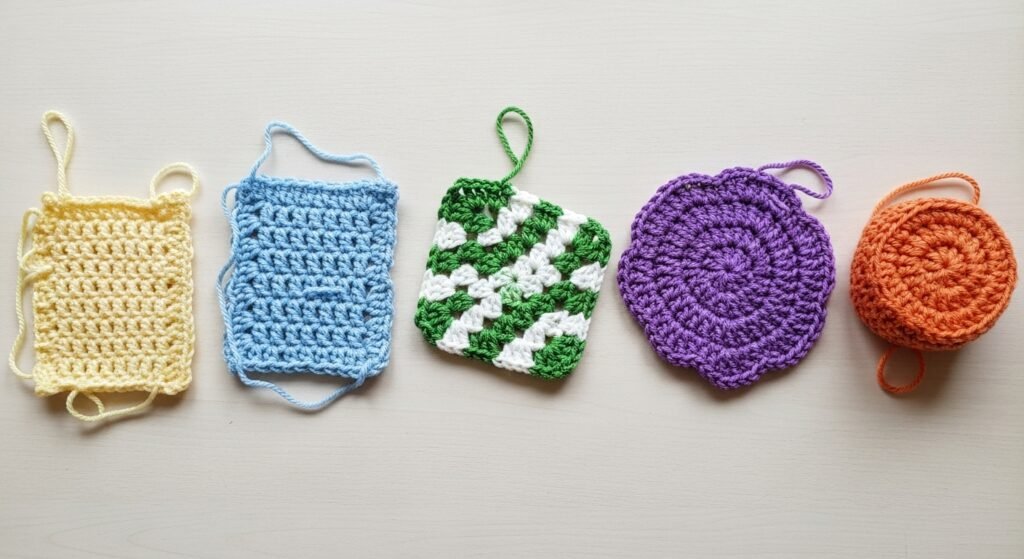
Dishcloths, simple scarves, coasters, small pouches. These teach fundamentals while producing something usable.
Allow Imperfection on Purpose
Decide in advance that the first version doesn’t have to be perfect. Give yourself permission to finish even when flaws exist.
Perfection can come later. Progress cannot wait.
Learn One Concept at a Time
Instead of trying to master everything at once, focus on one idea per project. Maybe it’s consistent tension. Maybe it’s straight edges. Maybe it’s reading stitch anatomy.
Learning accelerates when focus narrows.
Why This Feels “Wrong” but Works Anyway
This method contradicts traditional instruction because it prioritizes experience over control. That makes instructors uncomfortable. It removes the illusion of order.
But learning isn’t linear. It’s messy, recursive, and deeply human.
Humans Learn by Doing, Not Preparing Forever
We don’t learn to speak by practicing sounds in isolation for years. We speak badly first. We improve through use.
Crochet is no different.
Motivation Is a Skill Too
Staying motivated is part of learning. Methods that ignore motivation fail beginners emotionally, even if they succeed technically.
The “wrong” way keeps beginners engaged long enough to actually improve.
Mastery Is Built on Imperfect Foundations
Every skilled crocheter has imperfect projects behind them. The difference is whether those projects were finished and learned from, or abandoned in frustration.
Redefining What It Means to Be a Beginner
Being a beginner doesn’t mean being fragile. It means being adaptable.
You don’t need to protect beginners from mistakes. You need to show them how mistakes teach.
The fastest progress doesn’t come from avoiding errors. It comes from surviving them.
The Quiet Lesson I Didn’t Expect to Learn
Starting crochet the “wrong” way taught me more than stitches. It taught me patience with myself. It taught me that learning is not about proving competence, but building familiarity.
Crochet stopped being intimidating when I stopped trying to do it correctly and started trying to understand it.
So if you’re a beginner feeling stuck, frustrated, or secretly wondering if crochet just isn’t for you, consider this possibility:
You might not be failing because you’re doing it wrong.
You might be failing because you’re trying too hard to do it right.

My name is Sarah Clark, I’m 42 years old and I live in the United States. I created Nova Insightly out of my love for crochet and handmade creativity. Crochet has always been a calming and meaningful part of my life, and over the years it became something I wanted to share with others. Through this blog, I aim to help beginners and enthusiasts feel confident, inspired, and supported as they explore crochet at their own pace. For me, crochet is more than a craft — it’s a way to slow down, create with intention, and enjoy the beauty of handmade work.