
Have you ever felt the soul-crushing weight of a yarn shop receipt that cost more than your monthly car payment? We have all been there, standing in the aisle of a boutique fiber studio, stroking a skein of pure, unadulterated Mongolian cashmere, convinced that if we don’t spend sixty dollars on those 100 grams of fuzz, we aren’t “real” artists. We tell ourselves that our skin is too sensitive for anything else, that our hands deserve the tactile equivalent of a thousand angel whispers. But what if I told you that you are being lied to? What if I told you that the “luxury” label is often just a psychological trick designed to separate you from your hard-earned cash, while the fiber world’s best-kept secrets are hiding in plain sight for a fraction of the cost?
The yarn industry is built on a hierarchy of snobbery. We are conditioned to look down our noses at anything that contains a synthetic fiber or costs less than a fancy steak dinner. But the truth is, textile technology has advanced so rapidly in the last decade that the line between “budget” and “luxury” has blurred into total obscurity. There are yarns sitting on the shelves of your local big-box craft store right now that possess the same micron count, the same buttery drape, and the same thermal properties as the fibers harvested from high-altitude goats. Why are you still paying for the brand name when you could be paying for the performance? Isn’t it time we stopped burning money in the name of “purity” and started knitting smarter?
The obsession with pure cashmere is, quite frankly, a trap. Cashmere is fragile. It pills if you breathe on it too hard. It has zero memory, meaning your expensive sweater will eventually sag into a sad, shapeless puddle. But the modern “Budget Luxury” yarns—those clever blends of high-twist wool, bamboo, silk, and premium microfibers—are engineered to overcome these flaws. They mimic the “hand” of cashmere so perfectly that even professional fiber judges would struggle to tell the difference in a blind touch test. Are you ready to stop being a victim of marketing and start discovering the five yarns that will revolutionize your stash without emptying your bank account?
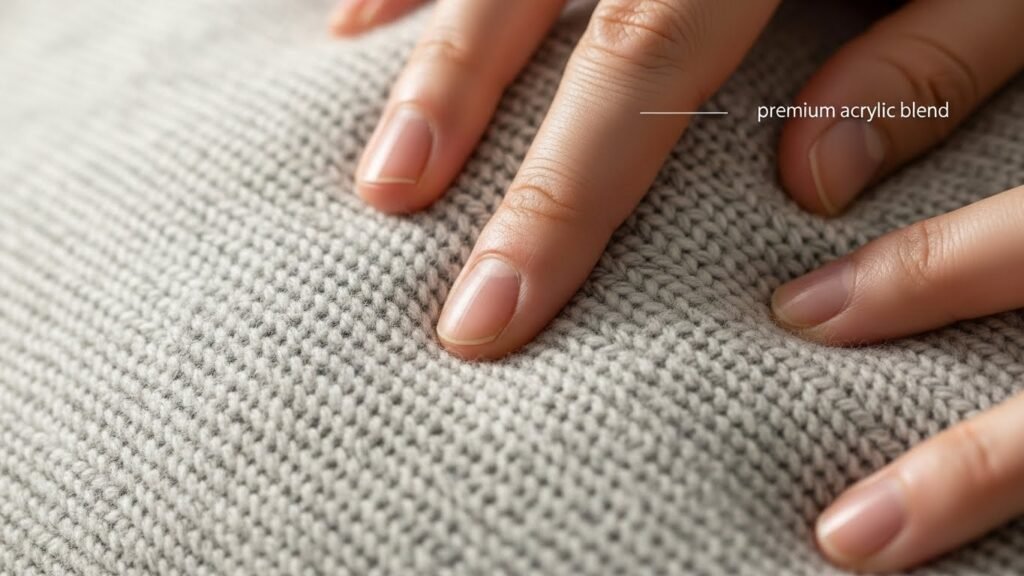
Let’s talk about the first contender in our rebellion against the elite: The Brushed Microfiber Miracle. For years, acrylic was the “scary” word in knitting circles. It was squeaky, it was plastic-feeling, and it felt like wearing a brillo pad. But those days are dead. High-end manufacturers have mastered the art of “brushing” ultra-fine synthetic fibers to mimic the downy undercoat of the Kashmir goat. When you work with a yarn like Premier Everyday Anti-Pilling or certain high-end Lion Brand blends, you aren’t just working with plastic; you are working with a material designed to stay soft forever. Unlike real cashmere, which gets uglier the more you wear it, these fibers are treated to resist pilling. Can your $80 skein survive a trip through the washing machine and come out looking like a million bucks? No? Then why are you still buying it?
Then we have the Bamboo-Sourced Silks. If cashmere is the king of warmth, bamboo-silk blends are the queens of drape. Many crafters spend a fortune on cashmere-silk blends because they want that heavy, liquid-like fall of the fabric. However, bamboo viscose, when processed correctly, has a micron count that rivals the finest animal fibers. It is hypoallergenic, incredibly soft, and possesses a natural sheen that makes color look deeper and richer than any matte wool ever could. When you find a budget-friendly bamboo-acrylic or bamboo-wool blend, you are essentially getting a fiber that breathes better than cashmere and mimics its luxury feel so closely that people will stop you on the street to ask which designer boutique you shop at. Why tell them you made it for the price of a sandwich?
Now, let’s dive into the Merino-Nylon Workhorse. This is perhaps the most shocking secret of all. High-quality Merino wool, when spun with a high twist and a small percentage of premium nylon, can be processed to be just as soft as low-grade cashmere. The “scratch” we associate with wool comes from the diameter of the fiber scales. Modern “superwash” treatments flatten these scales, resulting in a yarn that feels like silk against the skin. Many budget brands now offer “merino gold” or “extra-fine” lines that cost under $10. If you can get the same skin-comfort and warmth for 15% of the price of cashmere, is the label “100% Cashmere” really worth the extra $50? Or are you just paying for the ego boost of saying you used “the best”?
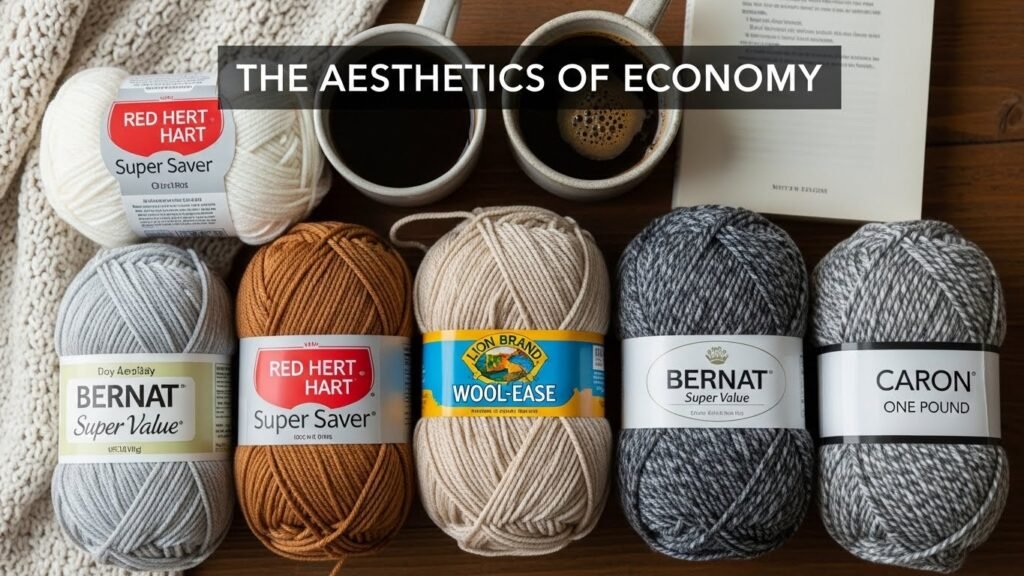
The fourth secret weapon in your budget arsenal is the Cotton-Acrylic Blend. Now, wait—don’t roll your eyes. I am not talking about the stiff, kitchen-scrubby cotton you use for dishcloths. I am talking about the sophisticated, “cloud-spun” blends that have taken the European market by storm. These yarns are spun in a way that traps air, much like the hollow core of a cashmere fiber. They are lightweight, seasonally versatile, and shockingly soft. They don’t have that “cold” feel of traditional cotton; instead, they have a cozy, warm-to-the-touch quality that is indistinguishable from a luxury wool blend once knitted up. Have you ever considered that the “itch” you feel from expensive wool might just be your body telling you that a high-tech blend is actually more compatible with your skin?
Finally, we must address the Recycled “Luxury” Blends. We live in an era where textile recycling has become a high art form. Many budget-friendly brands are now salvaging silk and wool scraps from the fashion industry and re-spinning them with soft stabilizers. These yarns often contain 10% to 20% real cashmere or silk, but because they are “recycled,” they are sold at a fraction of the price. The result? A yarn that smells like luxury, feels like luxury, and carries the weight of luxury, but costs less than your afternoon latte. Is it “cheating” to use recycled fibers? Or is it the most ethical and financially brilliant move a modern crafter can make?
Why do we feel the need to suffer for our art? Is there some unwritten rule that a project is only valuable if it caused us financial stress? The “Dirty Little Secret” of the yarn world is that most of the price of high-end yarn goes into the marketing, the hand-painted labels, and the overhead of a chic storefront. When you buy a budget yarn that feels like cashmere, you are stripping away the vanity and focusing on the tactile reality of the craft. You are choosing the sensation of the fiber over the prestige of the invoice.
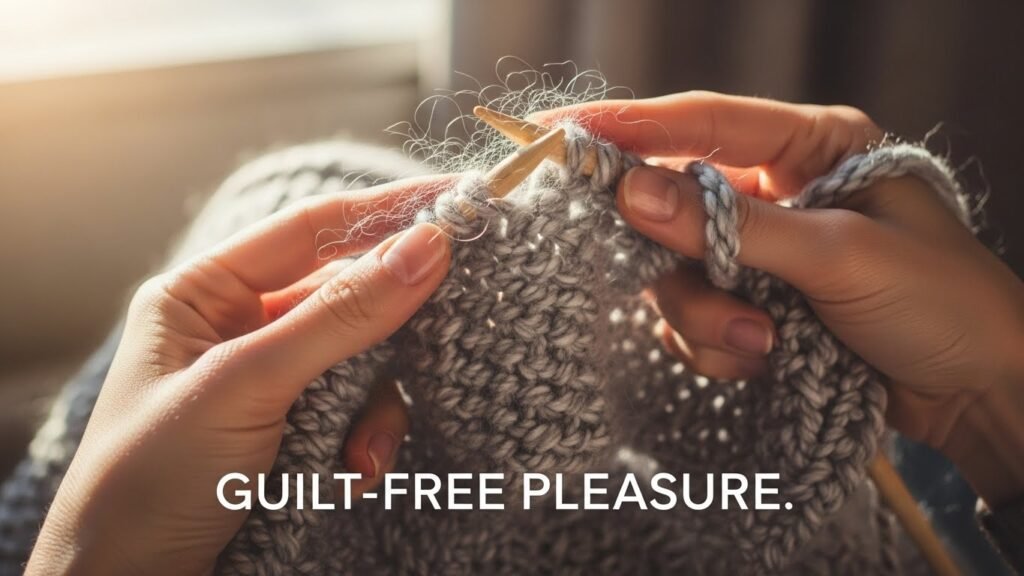
Think about the longevity of your work. We knit because we want to create something that lasts. Pure cashmere is notorious for “growing”—that phenomenon where your perfectly fitted sweater becomes a dress by the end of the day. Budget blends, particularly those with a touch of high-quality microfiber or nylon, have “memory.” They snap back. They hold their shape. They survive the reality of a life lived in knitwear. If you are making a garment for a child, a busy parent, or yourself to wear every day, why would you choose the most fragile, most expensive material available? Is it because you love the fiber, or because you’ve been brainwashed by a luxury-obsessed Instagram culture?
How many times have you “saved” your expensive yarn for a special project that never comes? You have ten skeins of $40 silk-cashmere sitting in a plastic bin, protected by cedar blocks and prayers, while you are too afraid to actually knit with it because “what if I mess up?” This is the hidden tragedy of expensive yarn: it kills creativity. When you use a budget yarn that feels just as good, the pressure vanishes. You experiment. You rip back. You try that crazy new lace pattern. You actually use the things you make because you aren’t terrified of a single snag or a spilled drop of coffee. True luxury isn’t owning a skein you’re afraid to touch; true luxury is wearing a cashmere-soft sweater to the grocery store and not giving it a second thought.
If you are a professional designer or a veteran knitter, you might argue that nothing can truly replace the “bloom” of high-end goat fiber. And in a laboratory, you might be right. But in the real world, on the skin of a human being moving through a busy day, the difference is negligible. We need to stop equating “expensive” with “virtuous.” A beautiful, soft, well-executed sweater made from a $5 acrylic blend is a greater triumph of skill than a poorly constructed one made from $500 vicuña. The talent is in your fingers, not in the sheep.
So, I challenge you: the next time you feel the urge to splurge on a luxury fiber, stop. Put down the “Exclusive Artisan” skein and walk over to the budget aisle. Close your eyes. Run your hands over the blends. Find the one that makes your heart skip a beat before you even look at the price. You might find that your “cashmere” dreams have been waiting for you in a $6 ball of yarn all along. Are you brave enough to trust your own sense of touch over a price tag? Are you ready to admit that you’ve been overpaying for a name?
The revolution of the “Budget Luxury” movement is here, and it is soft, durable, and incredibly affordable. Your bank account will thank you, your skin will thank you, and your projects will finally be free from the weight of “preciousness.” Let the snobs keep their pilling, sagging, overpriced goats. We’ll be over here, knitting our fifth cashmere-soft sweater of the year, laughing all the way to the bank. After all, isn’t the greatest “dirty secret” of all that you can have everything you want, without wasting a single penny? The choice is yours: keep funding the myth, or start knitting the reality. Which will you choose the next time you pick up your needles?

My name is Sarah Clark, I’m 42 years old and I live in the United States. I created Nova Insightly out of my love for crochet and handmade creativity. Crochet has always been a calming and meaningful part of my life, and over the years it became something I wanted to share with others. Through this blog, I aim to help beginners and enthusiasts feel confident, inspired, and supported as they explore crochet at their own pace. For me, crochet is more than a craft — it’s a way to slow down, create with intention, and enjoy the beauty of handmade work.