
You are about to embark on a journey that will take you fifty, sixty, perhaps eighty hours of your finite human life. You are sitting at your kitchen table, needles in hand, dreaming of a blanket that your great-grandchildren will wrap their babies in. You’ve scrolled through Instagram, you’ve seen the “influencer” blankets made of unspun roving that look like giant marshmallows, and you’ve visited the high-end boutiques where the yarn costs more than a designer handbag. But here is the cold, terrifying truth that the professional designers and yarn manufacturers are too afraid to tell you: Most of the blankets being made today will be in a landfill before the current decade is over.
How is that for a shock to the system? We call them “heirlooms,” but we are building them on foundations of sand. We spend hundreds of dollars on fibers that are designed for aesthetics, not for the brutal reality of time. We are being sold a fantasy of luxury that is structurally incapable of surviving a washing machine, let alone a century of use. If you want to create something that truly outlasts you, you have to stop listening to the marketing fluff and start understanding the cold, hard science of fiber survival. Are you ready to hear why your “perfect” yarn choice might actually be a disaster in the making?
The Roving Lie: The Most Expensive Mistake You’ll Ever Make
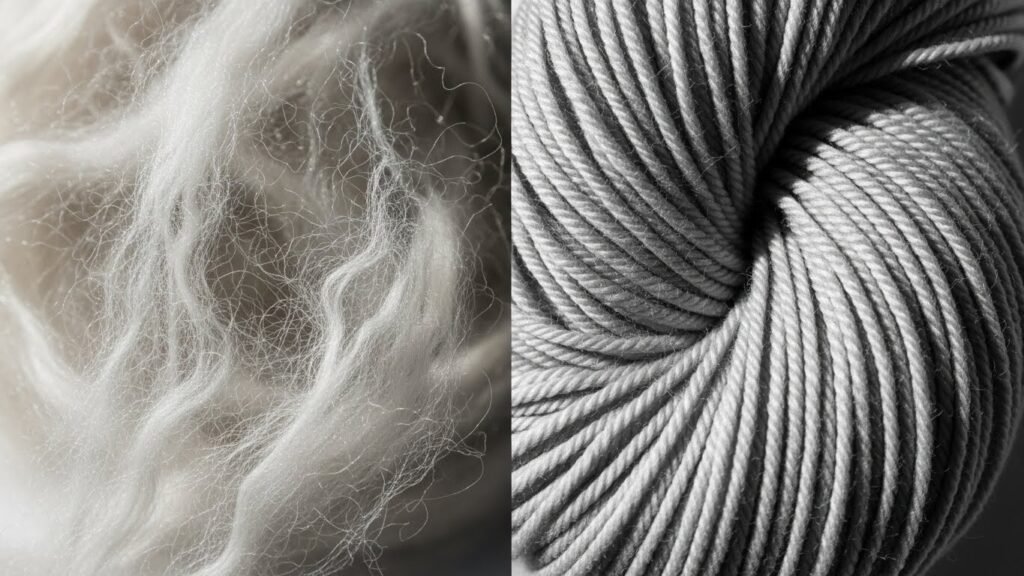
Let’s start with the elephant in the room: extreme chunky knits. You’ve seen them everywhere. They look like thick, luscious clouds of pure wool. They are marketed as the ultimate luxury heirloom. But let’s be brutally honest—unspun roving is not yarn. It is a pre-product. It has no twist. And without twist, there is no structural integrity.
When you knit a blanket out of roving, you are essentially knitting with a giant cotton ball. The first time someone sits on it, the fibers will compress. The first time a pet walks across it, their claws will pull out tufts of wool. Within three months, that $400 heirloom will look like a matted, pilling mess of felted hair. Why does the industry keep selling this to us? Because it’s fast, it’s expensive, and it photographs beautifully for the five minutes before it starts to disintegrate. Is a “heirloom” really an heirloom if it can’t survive a single season of snuggling?
If you want a thick blanket, you need “plied” yarn. Twist is the magic ingredient that anchors fibers together. Without it, you aren’t making a blanket; you’re making a giant dust magnet. If the “pros” won’t tell you that roving is a scam, I will. True longevity requires friction, and friction requires twist.
The Animal Fiber Fallacy: Why Your $500 Wool Might Be a Ticking Time Bomb
We have been conditioned to believe that “natural” and “expensive” mean “best.” We reach for the pure merino, the alpaca, the cashmere. We imagine these soft, delicate fibers lasting forever. But have you ever stopped to think about the diet of a common clothes moth? They don’t eat the “cheap” acrylic you bought at the craft store. They eat your $500 hand-dyed wool heirloom.
An heirloom blanket is a massive investment of time and money. If you make it out of 100% untreated animal fiber, you are creating a giant buffet for pests. Unless you plan on keeping that blanket in a hermetically sealed vault, you are taking a massive risk. This is where the pros get quiet. They don’t want to admit that a high-quality blend—something that incorporates a bit of synthetic fiber or treated plant fiber—might actually be more “heirloom-worthy” than pure wool.
Why? Because synthetics don’t rot. They aren’t appetizing to insects. They don’t lose their shape the moment they touch water. Does it hurt your soul to think about putting a bit of nylon or polyester in your masterpiece? Ask yourself this: Would you rather have a 100% wool blanket that is full of holes in twenty years, or a 70/30 wool-nylon blend that remains pristine for a hundred? Longevity isn’t always found in purity; sometimes, it’s found in the hybrid strength of modern textile engineering.
The Superwash Scandal: The Plastic Coating You Weren’t Told About
“Just use superwash wool!” they tell you. “It’s easy care!” But here is the secret the labels don’t explain. Superwash wool is wool that has been descaled with acid and then coated in a thin layer of plastic (polyamide). This prevents the fibers from interlocking (felting) when washed.
On the surface, it sounds great for a blanket. But superwash wool has a “dirty” side effect: it grows. Because the scales have been removed, the fibers have no “grip.” Over time, the weight of a large blanket will cause the stitches to stretch and sag. What started as a queen-sized throw will eventually become a long, narrow, distorted rectangle that looks nothing like the piece you spent months creating. Have you ever wondered why your expensive superwash projects lose their “bounce” after the first wash? You’ve traded structural memory for convenience. If you are building an heirloom, you need a yarn that remembers its shape. You need a yarn with “grit.”

The Weight of Gravity: The Silent Killer of Large Blankets
This is a technical point that many professionals overlook when recommending yarn. Blankets are heavy. A standard afghan can weigh anywhere from 3 to 7 pounds. When you hang that blanket over the back of a sofa or wrap it around your shoulders, gravity is pulling on every single stitch.
Certain luxury fibers, like alpaca or silk, have no “memory.” They are beautiful and soft, but they have no elasticity. If you knit a large blanket in 100% alpaca, the weight of the blanket itself will eventually pull the stitches open, creating a saggy, heavy mess that feels more like chainmail than a cozy wrap.
The “pros” will tell you how soft alpaca is, but they won’t tell you that it’s a terrible choice for a heavy heirloom. For a blanket to last, it needs “crimp”—that natural springiness found in sheep’s wool. It needs to be able to stretch and then snap back into place. Without that elasticity, your heirloom will literally pull itself apart over the decades. Are you choosing a yarn that can fight gravity, or one that will surrender to it?
The Pilling Paradox: Why “Soft” Is a Red Flag
We all love the “squish test.” We go to the yarn store and rub the skeins against our cheeks. If it’s buttery soft, we buy it. But in the world of fiber, softness is often a warning sign of a short “staple length.”
Fibers like cashmere or low-twist merinos are soft because the tiny hairs are loose and fluffy. However, those loose hairs are exactly what cause pilling. Every time someone moves under your heirloom blanket, those soft fibers rub together and migrate to the surface, forming those ugly little balls. Within a year, your “luxury” heirloom looks like it’s covered in lint.
The most durable heirlooms—the ones you see in museums or passed down through royal families—are often made of yarns that felt slightly “toothy” or even a bit “scratchy” when they were first spun. Why? Because long-staple fibers are tough. They stay tucked into the yarn. They get softer with every wash, but they never lose their core strength. Are you brave enough to choose a yarn that feels “real” today so that it can feel “luxurious” in fifty years? Or are you chasing the instant gratification of a softness that won’t last through the first winter?

The Colorfastness Trap: Will Your Legacy Fade?
You’ve spent weeks deciding on the perfect color palette. You’ve chosen “artisanal, hand-dyed, small-batch” yarns. They look like a watercolor painting in the skein. But here is what the boutique dyer won’t tell you: hand-dyed yarns are notoriously inconsistent in their light-fastness and wash-fastness.
Heirlooms are meant to be lived in. They will be left in the sun on a porch swing. They will have juice spilled on them by toddlers. They will be washed. Many boutique yarns use dyes that “bleed” or fade significantly over time. Imagine your beautiful cream and navy-blue heirloom turning into a murky, streaky mess after its first encounter with a spill.
For a true heirloom, you must look for “vat-dyed” or commercially dyed yarns that have been tested for stability. The “industrial” yarns that some pros look down upon are often the only ones that can guarantee your great-grandchild will see the same colors you see today. Is the “soul” of an indie-dyed skein worth the risk of a faded, bleeding legacy?
The Secret of the Blend: The Golden Ratio for Heirlooms
So, if roving is a lie, pure wool is a moth-snack, superwash is plastic-coated, and soft yarn pills, what on earth should you use? The pros who actually care about longevity—the museum conservators and the master weavers—know the secret: The Golden Ratio Blend.
A true heirloom yarn should ideally be a blend of high-twist, long-staple wool (for warmth and elasticity) and a stabilizing fiber (like silk, mohair, or high-quality nylon) for strength. Think of it like concrete and rebar. The wool is the concrete—the bulk and the warmth. The twist and the secondary fiber are the rebar—the structural skeleton that keeps the whole thing from collapsing.
Have you ever noticed how vintage “Icelandic” or “Fisherman” sweaters seem to last forever? It’s because the yarn was spun with both the soft undercoat and the tough outer coat of the sheep. It wasn’t designed to be “cheek-soft” in a store; it was designed to survive the North Atlantic. If you want your blanket to survive the “North Atlantic” of family life, you need to look for yarns that have a bit of “hair” to them—fibers like Mohair or Wool that have been spun with at least three or four plies.
The Maintenance Myth: Heirlooms Aren’t “Set and Forget”
The final thing the pros won’t tell you is that no yarn choice can save a blanket from neglect. But the right yarn choice makes maintenance possible.
If you choose a yarn that felts easily, you can never deep-clean that blanket. If you choose a yarn that is too fragile, you can never repair it. A real heirloom yarn is one that can be mended. It’s a yarn that has “body,” so when a thread eventually breaks—and it will—you can weave in a new one without the whole structure disintegrating.
Why are we so obsessed with “machine washable” heirlooms anyway? A true heirloom is a work of art. You wouldn’t put an oil painting in the dishwasher, would you? We need to shift our mindset. The best yarn for an heirloom is one that demands respect, one that requires a gentle hand-wash once a year, but rewards you by remaining unchanged for a century.
Your Legacy Is in the Twist
As you stand in that yarn aisle, or browse that online store, I want you to look past the beautiful colors and the poetic descriptions. I want you to look at the structure. Look at the twist. Look at the staple length. Ask yourself: “Is this yarn built to survive a hundred years of gravity, friction, moths, and sunlight?”
Don’t let the industry’s obsession with “fast luxury” dictate the quality of your legacy. Most of what is sold as “premium” today is actually “disposable luxury”—designed to look good for a photo and fail in the real world.
Are you a creator of temporary decor, or are you a builder of history? If you want to be the latter, you have to be smarter than the marketing. You have to choose the yarn that has the grit to go the distance. You have to choose the twist that will hold your family’s stories together long after you are gone.
The pros might not tell you these things because they want you to keep buying the trendy, the soft, and the expensive. But your great-grandchildren? They would tell you to choose the yarn that lasts. They are waiting for that blanket. Don’t let them down by choosing a yarn that’s all fluff and no soul. What will your needles create today: a fleeting trend, or a timeless treasure? The secret isn’t in the price tag—it’s in the fiber’s fight to survive. Will your yarn fight for you?

My name is Sarah Clark, I’m 42 years old and I live in the United States. I created Nova Insightly out of my love for crochet and handmade creativity. Crochet has always been a calming and meaningful part of my life, and over the years it became something I wanted to share with others. Through this blog, I aim to help beginners and enthusiasts feel confident, inspired, and supported as they explore crochet at their own pace. For me, crochet is more than a craft — it’s a way to slow down, create with intention, and enjoy the beauty of handmade work.