
If South America is the heart of the global coffee volume, East Africa is undoubtedly its soul. When you first taste a high-quality coffee from Ethiopia or Kenya, it is often a confusing experience. It doesn’t taste like the “coffee” most of us grew up with—that dark, bitter, chocolatey liquid. Instead, African coffees often taste like Earl Grey tea, jasmine flowers, sun-ripened blueberries, or tart blackberries.
This isn’t due to any added flavors; it is the pure expression of the most diverse genetics and unique processing methods in the world.
To understand the rise of African coffee is to understand the history of the plant itself. While Brazil and Colombia rely on large-scale plantations and standardized varieties, Africa remains a land of “heirloom” mysteries. In the high-altitude forests of Ethiopia and the volcanic red soils of Kenya, coffee isn’t just a crop; it is a wild, living piece of history.
In this guide, we are going to explore why these two origins have become the “gold standard” for specialty coffee enthusiasts and how their distinct profiles can change everything you thought you knew about your morning cup.
1. Ethiopia: The Garden of Eden
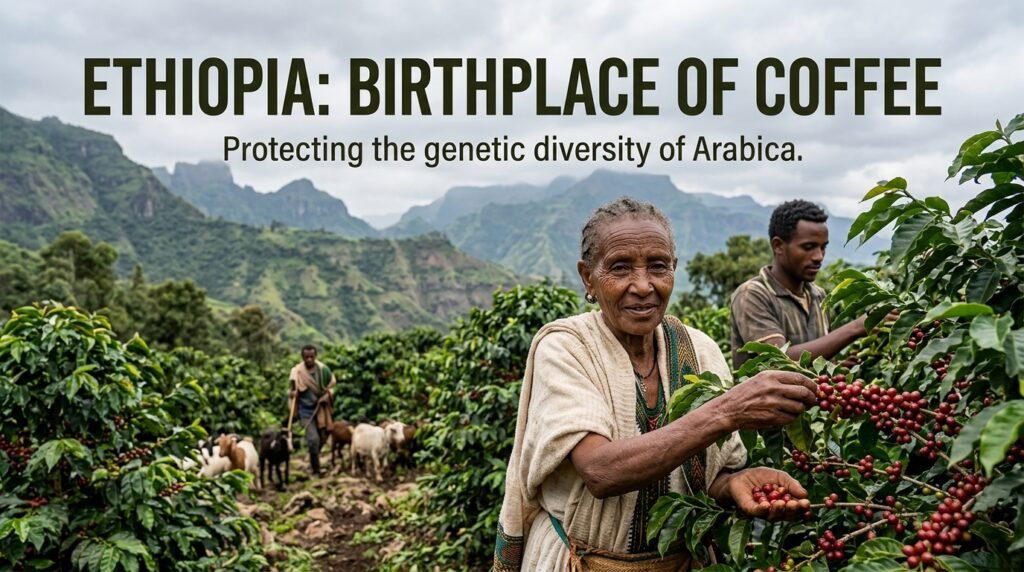
Ethiopia is the birthplace of Arabica coffee. Legend tells the story of Kaldi, a goat herder who noticed his goats dancing after eating berries from a certain bush. Whether or not Kaldi existed, the science is clear: the genetic diversity of coffee in Ethiopia is greater than in the rest of the world combined.
In most countries, farmers know exactly what variety they are growing (Typica, Bourbon, Caturra). In Ethiopia, many bags are simply labeled as “Heirloom Varieties.” These are wild or semi-wild trees that have been growing in the forests for centuries.
This genetic wealth is the primary reason why The Secrets of High Altitude: Why Mountains Make Better Coffee is so evident here. Growing at heights of up to 2,200 meters, these ancient trees produce small, dense seeds packed with floral and citrus complexity.
2. The Great Process Divide: Washed vs. Natural
Ethiopia is famous for two very different flavor profiles, determined entirely by how the fruit is removed from the bean.
-
Washed Ethiopians (The Elegant): These are the coffees that taste like “tea.” The fruit is removed immediately using water. This leaves the bean clean and bright. Expect notes of lemon zest, jasmine, and bergamot. They are light-bodied and incredibly refreshing.
-
Natural Ethiopians (The Wild): These are the “fruit bombs.” The coffee cherries are dried in the sun with the fruit still attached. The bean ferments slightly inside the skin, absorbing deep sugars and berry flavors. A classic “Natural Yirgacheffe” can taste exactly like a handful of fresh strawberries or blueberries.
Understanding this distinction is the first step when you are Decoding Labels to Find Your Perfect Beans. If you want clarity and flowers, go Washed. If you want a thick, jammy fruit experience, go Natural.
3. Kenya: The Power of the “SL” Varieties
While Ethiopia is wild and floral, Kenya is bold and powerful. Kenyan coffee is often described as the “Cabernet” of the coffee world. It has a heavy body and a striking, savory-sweet acidity that you won’t find anywhere else.
The secret to Kenya’s success lies in its research. In the 1930s, Scott Agricultural Laboratories (SL) developed two specific varieties: SL-28 and SL-34. These trees were bred to thrive in Kenya’s iron-rich, volcanic soil.
The result is a coffee with a high concentration of phosphoric acid—the same thing that gives Coca-Cola its “zing.” This creates a flavor profile dominated by blackcurrant, tomato-like sweetness, and dark forest fruits. It is an intense, unapologetic coffee that demands your full attention.
4. The Kenyan Grading System: AA, AB, and Beyond
When buying Kenyan coffee, you will often see letters like “AA” or “AB” after the name. Contrary to popular belief, this isn’t a grade of quality (flavor), but a grade of size.
-
AA: The largest beans.
-
AB: Medium-sized beans.
-
Peaberry (PB): A rare, single round bean that grows alone inside the cherry.
The theory is that larger beans contain more oils and sugars, leading to a better cup. While this is often true, some of the most flavorful Kenyan coffees are actually the smaller AB lots. The key is the density. Because Kenya grows at extreme altitudes, even the smaller beans are incredibly hard, requiring precision during Calibrating Your Espresso: The Dialing-In Process to ensure you don’t end up with a sour, under-extracted mess.
5. The “Kenyan Wash”: A Masterclass in Fermentation
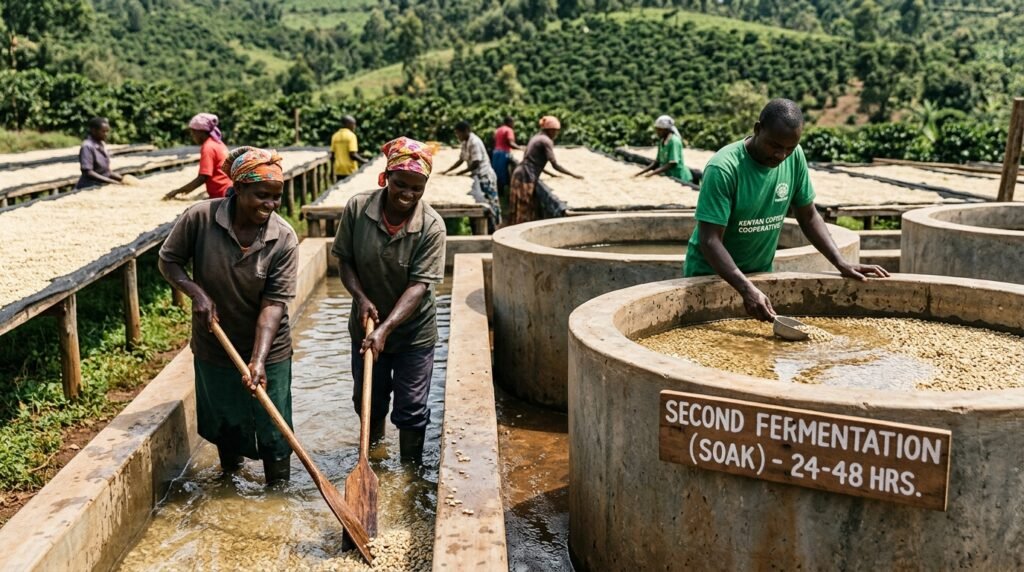
Kenya uses a unique processing method often called the “Double Wash” or “72-hour fermentation.”
The coffee is fermented once, washed, and then fermented a second time in clean water. This incredibly labor-intensive process removes every trace of mucilage and “polishes” the flavor. This is why Kenyan coffees have such a legendary “cleanliness.” There are no muddy or earthy notes—just pure, vibrant fruit and a long, sweet aftertaste.
This processing method is expensive and uses a lot of water, which is why Kenyan coffee is often among the most expensive on the market. But for those who value clarity of flavor, there is no substitute.
6. Brewing African Coffees: Respect the Acidity
Because African coffees are so prized for their acidity and delicate aromatics, they are rarely roasted dark. A dark roast would burn away the jasmine notes of an Ethiopian or the blackcurrant of a Kenyan, leaving you with a generic “burnt” taste.
To get the most out of these origins, you should use filter methods like the V60, Chemex, or AeroPress. These methods allow the delicate oils to shine.
Pro Tip: African coffees often benefit from a slightly higher water temperature (around 95°C to 96°C) because the beans are so dense. You need that extra heat to penetrate the “heirloom” structure and pull out the sugars that balance the high acidity.
7. Terroir: The Soil of the Rift Valley
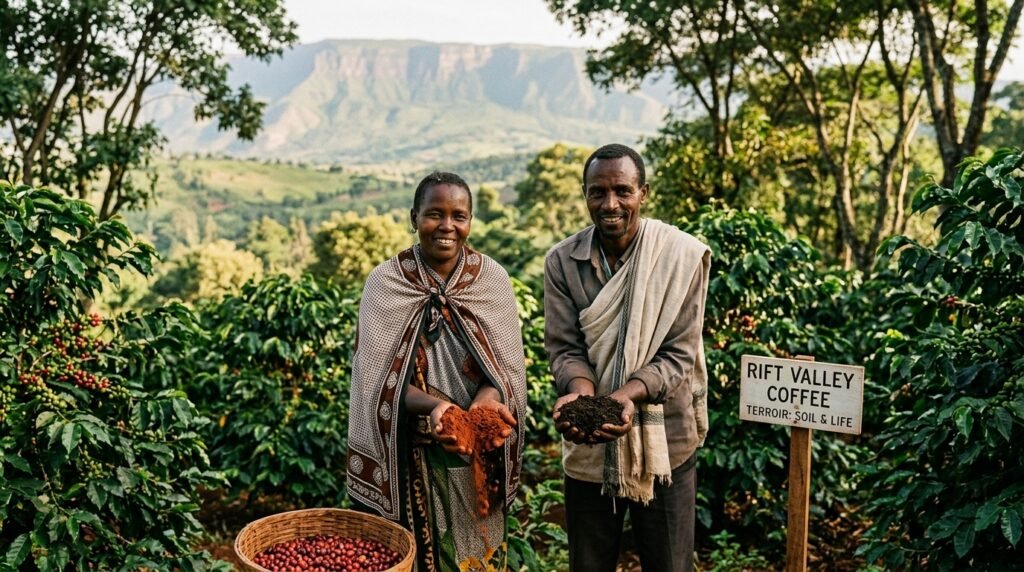
Both Ethiopia and Kenya sit along the East African Rift, a geologically active area with some of the richest soil on Earth.
In Kenya, the soil is famously “red” due to high iron content. In Ethiopia, the soil in regions like Sidamo and Guji is a deep, nutrient-dense loam. This soil provides the mineral foundation for the coffee’s chemical complexity.
When you drink an African coffee, you are quite literally tasting the minerals of the Rift Valley. It is a reminder that coffee is an agricultural product first, and a beverage second. The environment—the rain, the soil, and the shade-grown canopy—is what does 90% of the work. The roaster and the barista are simply trying not to ruin it.
8. The Challenge of Sustainability and Pricing
Despite producing the world’s best coffee, farmers in Ethiopia and Kenya face massive challenges.
In Ethiopia, the “Coffee Exchange” (ECX) system was designed to protect farmers but often made it difficult to trace coffee back to a specific small farm. In Kenya, the auction system is famous for its transparency but is currently undergoing significant political and structural changes.
As consumers, it is important to understand that these coffees should be expensive. The amount of manual labor required to pick wild heirloom cherries on a steep Ethiopian hillside or to manage the 72-hour fermentation in a Kenyan washing station is immense. When you pay a premium for these origins, you are supporting the preservation of coffee’s genetic history.
Summary: The African Flavor Map
| Origin | Key Regions | Classic Flavor Profile | Mouthfeel |
| Ethiopia (Washed) | Yirgacheffe, Sidamo | Jasmine, Lemon, Bergamot, Tea-like. | Light, Silky. |
| Ethiopia (Natural) | Guji, Harrar | Strawberry, Blueberry, Dried Fruit. | Creamy, Heavy. |
| Kenya | Nyeri, Kirinyaga | Blackcurrant, Grapefruit, Savory-Sweet. | Juicy, Powerful. |
Final Thoughts
The rise of African coffees has redefined the global palate. They have pushed us to see coffee as something more than just a caffeine delivery system. They have taught us that coffee can be as complex as a fine wine and as delicate as a blooming garden.
If you have stayed within the “comfort zone” of nutty Brazilian or chocolatey Colombian coffees, I invite you to take a leap into East Africa. It might be shocking at first—the acidity can be intense—but once you find that perfect cup of Yirgacheffe that tastes like liquid gold and flowers, there is no going back.
Africa is where coffee began, and as the specialty industry continues to evolve, it is where the future of flavor still resides. Whether it’s the wild, untamed forests of Ethiopia or the scientifically perfected slopes of Kenya, these origins represent the pinnacle of what the coffee bean can achieve.
Happy brewing, and may your cup always be bright!

Marcelo Clark combines professional industry experience with a passion for democratizing coffee knowledge. Specialist in extraction techniques and an advocate for single-origin beans, Marcelo uses this space to teach beginners how to appreciate the subtle notes of a well-crafted brew. His goal is to make learning about methods and origins simple, relevant, and inspiring for every reader’s daily routine.