You’ve likely stood in the coffee aisle or scrolled through an online roaster’s shop, feeling a bit overwhelmed. You see terms like “Natural Process,” “Light Roast,” “Full City,” and “Heirloom Varieties.” You might be tempted to just pick the bag with the prettiest label, but there is a hidden logic to these descriptions.
Coffee is not a “one size fits all” product. A bean that tastes like a vibrant, floral masterpiece in a pour-over might taste like a sour battery when pulled as an espresso. Conversely, a bean that creates a rich, syrupy latte might taste muddy and flat in a French Press.
Choosing the right coffee for your specific brewing method is about matching the solubility and flavor profile of the bean to the extraction physics of your equipment. In this guide, we are going to break down how to shop like a pro so that you never waste a gram of expensive specialty coffee again.
1. The Physics of Extraction: Why Methods Matter
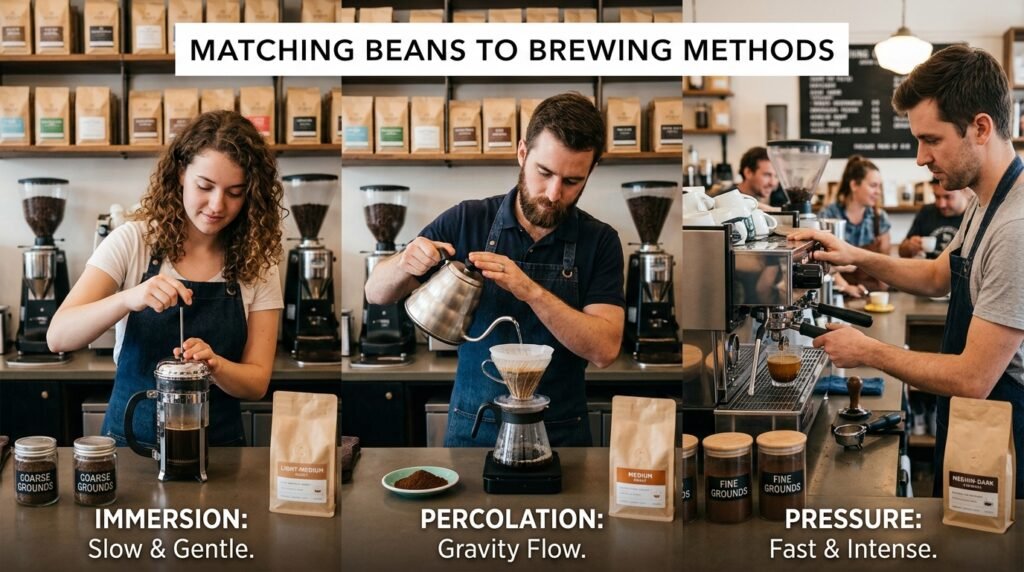
Before we look at the beans, we have to understand the tools. Brewing methods generally fall into three categories: Immersion (French Press, AeroPress), Percolation (V60, Chemex, Drip), and Pressure (Espresso, Moka Pot).
Each of these methods interacts with the coffee particles differently. Pressure methods extract very quickly and intensely, while immersion methods take their time. Because of this, the “ideal” bean for each method needs to have a specific roast level and density to ensure we don’t end up with a cup that is either under-developed or over-extracted.
As we’ve seen in The Chemistry of Extraction: Balancing Acid, Sweet, and Bitter, the goal of any brew is to find the sweet spot. Choosing the right bean is the first 50% of that battle.
2. Espresso: Searching for Soluability and Body
Espresso is the most “aggressive” way to make coffee. Because the water is forced through the grounds in about 30 seconds, the coffee needs to be highly “soluble”—meaning it needs to give up its flavors easily.
What to look for:
-
Roast Level: Medium to Medium-Dark. These roasts are more porous, allowing the water to penetrate the cells quickly.
-
Origins: Brazil, Colombia, or Guatemala. These regions typically offer the chocolate, nut, and caramel notes that create a balanced, syrupy espresso.
-
Process: Pulped Natural or Honey Process. As we explored in Central American Gems: Costa Rica and Panama Honey Processes, the extra sugars in these beans help create that thick, luxurious crema we all crave.
What to avoid:
Ultra-light roasted, high-acidity African coffees can be very difficult to “tame” in an espresso machine. Unless you are an expert at Calibrating Your Espresso: The Dialing-In Process, these beans often come out tasting sharp and vinegary.
3. Pour-Over (V60 & Chemex): The Quest for Clarity
If espresso is a shot of intensity, pour-over is a high-definition photograph. This method uses a paper filter to trap oils and “fines,” resulting in a clean, transparent cup that highlights the delicate, “sparkling” notes of the coffee.
What to look for:
-
Roast Level: Light to Medium-Light. You want the roast to stay “out of the way” so you can taste the terroir of the bean.
-
Origins: Ethiopia, Kenya, or Panama. These high-altitude regions produce the floral and fruity complexity that pour-overs are designed to showcase.
-
Process: Washed. This process provides the highest level of clarity and acidity, which is exactly what a V60 is meant to accentuate.
The Logic:
When you use a Chemex, you are looking for those tea-like qualities. A dark, oily roast will often clog the filter and result in a bitter, muddled taste that ruins the elegant experience of a percolation brew.
4. French Press: The Immersion Powerhouse
The French Press is an immersion method where the coffee sits in the water for several minutes. It uses a metal mesh filter, which allows the coffee’s natural oils to pass through into your cup.
What to look for:
-
Roast Level: Medium to Dark. The long contact time allows for a deep development of “heavy” flavors.
-
Body over Acidity: Look for beans described as “Full Bodied,” “Creamy,” or “Earthy.” Indonesian coffees (like Sumatra) are legendary in a French Press because their herbal, spicy notes thrive in an immersion environment.
-
Process: Natural Process. The “jammy” fruit notes of a natural process coffee pair beautifully with the heavy mouthfeel of a French Press.
Pro Tip:
Since the French Press doesn’t have a paper filter, any “off-flavors” in the bean will be amplified. This is a method that demands high-quality, clean beans despite its reputation for being a “rugged” brewer.
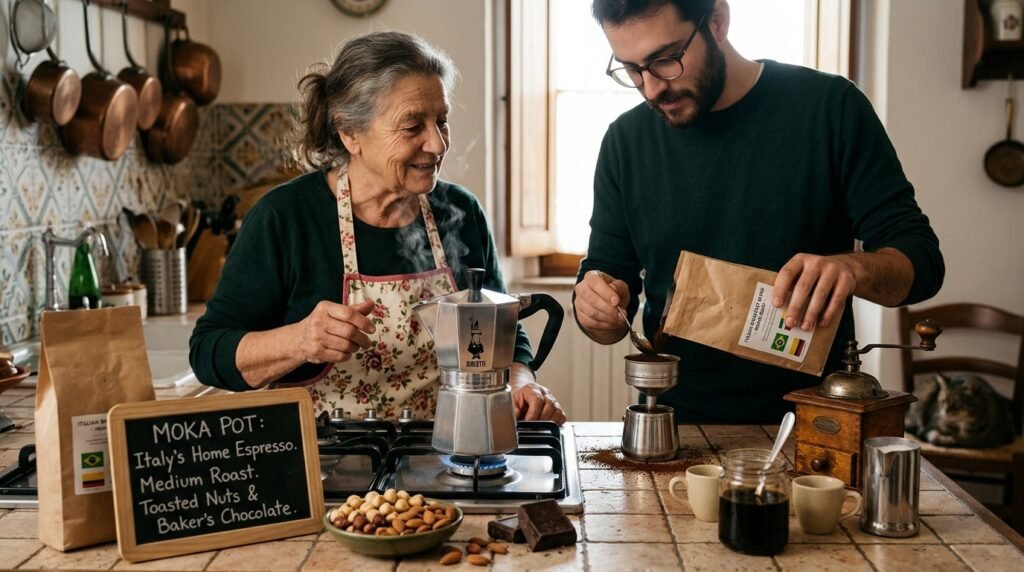
5. Moka Pot: Italy’s “Home Espresso”
The Moka Pot sits in a unique space between espresso and filter coffee. It uses steam pressure, but not nearly as much as a professional machine. This creates a very hot, concentrated, and rustic cup.
What to look for:
-
Roast Level: Medium. You want enough roast development to provide sweetness, but not so much that the high heat of the Moka Pot turns the coffee into an “ashy” mess.
-
Origins: Blend of Central and South American beans. A classic “breakfast blend” often works best here.
-
The “Italian” Profile: If you enjoy the traditional Moka Pot Ritual, look for beans with notes of toasted nuts, baker’s chocolate, or molasses.
6. Cold Brew: Time replaces Heat
Cold brew is the only method that doesn’t use heat to extract flavor. Instead, it uses time (12 to 24 hours). This results in a drink that is naturally very low in acidity and very high in sweetness.
What to look for:
-
The “Experimental” Beans: Cold brew is a great place to use those “funky” natural process coffees that might be too intense for a morning pour-over. The cold water extracts the fruit notes without the sharp acid.
-
Darker Roasts: If you like a “classic” chocolate-milk-style cold brew, a dark roast is perfect. The long steep time pulls out all the deep, roasty sugars without the bitterness often associated with hot-brewed dark coffee.
7. Reading the Label: The Secret Translator
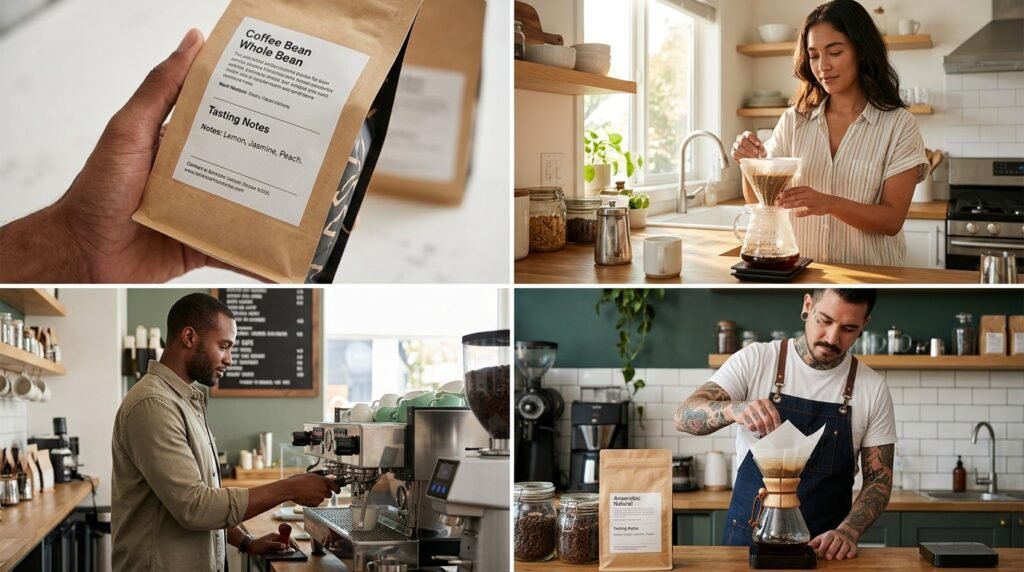
When you’re looking at a bag, the “Tasting Notes” are your best friend. Roasters don’t just put those there for fun; they are telling you what the bean wants to be.
-
“Notes of Lemon, Jasmine, Peach”: This is a high-acidity coffee. Best for V60, Chemex, or Aeropress.
-
“Notes of Chocolate, Almond, Brown Sugar”: This is a high-sweetness, balanced coffee. Best for Espresso, Moka Pot, or French Press.
-
“Notes of Wine, Strawberry, Fermented Fruit”: This is a “Natural” or “Anaerobic” coffee. Best for Cold Brew or for adventurous pour-over drinkers.
8. Why Freshness is the Ultimate Buying Guide
No matter which method you choose, the date on the bag is the most important piece of information. As we’ve learned in the science of storage, coffee is a fresh agricultural product.
-
For Espresso: Look for beans roasted 7–14 days ago. Espresso needs some CO2 to create crema, but too much gas makes the shot erratic.
-
For Filter/Pour-Over: Look for beans roasted 3–10 days ago. You want the peak aromatics before they begin to fade.
Buying “Old” coffee is the fastest way to ruin a good brewing method. If a bag doesn’t have a “Roasted On” date (and only has a “Best By” date), put it back on the shelf. You deserve to know when your coffee was born.
Summary: The Brewing Matchmaker
| Method | Ideal Roast | Preferred Process | Flavor Profile Goal |
| Espresso | Medium / Med-Dark | Honey / Pulped Natural | Chocolate, Syrupy, Sweet. |
| Pour-Over | Light / Med-Light | Washed | Floral, Tea-like, Bright. |
| French Press | Medium / Dark | Natural | Heavy, Creamy, Nutty. |
| Moka Pot | Medium | Washed / Natural Blend | Bold, Toasted, Intense. |
| Cold Brew | Any (Dark is classic) | Natural / Experimental | Smooth, Low-Acid, Berry. |
Final Thoughts
Choosing the right coffee is about more than just “quality”—it’s about intent. The roaster had a vision for that bean, and the equipment you have in your kitchen is the lens through which you see that vision.
By matching the roast level, the origin, and the process to your brewing method, you are ensuring that the physics of the water and the chemistry of the bean are working together rather than fighting each other. Don’t be afraid to experiment, but use these guidelines as your foundation.
The next time you’re at the shop, don’t just buy a “good” coffee. Buy the right coffee for your morning ritual. Your palate (and your equipment) will thank you.
Happy brewing, and may your beans always match your brewer!

Marcelo Clark combines professional industry experience with a passion for democratizing coffee knowledge. Specialist in extraction techniques and an advocate for single-origin beans, Marcelo uses this space to teach beginners how to appreciate the subtle notes of a well-crafted brew. His goal is to make learning about methods and origins simple, relevant, and inspiring for every reader’s daily routine.