We’ve all been there. It’s 7:00 AM on a Tuesday, you’re stumbling toward the kitchen, and you reach for the coffee bag only to realize it’s empty. Or worse, you find a bag in the back of the pantry that was roasted six months ago and now smells more like an old shoe than a vibrant Ethiopian Yirgacheffe.
The “Grocery Store Gap” is real. Most coffee found on supermarket shelves was roasted weeks, if not months, before it reached the aisle. By the time you buy it, the delicate oils have oxidized, and the complex aromatics have vanished.
This is where the subscription revolution comes in. Over the last decade, the specialty coffee industry has mastered the art of the “Direct-to-Consumer” model. Now, you can have world-class beans, roasted by masters, delivered to your doorstep within 48 hours of leaving the cooling tray.
But with hundreds of services available, how do you choose the right one? Is a “Curated” box better than a “Single Roaster” plan? How does the shipping impact the flavor? In this guide, we are going to decode the world of coffee subscriptions so you can ensure your hopper is always full of the good stuff.
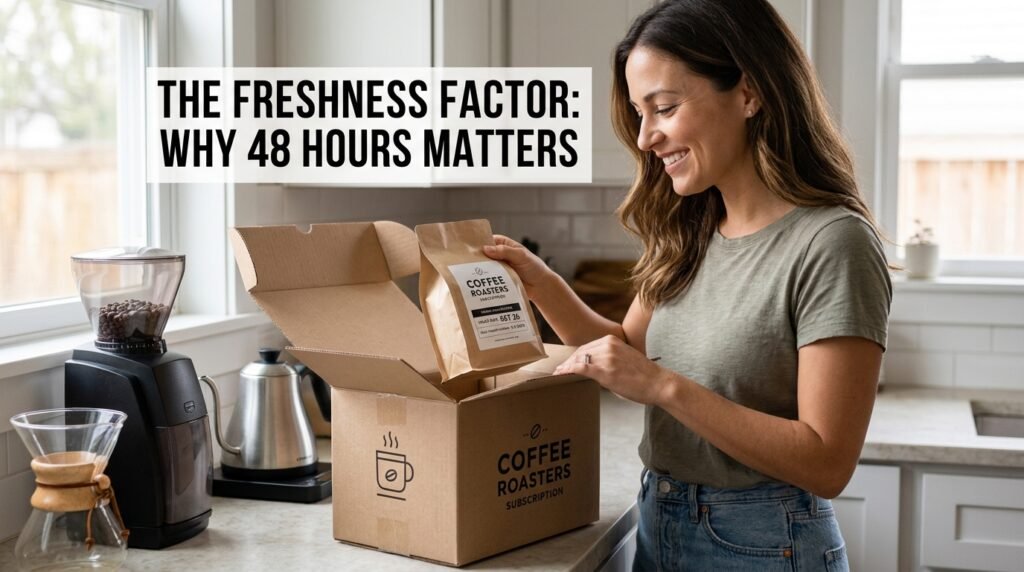
1. The Freshness Factor: Why 48 Hours Matters
The primary reason to use a subscription service isn’t just convenience; it’s chemistry. As we explored in The Science of Coffee Storage: How to Keep Your Beans Fresh for Months, coffee is a volatile product. Once the roasting process ends, the beans begin a process called “degassing,” where they release $CO_2$ and other gases. While this gas is essential for creating crema in espresso, it also marks the beginning of the coffee’s decline.
Most specialty subscriptions operate on a “Roast-to-Order” schedule. This means the beans aren’t sitting in a warehouse; they are literally roasted because you ordered them. Receiving beans that are 3 to 5 days off the roast is the “Sweet Spot.” It gives the coffee enough time to settle but ensures you are catching the peak of its flavor profile.
2. Multi-Roaster vs. Single Roaster: Choosing Your Path
When you start looking for a subscription, you’ll generally find two different business models.
The Single Roaster Subscription:
This is when you subscribe directly to a company like Stumptown, Blue Bottle, or Onyx.
-
The Pros: You get a deep dive into that specific roaster’s style. You know exactly what their “house profile” is, and you build a relationship with their brand.
-
The Cons: You are limited to their specific sourcing and roasting philosophy. If they prefer dark roasts and you want to try a light-roasted Kenyan, you might be out of luck.
The Multi-Roaster (Curated) Platform:
Services like Trade, Mistobox, or BeanBox act as a “middleman.” They partner with dozens of different roasters across the country and send you a different bag every time.
-
The Pros: Variety. One week you might have a chocolatey Brazilian from a roaster in New York, and the next, a floral Panamanian from a shop in Oregon.
-
The Cons: Because they are managing thousands of orders from different locations, the shipping times can occasionally be less predictable than going direct.
3. The Algorithm vs. The Palate: How “Curated” Works
Many modern subscription services use “Flavor Quizzes” to match you with beans. They ask questions like: “How do you take your coffee?” or “Do you like the taste of blueberries or dark chocolate?”
While these algorithms are surprisingly accurate, they rely on you knowing your own preferences. This is where How to Choose the Best Coffee for Each Brewing Method becomes a vital piece of knowledge. If the algorithm suggests an ultra-light roast but you only have a French Press, you might find the result too sour.
A good subscription service should allow you to “veto” certain profiles. If you hate smoky, dark roasts, the algorithm should learn that over time, narrowing down its search until every bag delivered feels like it was hand-picked for your specific taste buds.
4. Shipping Logistics: The Hidden Science
How a subscription service ships your coffee is just as important as the coffee itself.
Specialty coffee bags are designed with “One-Way Valves.” These allow the $CO_2$ to escape without letting oxygen in. When a subscription service puts that bag in a shipping box, they are essentially creating a protective “micro-environment.”
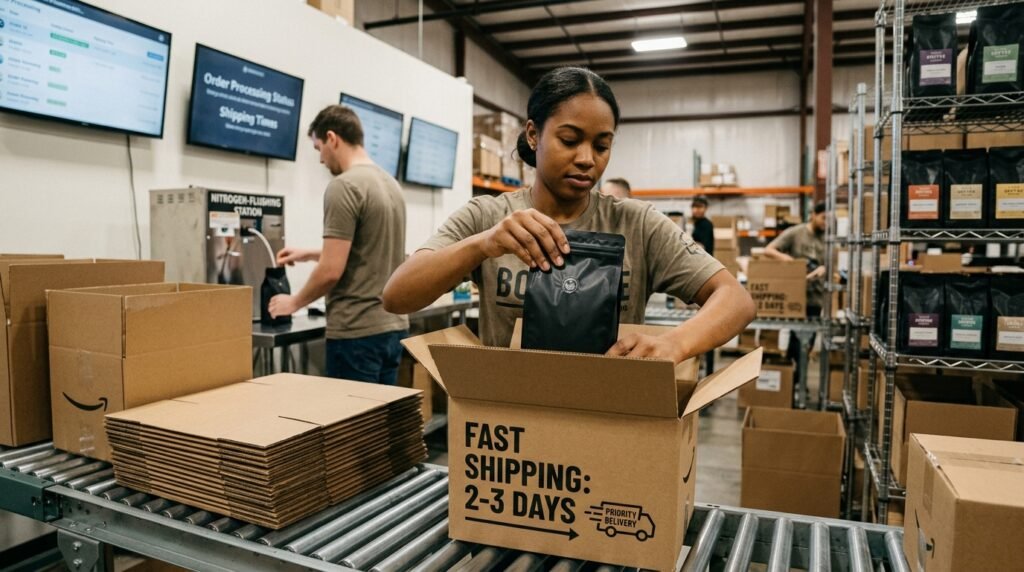
However, you should look for services that prioritize fast shipping (2–3 days). Coffee that sits in a hot delivery truck for a week will degrade much faster than coffee that is moved quickly. Some premium services even use nitrogen-flushed packaging to further stall the oxidation process during transit.
5. Frequency and Quantity: Avoid the “Coffee Backlog”
One of the biggest mistakes newcomers make is over-subscribing. You think you drink more coffee than you actually do, and suddenly, you have four unopened bags sitting on the counter.
Most services offer flexible schedules:
-
Weekly: Best for households with 2+ heavy drinkers.
-
Bi-Weekly (Every 2 weeks): The “Goldilocks” zone for the average daily drinker (one 12oz bag typically lasts 10 to 14 days).
-
Monthly: Best for the occasional brewer or those who like to supplement their subscription with local finds.
The goal is to finish your current bag just as the next one arrives. This ensures you never have to resort to the “back-of-the-pantry” emergency beans.
6. Sourcing and Ethics: Subscribing to a Cause
One of the “hidden” benefits of a specialty subscription is the transparency. When you buy a bag of “Original Blend” at the store, you have no idea who grew it or how much they were paid.
Most high-end subscriptions provide detailed “Origin Reports.” They tell you the name of the farm, the altitude, and often the exact price paid to the farmer (which is usually significantly higher than the Fair Trade minimum).
As we discussed in our guide to Sustainable Coffee: What ‘Organic’ and ‘Fair Trade’ Really Mean, your subscription is a direct vote for the future of the industry. By cutting out the multiple layers of commodity middlemen, more of your money goes back to the people who actually grew the fruit.
7. The Equipment Match: Does Your Gear Fit Your Plan?
Before you sign up, you need to be honest about your equipment.
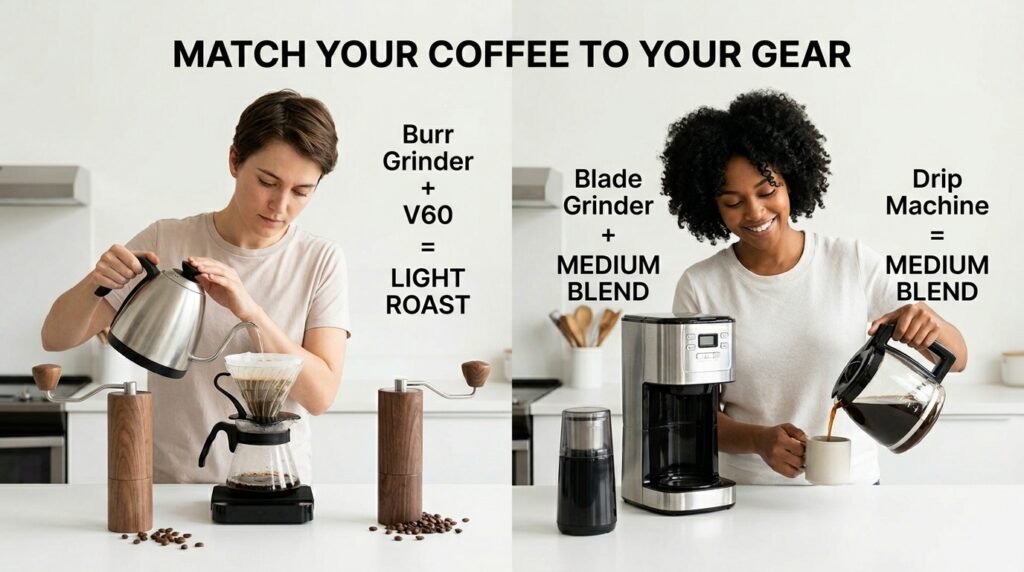
If you have a high-end burr grinder and a V60, you will benefit most from a “Light Roast / Single Origin” subscription. The nuanced, floral notes of these beans will be clear and vibrant in your cup.
However, if you are using an automatic drip machine or a blade grinder (and haven’t yet read Why Blade Grinders are Killing Your Coffee), those delicate single-origin beans might get “lost in translation.” In this case, a “Medium Roast / Blend” subscription is often a better choice. Blends are designed to be more forgiving and consistent, providing a reliable “coffee-flavored coffee” experience every morning.
8. Troubleshooting Your Subscription
What happens if you hate a bag? It will happen eventually. Taste is subjective, and even the best roaster can produce a profile that just doesn’t sit right with you.
-
Don’t cancel immediately: Most services allow you to “Rate” your bags. If you give a bag a low rating and explain why (e.g., “Too acidic”), the system will adjust your future shipments.
-
Check your water: Before blaming the roaster, ensure your water is filtered. A “bad” bag is often just a “good” bag reacting poorly to tap water minerals.
-
Adjust your grind: Some roasts are more “soluble” than others. If a subscription bag tastes thin, try grinding a bit finer to pull out more body.
Summary: Subscription Comparison Table
| Service Type | Target Audience | Variety Level | Cost Range |
| Direct (Single Roaster) | The “Brand Loyalists” | Low |
$$-$$
$ |
| Curated (Multi-Roaster) | The “Explorers” | High |
$$-$$
$ |
| Budget (Value Packs) | The “Daily Drinkers” | Medium | $ |
| Premium (Rare/Gesha) | The “Connoisseurs” | Very High |
|
| Cold Brew Specific | The “Iced Lovers” | Low/Medium | $$ |
Final Thoughts
A coffee subscription is more than just a delivery service; it is an education. Each bag that arrives is a new chapter in the story of global agriculture. One week you are tasting the volcanic soil of Guatemala, and the next, you are experiencing the high-altitude citrus of Kenya.
It removes the “choice paralysis” of the grocery store and replaces it with the curated expertise of professional roasters. While it might cost a few dollars more than a tin of commodity coffee, the value is found in the freshness, the ethics, and the sheer joy of waking up to a kitchen that smells like a world-class cafe.
If you’ve never tried a subscription, start with a “Variety” pack. See what speaks to you. You might find that the “perfect cup” you’ve been searching for was just a mailbox away.
Happy brewing, and may your hopper never be empty!
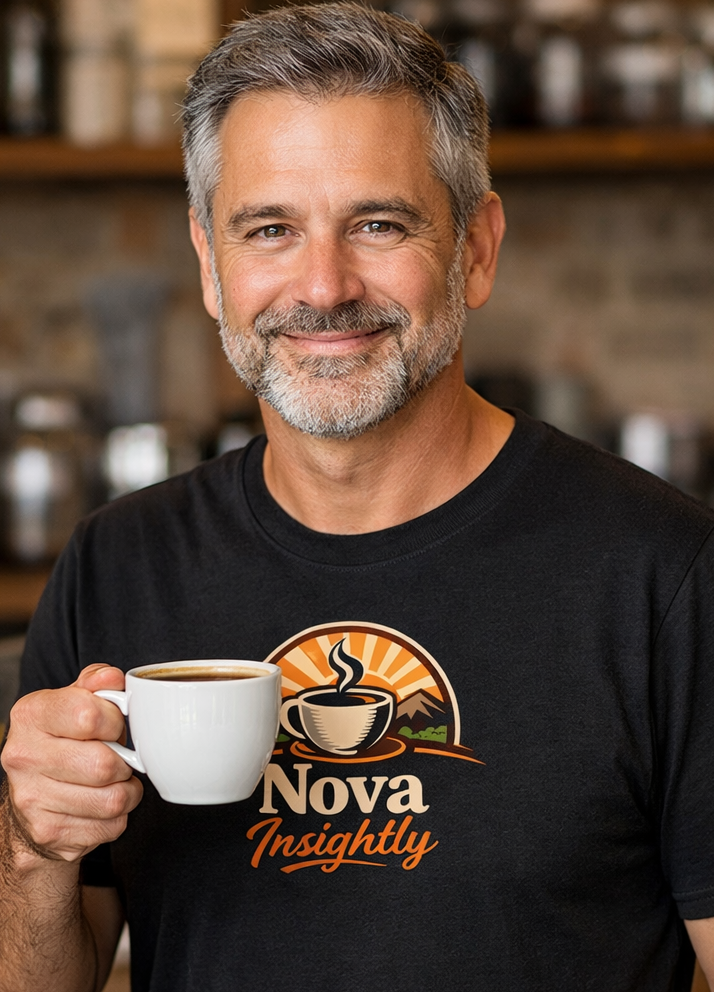
Marcelo Clark combines professional industry experience with a passion for democratizing coffee knowledge. Specialist in extraction techniques and an advocate for single-origin beans, Marcelo uses this space to teach beginners how to appreciate the subtle notes of a well-crafted brew. His goal is to make learning about methods and origins simple, relevant, and inspiring for every reader’s daily routine.