Walking down the coffee aisle of a typical American supermarket can be an overwhelming experience. You are faced with a wall of shiny bags, vibrant labels, and buzzwords like “gourmet,” “premium,” and “dark roast.” For years, I made the same mistake many people do: I chose the bag with the prettiest design or the one that happened to be on sale.
Most of the time, I ended up with a cup of coffee that tasted like burnt toast or, worse, paper.
Living here in the U.S., we are lucky to have access to coffee from all over the world, but the abundance of choice is a double-edged sword. After a lot of trial and error—and many wasted bags of beans—I finally cracked the code.
Here is how I navigated the supermarket shelves to find gold in a sea of mediocrity.
The Myth of the “Premium” Label
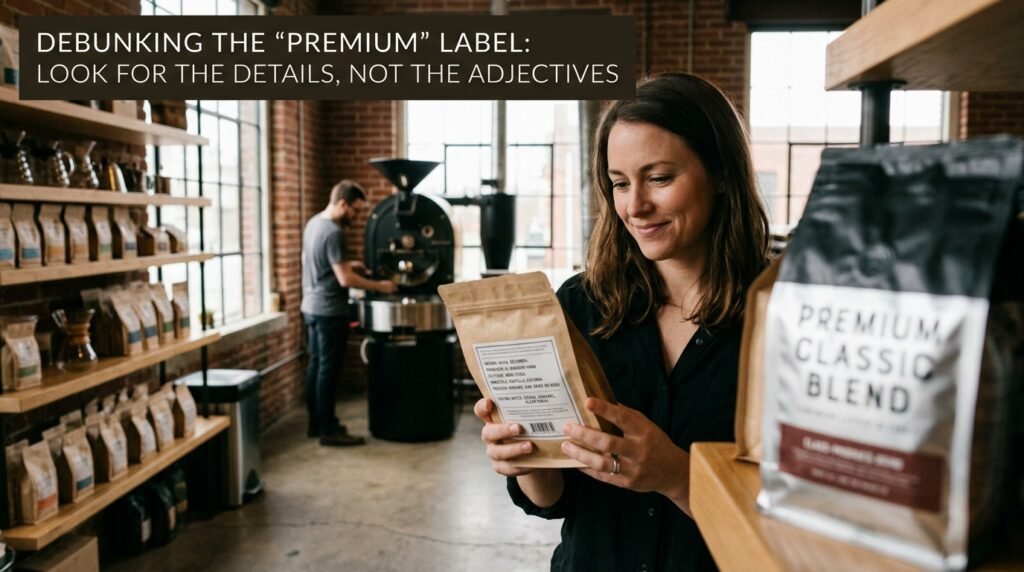
The first thing I had to unlearn was trusting the marketing adjectives. In the coffee world, words like “Professional Blend” or “Classic Roast” don’t actually mean anything regarding quality. They are marketing terms designed to make mass-produced, low-grade beans sound sophisticated.
What I started looking for instead were specifics.
A quality bag of coffee will tell you exactly what is inside. If a label just says “100% Coffee,” I usually put it back. Think about it: if you bought a bottle of wine and the label just said “100% Grapes,” you’d be suspicious, right? You want to know the region, the variety, and the story behind it.
The Roast Date: My Golden Rule
This was the biggest “aha!” moment for me. In the past, I would look for the “Best By” date. This is a trap. Most commercial coffee brands set their “Best By” date for a year or more after the coffee was roasted.
Coffee is a fresh agricultural product. Once it’s roasted, the clock starts ticking. The oils begin to oxidize, and the delicate aromas start to fade.
Now, I only buy bags that list a “Roasted On” date. Ideally, I look for something roasted within the last 2 to 4 weeks. If a bag doesn’t have a roast date, it’s a sign that the manufacturer cares more about shelf life than flavor. Freshness is the single most important factor in how your morning cup will taste.
Whole Bean vs. Pre-Ground: The Freshness Battle
I used to buy pre-ground coffee because it was convenient. I didn’t want to deal with a grinder at 6:00 AM. However, I learned that ground coffee loses its flavor exponentially faster than whole beans.
The moment coffee is ground, the surface area increases, exposing it to oxygen. Within days—sometimes hours—the vibrant flavors disappear, leaving behind only the bitter, generic “coffee” taste.
I decided to invest in a simple burr grinder. Now, I buy whole beans, and the difference is night and day. When you open a bag of whole beans that were roasted recently, the aroma fills the entire kitchen. That’s an experience you just don’t get with a tin of pre-ground coffee.
Understanding the Origin (And Why It Matters)
As I spent more time reading labels, I started to notice patterns. I learned that coffee isn’t just “coffee flavor.” It’s a fruit, and where it grows changes everything.
-
Latin American Coffees (Colombia, Guatemala, Brazil): I look for these when I want something familiar, chocolatey, and nutty. They are great for my everyday morning mug.
-
African Coffees (Ethiopia, Kenya): These were a revelation to me. They can taste like blueberries, jasmine, or even lemon tea. They are bright and acidic.
-
Asian Coffees (Sumatra, Vietnam): These tend to be earthy, heavy-bodied, and spicy.
By paying attention to the origin listed on the bag, I stopped gambling with my money. I started buying based on the flavor profile I was in the mood for that week.
The Packaging Matters More Than You Think
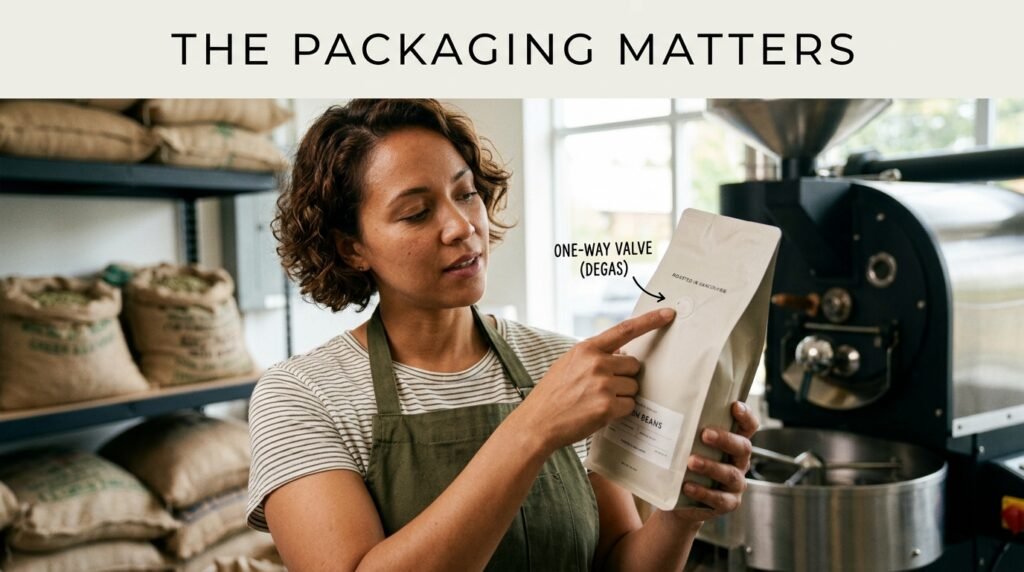
Have you ever noticed that little circular valve on coffee bags? For a long time, I thought it was just there so I could squeeze the bag and smell the coffee. While that’s a nice bonus, that’s not its primary job.
It’s a one-way degas valve.
Freshly roasted coffee releases carbon dioxide (CO2). If the bag were airtight, it would explode. If the bag were open to the air, the coffee would go stale. The valve allows the gas to escape without letting oxygen in. If I see a coffee bag that is just a simple folded paper bag with no valve, I know that coffee is likely already stale or wasn’t fresh when it was packed.
Price vs. Value: Finding the Sweet Spot
I used to think that $15 or $20 for a 12oz bag of coffee was crazy. I would much rather pay $7 for a huge plastic tub. But then I did the math.
A standard bag of specialty coffee makes about 20 to 25 cups of coffee. If I pay $20 for a high-quality bag, that’s less than $1.00 per cup. Compare that to the $5.00 I was spending at the local drive-thru for a cup that was often mediocre.
By choosing better beans at the supermarket, I was actually saving money and significantly upgrading my daily life.
My Simple Checklist for Your Next Trip
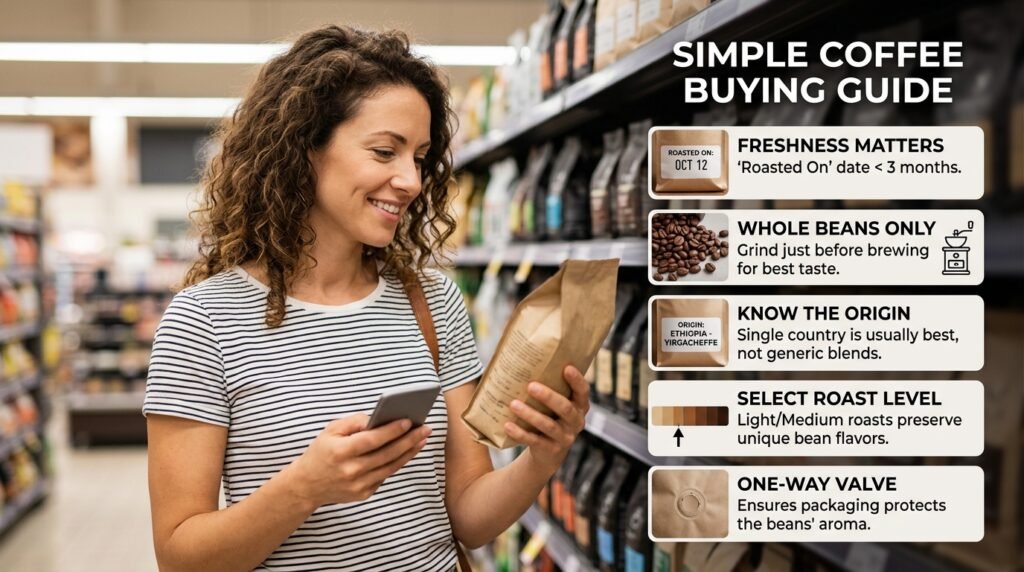
Next time you find yourself standing in that aisle, don’t let the bright lights and fancy fonts confuse you. Run through this mental checklist that I use every single week:
-
Check for a “Roasted On” date. If it’s older than 3 months, move on.
-
Look for Whole Beans. Your taste buds will thank you.
-
Find the Origin. Is it a single country or a “non-descript blend”?
-
Check the Roast Level. “Light” or “Medium” roasts usually preserve the unique flavors of the bean better than “Dark” roasts, which often just taste like the roaster itself.
-
Look for the Valve. Ensure the packaging is designed to keep the beans protected.
Final Thoughts
Learning to buy coffee at the supermarket is a journey of reclaiming your morning ritual. It took me a few “bad” bags to realize that I had the power to choose better. You don’t need to be a professional barista to enjoy a world-class cup of coffee in your pajamas. You just need to know how to read between the lines on the packaging.
Since I started paying attention to these details, my kitchen smells better, my mornings are brighter, and I haven’t wasted a single cent on “burnt” beans.
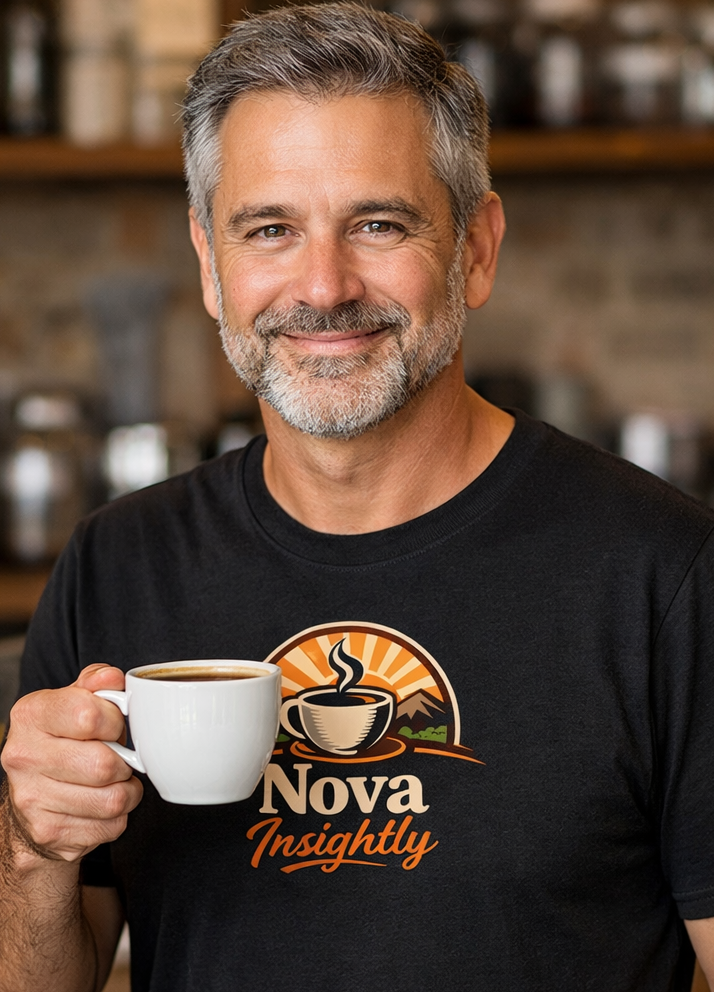
Marcelo Clark combines professional industry experience with a passion for democratizing coffee knowledge. Specialist in extraction techniques and an advocate for single-origin beans, Marcelo uses this space to teach beginners how to appreciate the subtle notes of a well-crafted brew. His goal is to make learning about methods and origins simple, relevant, and inspiring for every reader’s daily routine.