We all like to think we are savvy consumers. We compare prices, read reviews, and look for the best deals. But when it comes to coffee, I spent years being a complete amateur while thinking I was a connoisseur. I was making “rookie mistakes” every single week at the grocery store, and the worst part was that I didn’t even know it.
I thought that if a coffee was expensive, it was good. I thought that if it was “dark,” it was strong. I thought that if the bag was pretty, the beans were artisanal.
After a decade of brewing at home and eventually diving deep into the specialty coffee scene here in the U.S., I look back at my old shopping habits and cringe. If you want to stop wasting money and start drinking coffee that actually excites you, you need to recognize these common pitfalls. Here are the biggest mistakes I made, and the simple ways you can avoid them.
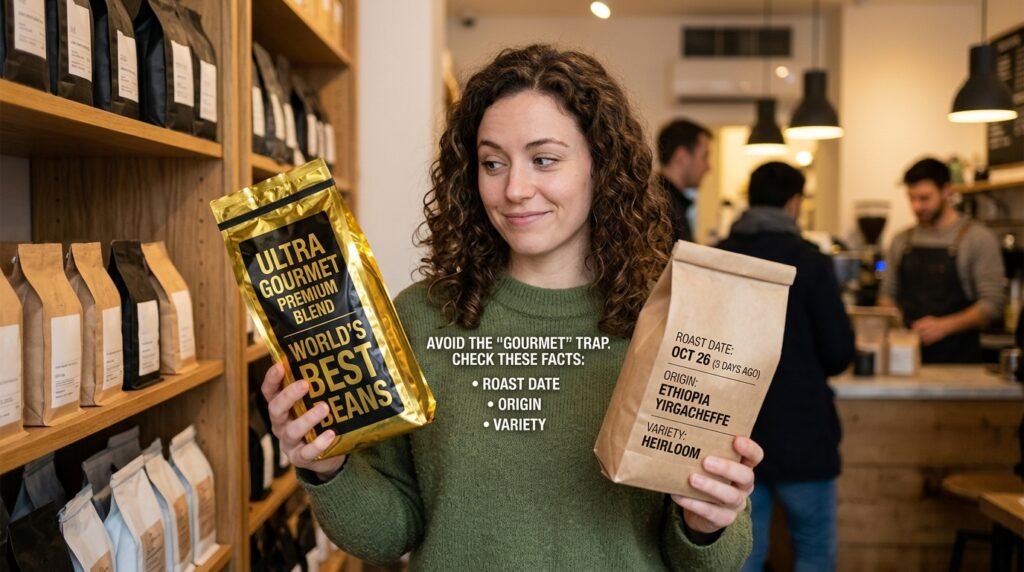
1. Falling for the “Gourmet” and “Premium” Marketing Trap
This was my first and most frequent mistake. I would walk into a store, see a shiny gold bag labeled “100% Gourmet Arabica,” and think I was buying the top-tier stuff.
Here is the truth: “Gourmet” and “Premium” are not regulated terms in the coffee industry. Any company can put those words on a bag of low-quality, stale beans. It is pure marketing. In fact, most truly high-quality roasters don’t even use those words because they prefer to let the technical details (like the roast date and origin) speak for themselves.
I learned that How I Read Coffee Labels to Understand What I’m Really Buying is the only way to bypass this trap. Instead of looking for adjectives, look for facts: where was it grown, when was it roasted, and what variety of bean is it?
2. Prioritizing Quantity Over Quality
I grew up in a household where “value” meant getting the largest container for the lowest price. I applied this logic to coffee, buying those massive three-pound plastic tubs.
The problem? Coffee is a fresh agricultural product, like bread or milk. Once you open that giant tub, the clock starts ticking. Oxygen rushes in, and the oils begin to go rancid. By the time I was halfway through the tub, the coffee tasted like dusty cardboard.
I was “saving” money on the price per ounce, but I was “wasting” money because half of the coffee I drank was stale and unpleasant. Now, I buy smaller 12oz bags more frequently. It ensures that every cup I drink is at its peak. This realization was a core part of What I Wish I Knew Before Buying My First Specialty Coffee, where I finally understood that “value” is about the experience, not just the volume.
3. Ignoring the “Roasted On” Date
For the longest time, I would check the “Best By” date. I thought, “Hey, this expires in 2027, it must be fresh!”
This is perhaps the most common mistake in the world. As I’ve mentioned before, “Best By” is a safety date, not a flavor date. Coffee is at its absolute best between 7 and 30 days after roasting. Commercial brands often sit on warehouse shelves for months before they even reach the supermarket.
If you aren’t checking for a specific day, month, and year of roasting, you are gambling with your palate. I finally stopped guessing once I started using The Simple Trick I Use to Identify Fresh Coffee Beans at the Store, which involves checking the physical state of the bag and the degassing valve.
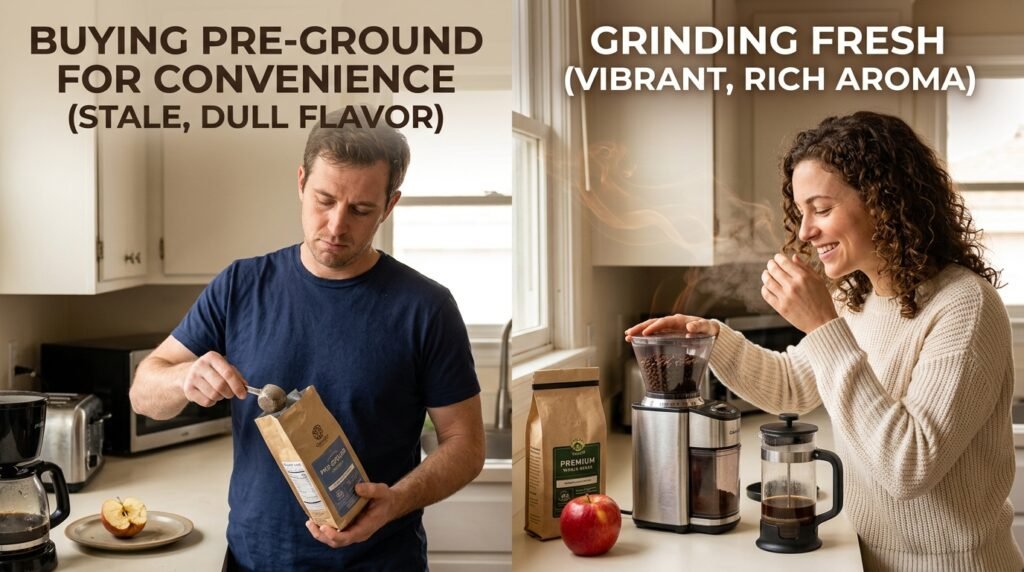
4. Buying Pre-Ground Coffee for “Convenience”
I get it. Mornings are busy. You want to just scoop and brew. I used to be the same way. But buying pre-ground coffee is the fastest way to kill the flavor of even the most expensive beans.
Think of an apple. If you slice it and leave it on the counter, it turns brown and loses its crispness in minutes. Ground coffee does the same thing, but even faster because its surface area is so much larger. When you buy pre-ground, you are essentially buying “pre-staled” coffee.
Investing in a decent burr grinder and spending sixty seconds grinding my beans every morning was the single biggest upgrade I ever made to my life. The aroma alone is worth the extra effort.
5. Thinking “Dark Roast” Means “Strong Coffee”
I used to reach for the darkest, oiliest beans I could find because I wanted that “strong” caffeine kick. I didn’t realize that roasting coffee longer actually reduces the caffeine content slightly (though the difference is negligible) and destroys the unique flavors of the bean.
A dark roast isn’t “stronger” in terms of caffeine; it’s just more “bitter.” If you only buy dark roasts, you are missing out on the incredible floral, fruity, and sweet notes that exist in medium and light roasts. Don’t let the “Bold” label fool you into thinking you’re getting more energy; you’re often just getting more “burnt.”
6. Not Storing the Beans Correctly
After I bought good coffee, I used to make the mistake of putting it in the fridge or freezer. I had heard somewhere that this kept it fresh.
I was wrong.
The fridge is a humid environment full of odors. Coffee is porous—it absorbs smells. If you put your coffee in the fridge next to an onion, your coffee will eventually taste like an onion. Furthermore, taking coffee in and out of the freezer causes condensation to form on the beans, which ruins the delicate oils.
The best way to store coffee is in a cool, dark place (like a pantry) in an airtight container. Keep it away from heat, light, and moisture.
7. Being Afraid to Try New Origins
I was a “Colombian Coffee” person for years. I thought that was the gold standard. I was afraid to try beans from Ethiopia, Sumatra, or Burundi because I didn’t recognize the names or I was worried I wouldn’t like the taste.
This “flavor loyalty” was a mistake. Coffee is as diverse as the countries it grows in. By sticking to one origin, I was missing out on the berry-like sweetness of Africa and the earthy, spicy richness of Southeast Asia. Don’t be afraid to experiment. The worst that can happen is you find a flavor you don’t love—but the best that can happen is you find your new favorite ritual.
8. Buying Beans Based on the “Price Tag” Alone
In the supermarket, there is often a middle-ground price point that is a “no man’s land.” You have the very cheap stuff ($5) and the “fancy” looking stuff ($12). I used to buy the $12 bag thinking it was a massive upgrade.
Often, that $12 bag is just the $5 coffee with better branding. True quality coffee—the kind where the farmer was paid fairly and the beans are specialty grade—usually starts around the $16-$20 mark for a 12oz bag in the U.S.
If you are going to pay more than the “budget” price, make sure you are getting actual data on the bag to support that price. Don’t pay for a pretty illustration; pay for a roast date and a farm name.
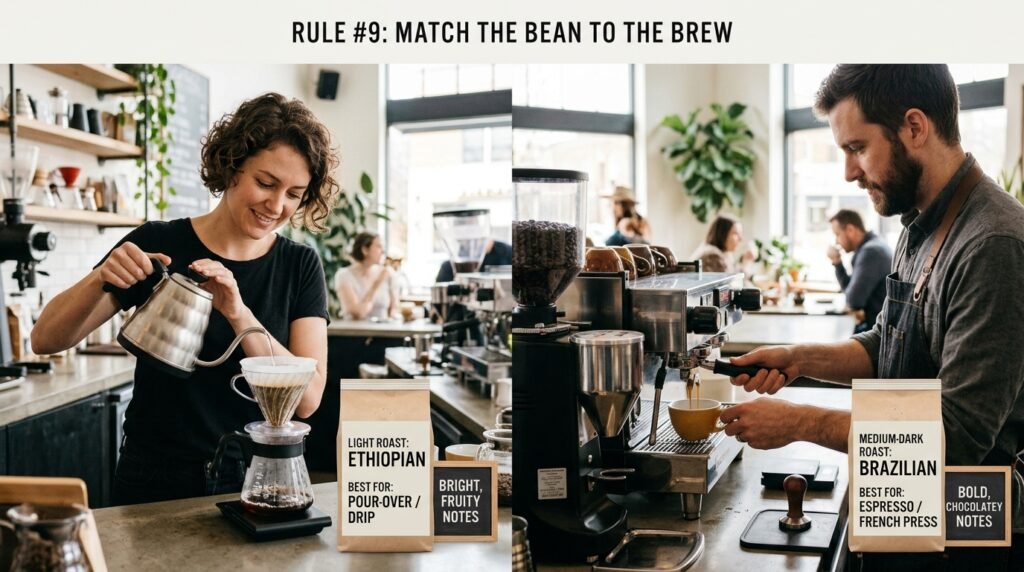
9. Not Matching the Bean to the Brewing Method
I used to buy a bag of beans and try to use it for everything: drip, espresso, and cold brew.
While you can do this, some beans are better suited for specific methods. For example, a very light, acidic Ethiopian bean might taste incredible as a pour-over, but it might be too “sour” and intense as an espresso. Conversely, a heavy Brazilian bean might be great for an espresso or a French Press but might feel a bit “muddy” in a paper filter.
Nowadays, I check the tasting notes. If I want a French Press, I look for chocolate and nut notes. If I’m making a summer cold brew, I look for bright, fruity notes.
10. Forgetting the Human Element
The final mistake I made was forgetting that coffee is a human story. I used to view it as just another item on my grocery list, like salt or flour.
When I started buying from roasters who talk about their relationship with the farmers, my appreciation for the drink changed. Coffee that is ethically sourced and “Direct Trade” almost always tastes better. Why? Because when farmers are paid a premium, they have the resources to take better care of the plants, use better processing methods, and pick only the ripest cherries.
When you buy cheap, anonymous coffee, you are often supporting a system that exploits the people at the beginning of the chain. Buying quality isn’t just a treat for your taste buds; it’s a more ethical way to consume.
How to Shop Like a Pro: A 30-Second Summary
If you want to avoid my mistakes, just follow these three “Golden Rules” on your next trip:
-
Check the Roast Date: No date? No deal.
-
Whole Bean Only: Buy a grinder. It’s the best $30-$50 you’ll ever spend.
-
Specifics Matter: Look for the farm name, the altitude, and the process (Washed/Natural).
Final Thoughts
We all make mistakes when we start a new hobby or try to improve our lifestyle. My “coffee journey” was full of them. But each mistake taught me something about what makes a cup of coffee truly special.
You don’t have to be a scientist or a professional taster to enjoy great coffee. You just have to be a little bit more curious and a little less susceptible to marketing buzzwords.
Next time you are in the coffee aisle, take a breath, ignore the “Gourmet” stickers, and look for the truth on the label. Your mornings will never be the same again. Happy brewing!
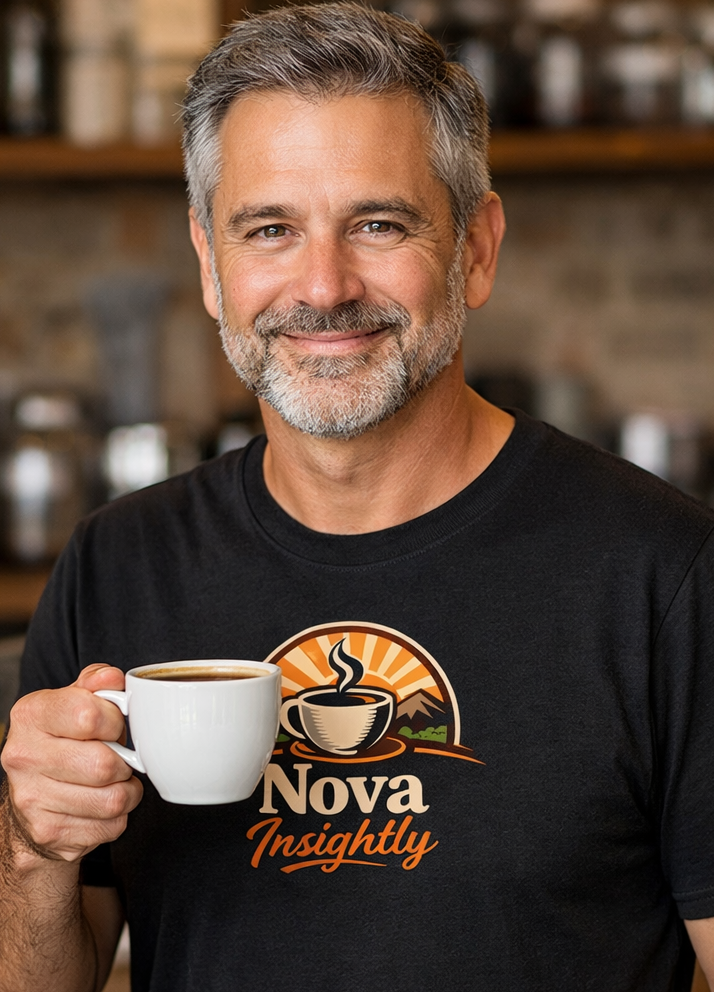
Marcelo Clark combines professional industry experience with a passion for democratizing coffee knowledge. Specialist in extraction techniques and an advocate for single-origin beans, Marcelo uses this space to teach beginners how to appreciate the subtle notes of a well-crafted brew. His goal is to make learning about methods and origins simple, relevant, and inspiring for every reader’s daily routine.