One of the biggest lessons I learned on my coffee journey is that there is no such thing as a “universal” coffee bean. In my early days, I used to think that a good bean was a good bean, regardless of how I prepared it. I would buy a beautiful, light-roasted Ethiopian coffee and try to force it through my espresso machine, only to end up with a cup that tasted like sour battery acid. Then, I’d take a dark-roasted, heavy-bodied Sumatran and try to make a delicate pour-over, resulting in a muddy, bitter mess.
It took me a while to realize that the brewing method you choose acts like a lens. It magnifies certain characteristics of the coffee while hiding others. If you choose the wrong “lens” for your “subject,” the image—or in this case, the flavor—will be blurry and disappointing.
Living in a place where I have access to everything from a classic French Press to a modern AeroPress, I’ve had to learn how to match the bean to the machine. Here is my personal system for choosing the right coffee based on how I plan to brew it.
The Science of Extraction and Flavor
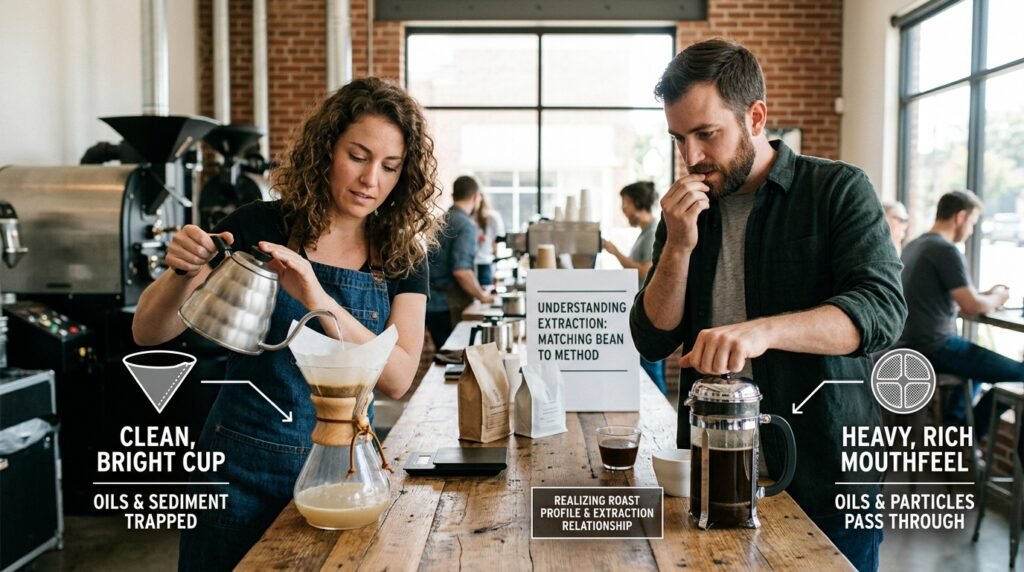
To understand why matching is important, we have to look at how different methods extract flavor. Some methods use a paper filter, which traps oils and sediment, leading to a “clean” and “bright” cup. Others use a metal mesh (like a French Press), which allows oils and tiny particles to pass through, creating a “heavy” and “rich” mouthfeel.
When I’m shopping, I’m essentially looking for beans whose natural chemical profile will be complemented by the physics of my brewer. I’ve realized that How I Tell the Difference Between Cheap Coffee and Quality Coffee often comes down to how well the roaster understood this relationship when they chose the roast profile for those specific beans.
1. The Pour-Over (V60, Chemex, Kalita)
The pour-over is my favorite way to start a quiet weekend morning. Because these methods use paper filters, they excel at highlighting clarity and acidity. They allow you to taste the “tea-like” qualities of a coffee.
What I look for: I almost always go for Light to Medium-Light Roasts. Specifically, I look for “Washed” process coffees from East Africa (Ethiopia, Kenya) or high-altitude regions in Central America. These beans have delicate floral and citrus notes that would get lost in a more aggressive brewing method but shine beautifully through a paper filter.
If I were to use a very dark, oily bean in a Chemex, the filter would strip away the body, leaving me with something that just tastes like thin, smoky water. For this method, clarity is king.
2. The French Press (The Immersion Method)
The French Press is the opposite of the pour-over. It’s an immersion method, meaning the coffee sits in the water for several minutes. Because of the metal filter, you get all the oils and a lot of body.
What I look for: For the French Press, I want Medium to Dark Roasts with low acidity. I look for tasting notes like “Dark Chocolate,” “Walnut,” “Caramel,” or “Earth.” Beans from Brazil, Sumatra, or India are perfect here. The heavy body of these beans matches the heavy texture that the French Press provides.
Using a very bright, acidic light roast in a French Press can be a bit overwhelming for some, as the long immersion time can make that acidity feel “sharp” or “unbalanced.” I’ve found that How I Choose Coffee That Matches My Taste Preferences usually leads me to choose a classic, chocolatey Brazilian bean for my French Press mornings.
3. Espresso (The High-Pressure Challenge)
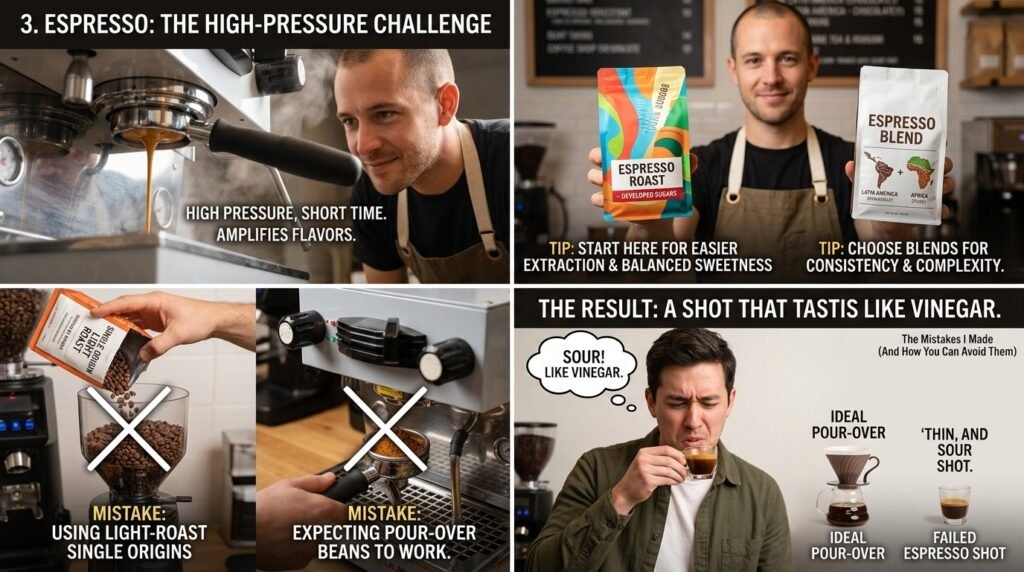
Espresso is the most demanding method. Because the water is forced through the coffee at high pressure in a very short amount of time, everything is magnified. Bitterness is more bitter; acidity is more sour.
What I look for: Unless you are a very experienced home barista, I recommend looking for bags specifically labeled as “Espresso Roast.” This usually means the roaster has developed the sugars a bit longer to ensure the coffee is easy to extract and has a balanced sweetness.
I look for “Blends” for espresso because they are designed to be consistent. A mix of a chocolatey Latin American bean and a fruity African bean can create a complex, balanced shot. If you try to use a very light-roasted “Single Origin” bean meant for filter coffee, you might struggle with a shot that tastes like vinegar.
This was one of The Mistakes I Made When Buying Coffee (And How You Can Avoid Them)—thinking that I could just use my pour-over beans in my espresso machine without any adjustments.
4. The AeroPress (The Versatile Hybrid)
The AeroPress is the “wildcard” of the coffee world. It uses both immersion and pressure. Because you can use paper or metal filters, you can brew almost anything in it.
What I look for: This is the brewer I use when I want to experiment. However, because it’s a relatively fast brew, Medium Roasts tend to perform best. They offer enough solubility to give you a rich cup without needing the perfect precision that a light roast requires. I love using “Honey Processed” coffees from Costa Rica in my AeroPress; they have a unique syrupy sweetness that this method captures perfectly.
5. Cold Brew (The Patient Method)
Cold brew uses time instead of heat. This results in a very low-acid, highly caffeinated concentrate that is naturally sweet.
What I look for: Since cold water doesn’t extract acids as effectively as hot water, this is the perfect time to use those Darker Roasts that might be too bitter for you in a hot brew. I also love using “Natural Process” coffees here. The fermented, fruity notes of a natural Ethiopian coffee transform into something that tastes like blueberry soda when cold-brewed.
It’s also the best method to use if you have beans that are slightly past their “freshness peak,” as the cold extraction is more forgiving than hot water.
6. Moka Pot (The Stovetop Classic)
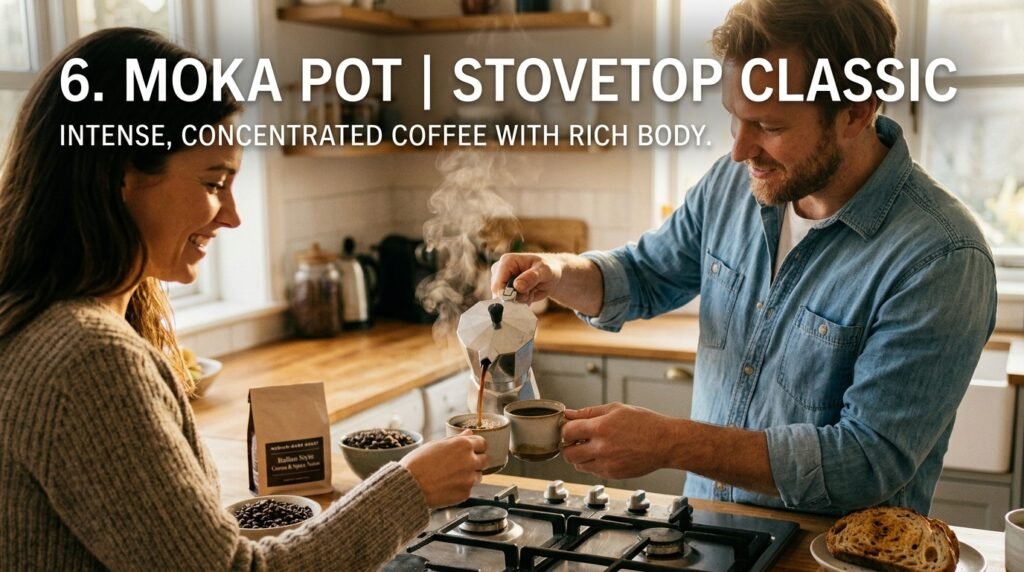
The Moka Pot produces a concentrated, intense coffee that is close to espresso but with more grit and body.
What I look for: Stick with Medium to Dark Roasts. The high heat of the Moka Pot can easily make a light roast taste metallic. You want something that can stand up to the heat—think Italian-style profiles with notes of toasted bread, cocoa, and spice.
Why Grind Size Still Matters
Even if you choose the perfect bean for your method, you have to grind it correctly.
-
French Press: Coarse (like sea salt).
-
Pour-Over: Medium (like sand).
-
Espresso: Fine (like powdered sugar).
Buying whole beans and matching your grind to your brewer is the final step in ensuring that your “matching” strategy actually works.
My Final Buying Strategy
When I am at the store or browsing online, I follow this mental flow chart:
-
How am I brewing this? (Filter vs. Immersion vs. Pressure)
-
What flavor profile does that method favor? (Clarity vs. Body)
-
What roast level supports that? (Light for clarity, Dark for body)
-
Does the label’s tasting notes match the vibe?
If I’m in a rush and I just want a reliable cup from my auto-drip machine, I’ll grab a Medium roast from Colombia. If I want to spend time “dialing in” a recipe for my V60, I’ll look for a Light roast from Kenya.
Final Thoughts
The beauty of the modern coffee world is that there is a perfect bean for every piece of equipment. You don’t have to change your brewing habits to get better coffee; you just have to change the fuel you are putting in the tank.
By matching the origin, roast level, and processing method to your specific brewer, you are doing 90% of the work before the water even touches the grounds. You’ll find that “bad” cups of coffee become a rarity, and your appreciation for the nuances of the bean will grow every single day.
Take a look at your coffee shelf tomorrow morning. Ask yourself: “Is this bean really meant for this brewer?” If the answer is no, don’t be afraid to experiment. The journey to the perfect cup is all about trial, error, and a lot of delicious “research.”
Happy brewing!

Marcelo Clark combines professional industry experience with a passion for democratizing coffee knowledge. Specialist in extraction techniques and an advocate for single-origin beans, Marcelo uses this space to teach beginners how to appreciate the subtle notes of a well-crafted brew. His goal is to make learning about methods and origins simple, relevant, and inspiring for every reader’s daily routine.