If you’ve been following my journey for a while, you know that I am a huge advocate for specialty coffee. I love the nuances of a high-altitude Ethiopian bean, and I’m willing to pay a premium for a bag that was roasted just three days ago by a local artisan. But let’s be real: we are living in the real world. Inflation is a factor, budgets are a thing, and sometimes, spending $25 on a 12-ounce bag of coffee every single week just isn’t sustainable.
For a long time, I felt a bit of “coffee guilt” whenever I reached for a cheaper bag at the supermarket. I felt like I was betraying my palate or being a “fake” enthusiast.
But as I’ve matured in my coffee hobby, I’ve realized that being an expert isn’t about always buying the most expensive thing; it’s about knowing when quality is non-negotiable and when a “budget” option is perfectly acceptable. There is a time and a place for a $5 bag of coffee, and today, I want to talk about why I sometimes choose the cheaper route and how I do it without ruining my morning.
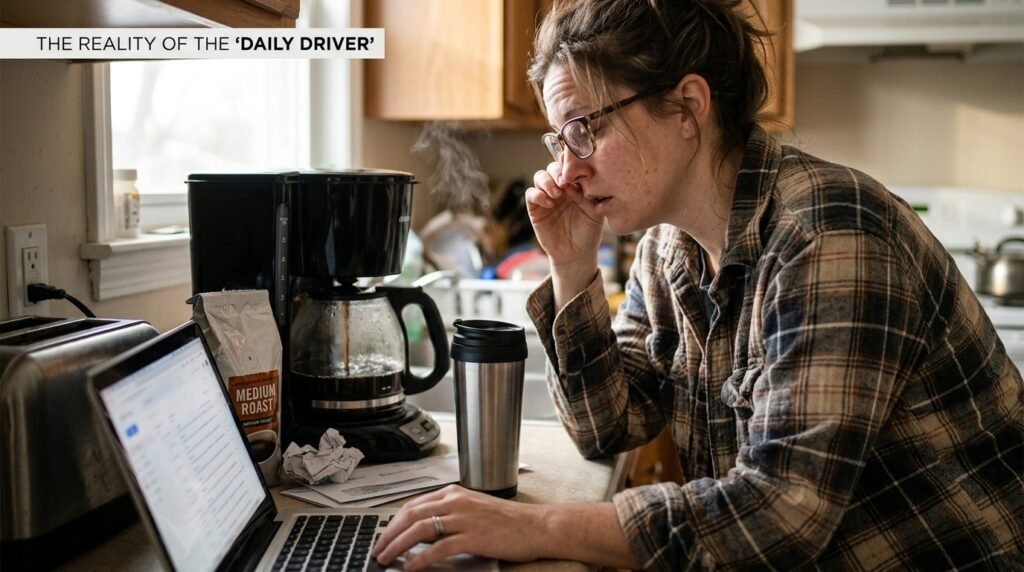
The Reality of the “Daily Driver”
In the coffee community, we often talk about “Daily Drivers.” This is the coffee you drink when you just need to get your brain moving. You’re half-asleep, you have a pile of emails waiting, and you aren’t exactly in the mood to do a 15-minute scientific ritual with a scale and a thermometer.
In these moments, the subtle notes of “jasmine and bergamot” are often lost on me anyway. If I’m just going to pour it into a travel mug and drink it while navigating traffic, a high-end specialty coffee is almost a waste.
I’ve found that How I Choose the Right Coffee Based on Brewing Method plays a huge role in this. If I’m using a standard auto-drip machine that doesn’t have precise temperature control, it’s not going to extract the delicate flavors of a $30 bag properly anyway. In that scenario, a decent, cheaper medium roast is a much more logical choice.
When I Go Cheap: The Cold Brew Factor
If there is one brewing method that is incredibly forgiving of “budget” beans, it’s cold brew.
Cold brew uses time instead of heat to extract flavor. Because heat is what usually brings out the harsh bitterness and sharp acidity in lower-quality beans, the cold-water process skips most of that drama. It creates a smooth, chocolatey concentrate regardless of whether the beans were $8 or $28.
Whenever I plan on making a large batch of cold brew to last me the whole week, I almost always reach for a cheaper, larger bag of dark-roasted beans. The cold extraction process rounds out the edges and makes it taste great, especially if I’m planning on adding milk or a splash of vanilla. This is one of The Simple Trick I Use to Identify Fresh Coffee Beans at the Store that applies even to budget coffee: I look for the bags that are still well-sealed and have a valve, even if they aren’t from a boutique roaster.
The “Coffee with Friends” Scenario
I love my friends, but not all of them care about the difference between a Washed and a Natural process. If I’m hosting a large brunch or a dinner party where I need to brew two or three large carafes of coffee, I’m not going to use my most expensive, limited-edition beans.
Most people, when they are chatting and eating cake, just want something that tastes “like coffee.” They want something hot, comforting, and familiar. In these cases, a reliable, medium-priced “supermarket premium” brand (the kind that costs around $10-$12) is the perfect middle ground. It’s a massive upgrade from the bottom-shelf stuff, but it doesn’t break the bank when you’re serving ten people.
How to Spot a “Good” Cheap Coffee
Even when I’m being “cheap,” I’m still being picky. There is a big difference between “affordable” coffee and “bad” coffee.
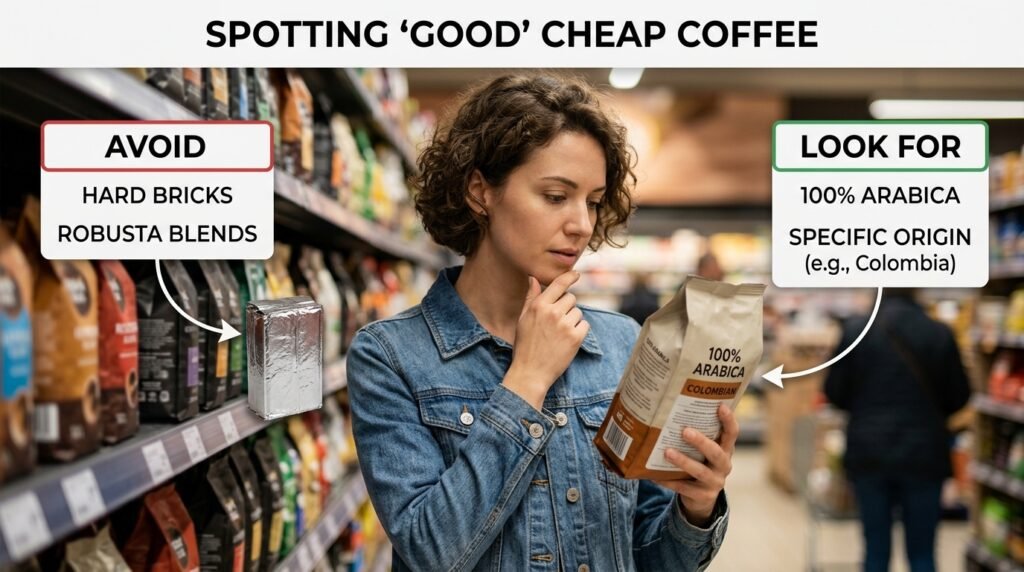
When I’m looking at the lower-priced shelves, I avoid anything that is vacuum-sealed into a hard brick. I also avoid anything that doesn’t specify it is “100% Arabica.” Cheap blends often “cut” their coffee with Robusta beans, which have a very harsh, rubbery taste and a lot of bitterness.
I’ve learned that How I Tell the Difference Between Cheap Coffee and Quality Coffee isn’t just about the price tag, but about the transparency on the label. Even a budget brand will sometimes tell you which country the beans came from. If I see a cheap bag that says “100% Colombian,” I know I’m getting a decent baseline of flavor that I can work with.
The “Milk and Sugar” Rule
Let’s be honest: if you are someone who likes a lot of creamer, flavored syrups, or sugar in your coffee, you are effectively masking the unique characteristics of the bean.
If you are going to add three tablespoons of Caramel Macchiato creamer to your cup, it is a mathematical waste of money to buy specialty beans. The creamer is going to be the dominant flavor.
When I know I’m in the mood for a sweet, milky treat, I intentionally buy a cheaper, darker roast. The bitterness of the cheaper bean actually cuts through the sweetness of the milk and sugar better than a delicate, expensive light roast would. It’s all about matching the ingredient to the final dish.
When It Is NOT Worth It to Go Cheap
While I’ve learned to embrace the budget life occasionally, there are three times where I will never compromise:
-
Espresso: Brewing espresso is a game of physics. Cheap beans are often too dry or too inconsistent to create the necessary pressure and crema. Trying to make a good espresso with $5 coffee is a recipe for frustration and a very dirty machine.
-
Gifts: If I’m buying coffee for someone else, I’m buying the best I can afford. Coffee is a personal experience, and a high-quality bag is a thoughtful, sensory gift.
-
The Weekend Ritual: Saturday morning is my time to slow down. I use my best grinder, my best water, and my best beans. This is the moment I live for, and saving $10 isn’t worth ruining that ritual.
Strategic Spending: The Hybrid Approach
One way I manage my coffee budget is by keeping two bags in my pantry at all times.
-
The “Monday to Friday” Bag: A decent, affordable 2lb bag of whole beans from a warehouse club or a supermarket sale. This is for my morning rush and my large-batch cold brews.
-
The “Special Occasion” Bag: A 10oz or 12oz bag of high-end specialty coffee that I buy from a local roaster. This is for my pour-overs and my slow Sunday mornings.
By using this hybrid approach, I get to enjoy the best of both worlds. I stay within my budget, but I never feel like I’m missing out on the “art” of coffee.
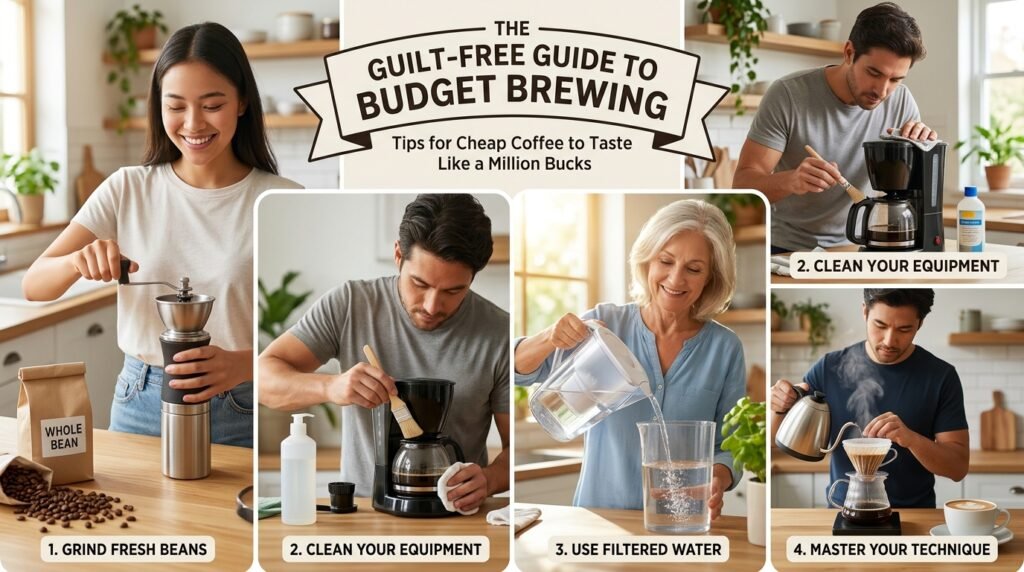
The Guilt-Free Guide to Budget Brewing
If you find yourself needing to save some money on your coffee habit, don’t feel bad! Here are my tips for making that cheaper coffee taste like a million bucks:
-
Buy Whole Bean: Even cheap beans taste better if you grind them fresh.
-
Clean Your Equipment: A clean coffee maker can make mediocre beans taste decent, while a dirty machine will make expensive beans taste like swamp water.
-
Use Filtered Water: If your water tastes like chlorine, your coffee will too. Using a simple water pitcher is a cheap way to upgrade budget beans.
-
Master Your Technique: A well-executed pour-over with budget beans will often beat a poorly-made cup with expensive beans.
Final Thoughts
At the end of the day, coffee is a personal pleasure. It should bring you joy, not financial stress. If you can afford the best beans in the world every day, that’s amazing! But if you need to be strategic with your spending, know that there is no shame in the budget game.
The “Best Coffee” is the one that you enjoy drinking in the moment. Sometimes that’s a complex Geisha from a high-altitude farm in Panama, and sometimes it’s a simple, dark-roasted supermarket blend that reminds you of home.
By knowing when to splurge and when to save, you become a more versatile and intelligent coffee lover. You aren’t just following a trend; you are making choices that fit your life. So, go ahead—grab that affordable bag for your cold brew, and don’t look back. Your wallet (and your morning self) will thank you.
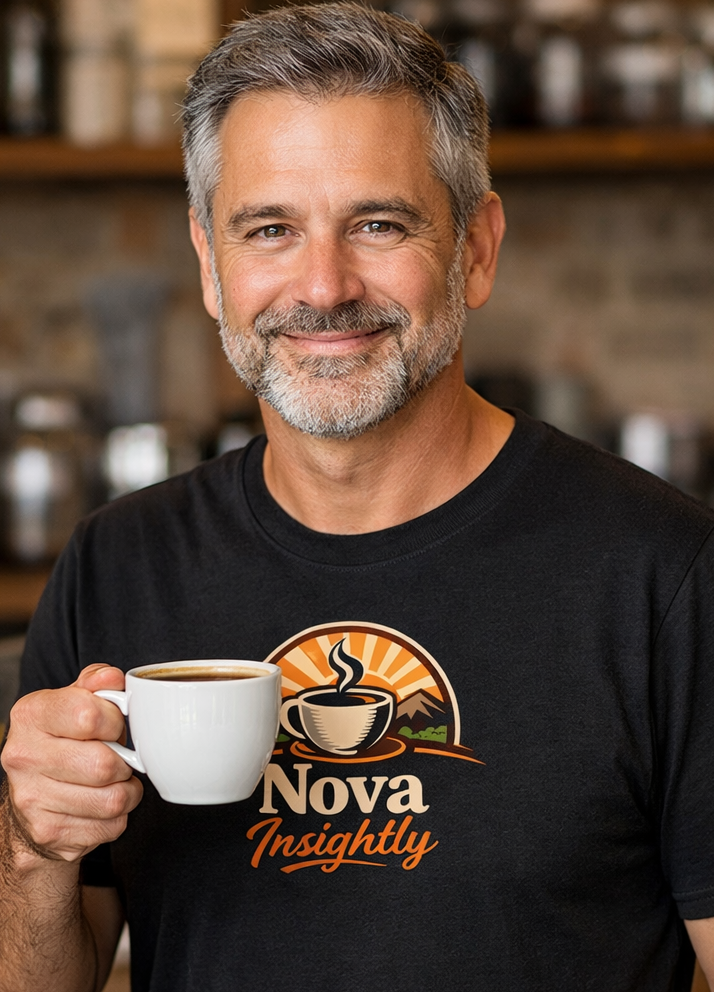
Marcelo Clark combines professional industry experience with a passion for democratizing coffee knowledge. Specialist in extraction techniques and an advocate for single-origin beans, Marcelo uses this space to teach beginners how to appreciate the subtle notes of a well-crafted brew. His goal is to make learning about methods and origins simple, relevant, and inspiring for every reader’s daily routine.