For most of my adult life, I lived in a state of blissful ignorance. I would walk into the supermarket, grab whatever was on sale—usually a massive red or blue tin—and call it a day. To me, coffee was a utility. It was the oil that kept my gears turning, and as long as it was hot and caffeinated, I didn’t ask too many questions. I genuinely believed that “specialty coffee” was just a clever way for hipsters to overcharge for the same drink.
But curiosity is a dangerous thing. One day, I decided to do a side-by-side comparison. I bought my usual supermarket “standard” and a bag of freshly roasted, single-origin specialty coffee from a local roaster. I used the same water, the same brewing method, and the same ratio.
What happened next wasn’t just a taste test; it was a total demolition of everything I thought I knew about my favorite beverage. It was the moment I realized I hadn’t been drinking coffee for twenty years—I had been drinking a shadow of it. Here is the breakdown of what I learned from that experiment and why I can never look at a supermarket shelf the same way again.
1. The Visual Truth: Identifying the “Graveyard”
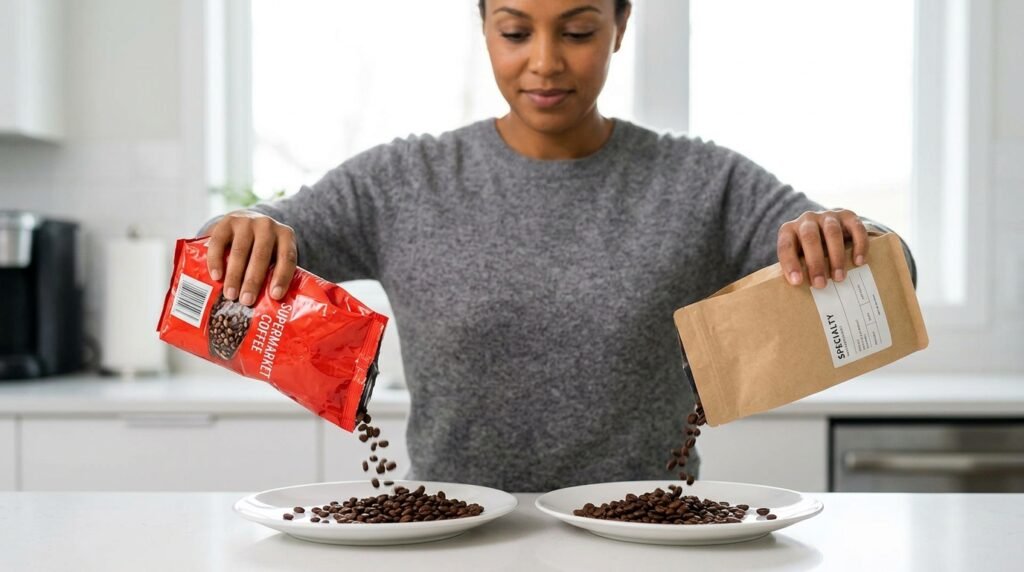
The first thing I did was pour both sets of beans onto a white plate. The difference was staggering before I even turned on the kettle.
The Supermarket Coffee was a mess of inconsistency. I saw broken beans, hollow shells, and shriveled “quakers” that looked like tiny, dried-up raisins. Some beans were black and oily, while others in the same bag were a dull, dusty brown. It looked like a graveyard of rejected seeds. This is the result of mechanical harvesting, where machines strip the trees of everything—ripe, unripe, and rotten cherries all go into the same bin.
The Specialty Coffee looked like a collection of jewels. Every bean was the same size, the same shade of medium-brown, and completely intact. There were no stones, no twigs, and no broken fragments. This is because specialty coffee is hand-picked. Only the perfectly ripe cherries make the cut.
I realized then that How I Tell the Difference Between Cheap Coffee and Quality Coffee starts long before the brewing begins; it starts with the respect shown to the bean during the harvest.
2. The Aroma: Cardboard vs. Complexity
Next came the smell test. I ground both samples and took a deep breath.
The supermarket grounds smelled… familiar. But not in a good way. They smelled like toasted wood, old peanuts, and a hint of smoke. It was a one-note aroma that felt “heavy” and flat. There was no life in it. It was the smell of a product that had been sitting in a warehouse for months, losing its volatile organic compounds to the air.
The specialty grounds, however, were an explosion. The moment the grinder stopped, the room filled with the scent of what I can only describe as “blueberries and milk chocolate.” It was vibrant, sharp, and sweet.
This scent comparison was the ultimate proof of The Simple Trick I Use to Identify Fresh Coffee Beans at the Store. When a bean is fresh and high-quality, it has “gas” and life inside it. When it’s supermarket-grade, it’s basically a flavored piece of charcoal.
3. The Brewing Experience: The “Bloom” is Real
I brewed both using a simple pour-over method. This is where the chemistry of coffee becomes visible to the naked eye.
When the hot water hit the Specialty Coffee, it “bloomed.” The grounds puffed up like a souffle, bubbling and releasing CO2. This is the sign of a bean that still has its oils and gases intact. It was beautiful to watch.
The Supermarket Coffee did nothing. The water just sat on top of the grounds, which looked like wet mud. There were no bubbles, no rising, and no life. It was “dead” coffee. Because it was so old and over-roasted, all the CO2 had long since leaked out of the bag.
I realized that if the coffee doesn’t “react” to the water, you are essentially just making a tea out of old wood fibers.
4. The Taste: Bitterness vs. Brightness
Then came the moment of truth: the first sip.
The Supermarket Coffee tasted exactly like what I was used to. It was bitter, it had a heavy “burnt” aftertaste, and it felt “thin” in the mouth. It was the kind of coffee that demands milk and sugar to be tolerable. Without those additions, it was just a harsh, punishing drink.
The Specialty Coffee was a revelation. It didn’t taste “bitter” at all. It was sweet, like a dark fruit, and had a sparkling acidity that reminded me of a crisp apple. It had a “body” that felt silky on the tongue. For the first time in my life, I understood why people drink coffee black. You don’t want to hide these flavors; you want to celebrate them.
This change in my palate was exactly What I Wish I Knew Before Buying My First Specialty Coffee—that I wasn’t a “sugar addict,” I was just trying to cover up bad flavor.
5. The Aftermath: The “Clean” High
One thing I didn’t expect was the difference in how I felt an hour later.
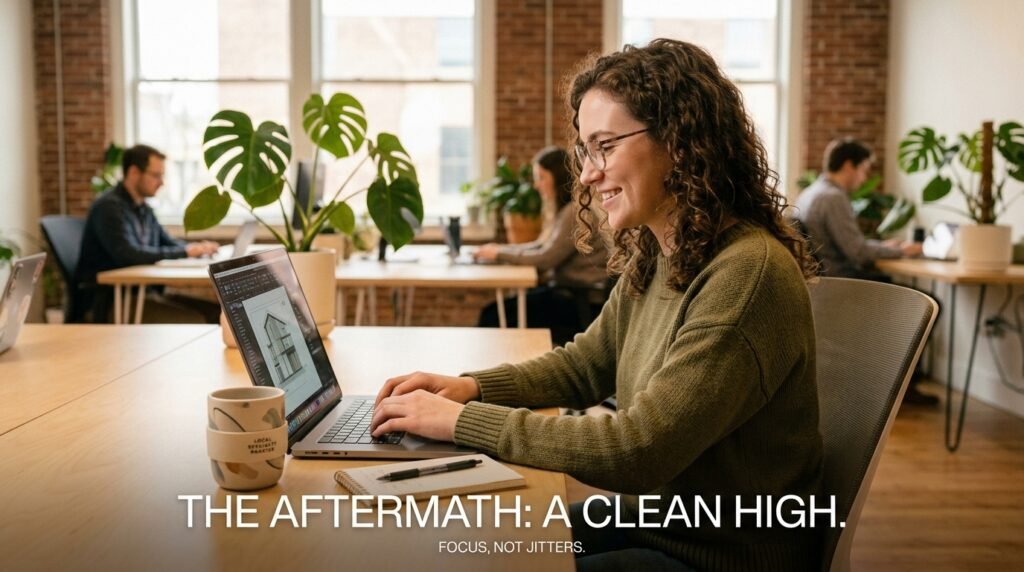
Supermarket coffee often gave me a “jittery” feeling and a bit of acid reflux. I used to think this was just what caffeine did to me. But after the specialty coffee, I felt a clean, focused energy. No jitters, no stomach ache, and no “crash.”
This is because high-quality Arabica has less caffeine and fewer harsh acids than the low-grade beans and Robusta fillers often found in supermarket blends. It’s a cleaner fuel for your body.
6. The Price Per Cup: A Math Lesson
I decided to do the math to see if the “specialty is too expensive” argument held water.
A bag of supermarket coffee might cost me $8 and last me two weeks. A bag of specialty coffee costs me $20 and lasts the same amount of time.
When you break it down, the specialty coffee costs me about $0.70 per cup to brew at home. The supermarket coffee costs about $0.25.
Is my morning happiness, my health, and my taste buds worth an extra 45 cents a day? When I framed it like that, the “expensive” argument vanished. I spend more than 45 cents on random snacks or parking meters without thinking twice. Why wouldn’t I spend it on the ritual that starts my day?
7. The Ethical Weight
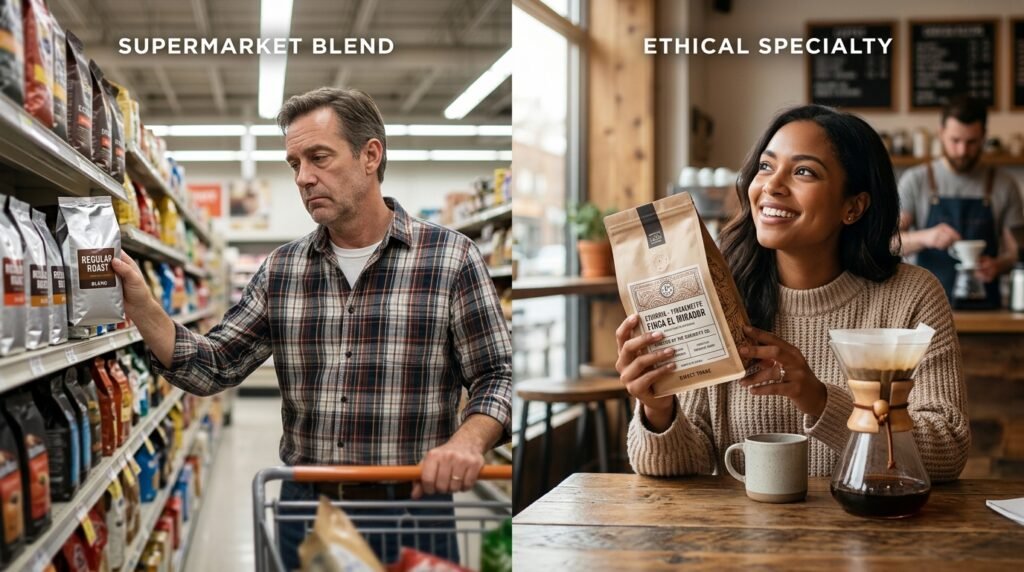
Finally, I looked into the supply chain. Supermarket coffee is a commodity. It’s bought at the lowest possible price, often leaving farmers in a cycle of poverty. Because the beans are blended into anonymity, there is no accountability for how they were grown.
Specialty coffee is different. Because the roaster’s name and the farmer’s name are both on the bag, there is a standard of excellence to maintain. Farmers are paid significantly more for specialty grade beans, allowing them to invest in their land, their families, and their communities.
When I drink the specialty cup, I’m not just enjoying a better flavor; I’m participating in a more sustainable and ethical global system.
Summary Checklist: The Big Differences
| Feature | Supermarket Coffee | Specialty Coffee |
| Sourcing | Mass-harvested by machine | Hand-picked for ripeness |
| Freshness | Months or years old | Roasted within weeks |
| Flavor Profile | Bitter, burnt, “brown” | Sweet, acidic, complex |
| Transparency | Generic “blends” | Specific farm and variety |
| Body Feel | Thin and metallic | Silky and rich |
Final Thoughts
Comparing these two was the “Red Pill” moment of my coffee life. Once you see the broken beans, smell the cardboard aroma, and taste the flat bitterness of mass-market coffee, you can’t un-see it.
I still buy “budget” coffee for my large batches of cold brew (as I discussed in my other guides), but for my daily hot cup, the choice is clear. Life is too short to drink a product that was designed for shelf-stability rather than soul-satisfaction.
If you are on the fence, I challenge you to do the same experiment. Spend the extra $10 this week. Find a local roaster. Brew it with care. I promise you, by the time you reach the bottom of that bag, that supermarket tin in your pantry is going to look a lot like a mistake.
You deserve a morning that starts with vibrancy and craft. Don’t settle for the “standard” when the “extraordinary” is only 45 cents away.
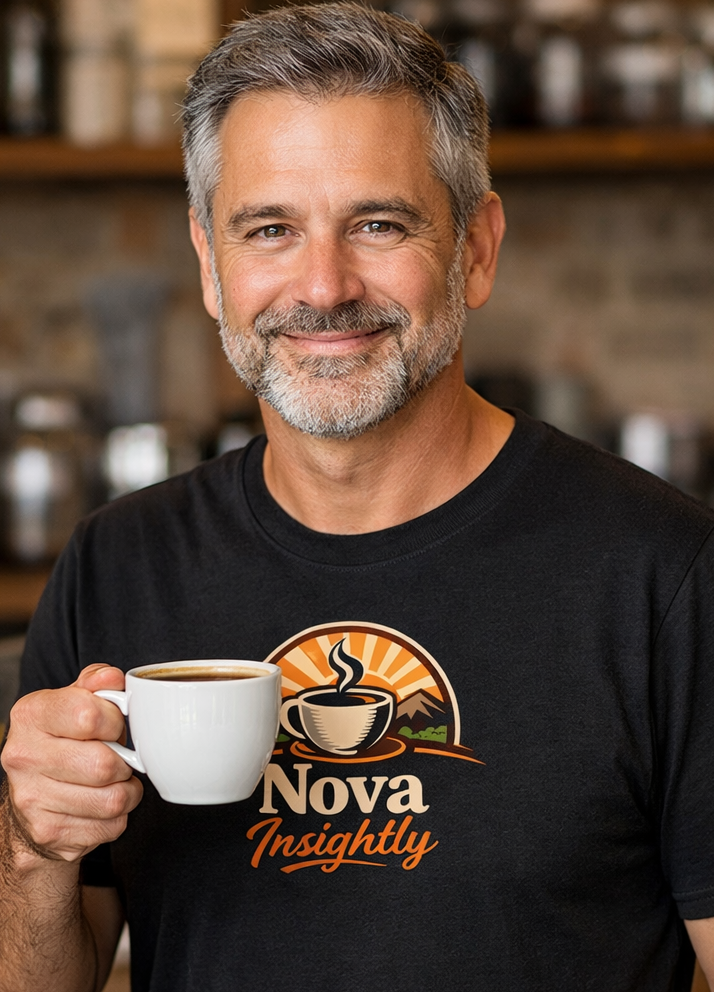
Marcelo Clark combines professional industry experience with a passion for democratizing coffee knowledge. Specialist in extraction techniques and an advocate for single-origin beans, Marcelo uses this space to teach beginners how to appreciate the subtle notes of a well-crafted brew. His goal is to make learning about methods and origins simple, relevant, and inspiring for every reader’s daily routine.