
Have you ever looked at a bag of specialty coffee and seen the word “Washed” or “Natural” written in small print near the origin? For a long time, I completely ignored those words. I thought the only thing that mattered was where the coffee grew and how dark it was roasted. I assumed that once the coffee cherries were picked from the trees, they were just dried out and sent to the roaster.
I couldn’t have been more wrong.
The journey from a bright red cherry on a branch to the green seed that enters a roaster is a high-stakes period called “processing.” It is during these few days or weeks that the coffee’s destiny is decided. You can take the exact same cherry from the exact same tree, process it two different ways, and end up with two coffees that taste like they came from different planets.
Understanding processing was the final “click” in my brain that allowed me to stop guessing at the store. Now, I know exactly what kind of acidity, body, and sweetness to expect just by reading that one word. Here is the breakdown of the three main processing methods and how they transform your morning cup.
The Anatomy of a Coffee Cherry
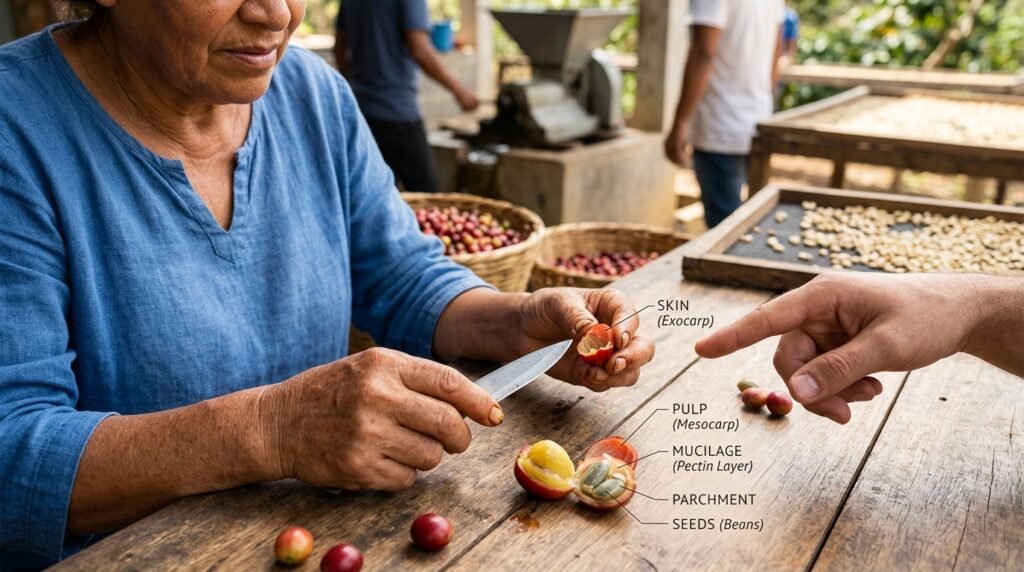
To understand processing, we first have to look at what we are working with. A coffee “bean” isn’t actually a bean; it’s the pit of a fruit. If you were to pick a ripe coffee cherry and bite into it, you would find a complex structure of layers.
First, there is the skin (exocarp), which is usually bright red or yellow. Underneath that is the pulp (mesocarp), a thin layer of fruit flesh. Then comes the mucilage (pectin layer), which is very slippery and full of sugars. Finally, there is a protective parchment layer before you reach the actual seed.
Processing is simply the art of removing those outer layers. But how and when you remove them changes the chemistry of the bean forever. This is a huge part of How I Tell the Difference Between Cheap Coffee and Quality Coffee, as quality processing requires intense labor and attention to detail.
1. The Washed Process (The “Clean” Classic)
In the Washed process, the goal is to remove all of the fruit flesh and sticky mucilage before the bean is dried.
After harvest, the cherries are put through a “depulper” machine that strips away the skin and pulp. Then, the beans are put into fermentation tanks filled with water. Over 12 to 48 hours, natural enzymes break down the sugars. Finally, they are washed clean with fresh water and laid out to dry.
What does it taste like? Washed coffees are the “cleanest” expression of coffee. Because the fruit was removed early, the bean didn’t absorb any extra sugars or funky flavors from the cherry. Instead, you taste the pure “terroir”—the soil, the altitude, and the plant variety.
If you love a cup that is bright, acidic, and has clear notes of lemon, jasmine, or green apple, you are a Washed process fan. This is why The Secrets of High Altitude: Why Mountains Make Better Coffee often focuses on Washed coffees; the mountain-grown acidity is most vibrant when the bean is “naked” and clean.
2. The Natural Process (The “Fruit Bomb”)
The Natural process is the oldest method in the world. It’s still the standard in places like Ethiopia and parts of Brazil where water can be scarce.
In this method, the cherries are picked and immediately spread out on raised beds or concrete patios to dry in the sun with the fruit still on. The beans stay inside the cherry for weeks. As they dry, the sugars in the fruit flesh begin to ferment and concentrate, eventually shriveling up like raisins before the dry husks are removed.
What does it taste like? Natural process coffees are wild. Because the bean spent weeks soaking in the fermenting fruit juices, it absorbs an incredible amount of sweetness and “funk.”
When I first tasted a Natural Ethiopian coffee, I didn’t believe there was no blueberry juice added to it. It was thick, syrupy, and tasted like a wine-heavy fruit basket. If you like coffee that feels “heavy” in your mouth and tastes like strawberry or blueberry, look for “Natural” on the bag. This processing style is often the star of the show for those who want maximum flavor impact.
3. The Honey Process (The Sweet Middle Ground)
The Honey process originated in Costa Rica, and despite the name, it has nothing to do with actual honey from bees. It’s called “Honey” because of how sticky the beans feel during the drying stage.
In this method, the skin and pulp are removed, but the sticky mucilage is left on the bean while it dries.
Farmers can control the flavor by how much mucilage they leave on:
-
White Honey: Most mucilage is washed off.
-
Yellow/Red Honey: Some mucilage remains.
-
Black Honey: Almost all the mucilage is left on, resulting in a very sweet, syrupy cup.
What does it taste like? Honey processed coffees are for the person who wants it all. You get some of the bright acidity of a Washed coffee, but with the creamy sweetness of a Natural. It’s incredibly balanced and usually has notes of brown sugar and peach.
Knowing these differences is a key part of How I Read Coffee Labels to Understand What I’m Really Buying, as it tells you exactly what to expect before you even open the bag.
The Science of Fermentation
Regardless of the method, fermentation is the invisible force at work.
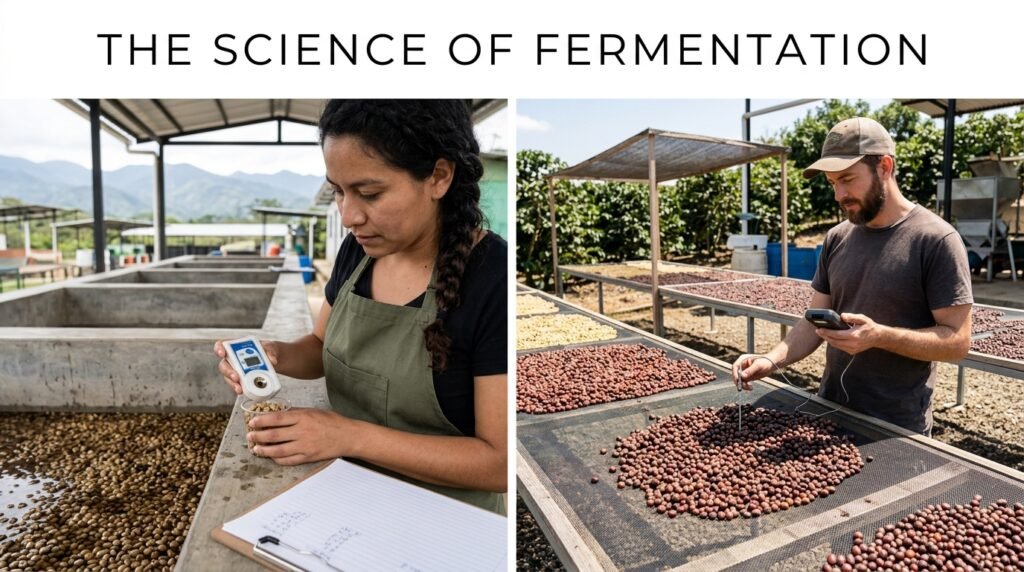
During the Washed process, fermentation happens in the water tanks. During the Natural and Honey processes, it happens while the beans dry in the sun. Bacteria and yeasts break down the sugars (fructose and glucose) into alcohols and acids.
If the fermentation goes too long, the coffee will taste “over-ripe” or like vinegar. If it’s too short, the coffee will taste “green” and grassy. This is where the skill of the producer comes in. They have to measure the sugar content of the cherries and the temperature of the drying beds every single day.
The Environmental Impact
As consumers, we also have to consider the footprint of our coffee.
The Washed process requires a massive amount of fresh water. In regions where water is a precious resource, this can be a problem. However, modern technology is helping to reduce this water usage significantly.
The Natural process is the most eco-friendly because it uses almost no water and relies entirely on the sun. However, it’s much riskier for the farmer. If it rains while the coffee is drying, the entire harvest can rot.
How to Brew Based on Processing
Because the chemistry of the bean is different, your brewing approach should be too:
-
Washed Coffees: Use slightly hotter water (around 94 to 96 degrees) to help extract those bright acids.
-
Natural Coffees: Use slightly cooler water (around 90 to 92 degrees). Since these beans are packed with sugars, they extract very easily.
-
Honey Coffees: These are very versatile and shine in an AeroPress or a French Press, where the immersion allows those complex sugars to fully dissolve.
Why Quality Control is the Secret Ingredient
Processing is a 24-hour-a-day job. During the drying phase, the coffee must be turned every 30 to 60 minutes to prevent mold growth and ensure even drying. If a worker forgets to turn the “Natural” beds on a humid day, the entire lot could be ruined.
This level of dedication is what separates a $20 bag of specialty coffee from a $5 bag of commercial coffee. When you buy specialty, you aren’t just paying for the bean; you are paying for the weeks of labor that went into managing the fermentation and drying process.
The Evolution of Experimental Processing
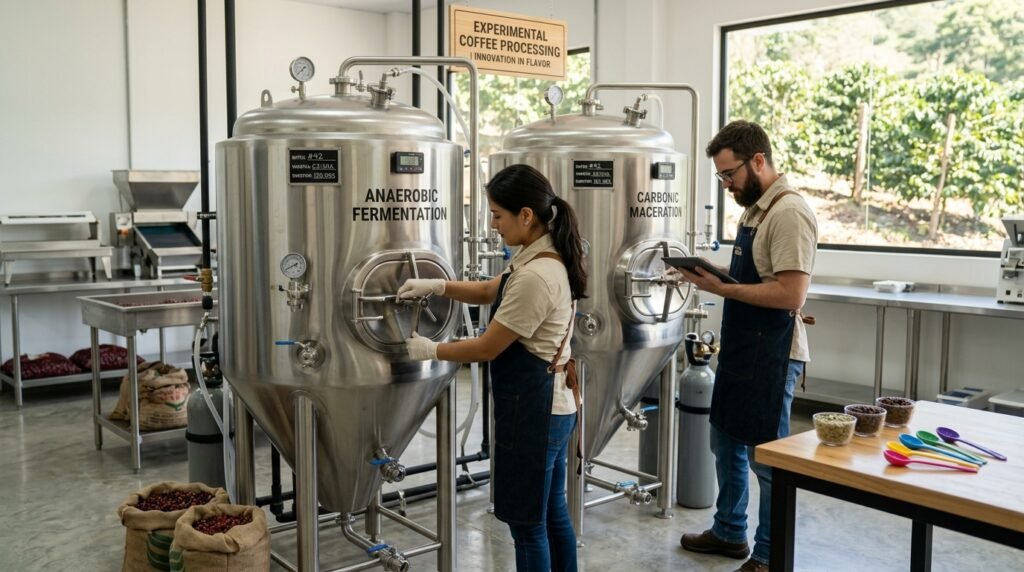
In recent years, we’ve seen the rise of “Anaerobic” and “Carbonic Maceration” processing. These are advanced techniques borrowed from the wine industry where the coffee is fermented in oxygen-free tanks.
This creates flavors that are even more intense—think cinnamon, bubblegum, or tropical punch. While these are still rare and expensive, they show just how much “processing” can influence the final flavor of your cup.
Summary Checklist for Your Next Purchase:
-
Want Clarity & Acidity? Look for “Washed.”
-
Want Sweetness & Fruit? Look for “Natural.”
-
Want Balance & Creaminess? Look for “Honey.”
-
Brewing Espresso? Honey and Natural processes often produce better crema.
-
Brewing Pour-Over? Washed process will give you the most elegant flavors.
Final Thoughts
Processing is the “bridge” between the tree and the roaster. It is the moment where a simple fruit is transformed into a complex chemical package ready to be unlocked by heat.
The next time you’re sipping a cup that tastes surprisingly like strawberry or one that feels incredibly clean and sharp, take a look at the bag. You’ll likely see the footprint of the Washed or Natural process staring back at you.
Learning about processing made me realize that coffee isn’t just a drink; it’s a craft. Every decision a farmer makes ends up in your cup. Respect the process, try something new, and let your palate explore the incredible diversity of this amazing fruit.
Happy brewing!

Marcelo Clark combines professional industry experience with a passion for democratizing coffee knowledge. Specialist in extraction techniques and an advocate for single-origin beans, Marcelo uses this space to teach beginners how to appreciate the subtle notes of a well-crafted brew. His goal is to make learning about methods and origins simple, relevant, and inspiring for every reader’s daily routine.