Imagine the scene: you walk into a specialty coffee shop, determined to upgrade your morning ritual. You stand in front of a shelf filled with beautifully designed bags. One says “Washed Caturra from Huila,” another mentions “Natural Process Heirloom with notes of Bergamot,” and a third proudly displays “1,800 MASL.”
To the uninitiated, this isn’t a coffee menu—it’s a foreign language.
In the world of commodity coffee, buying is easy: you look for “Bold” or “Mild” and check the price. But in the world of specialty coffee, the bag is covered in data. This data isn’t there to make the roaster look smart; it is there to tell you exactly how that coffee is going to taste before you even open the bag.
Learning how to read a coffee bag is like learning how to read a wine label. Once you understand the codes, you stop guessing and start choosing. This guide will walk you through every technical term on that bag, connecting the dots between the farm and your favorite mug.
1. The Origin: Country, Region, and Farm
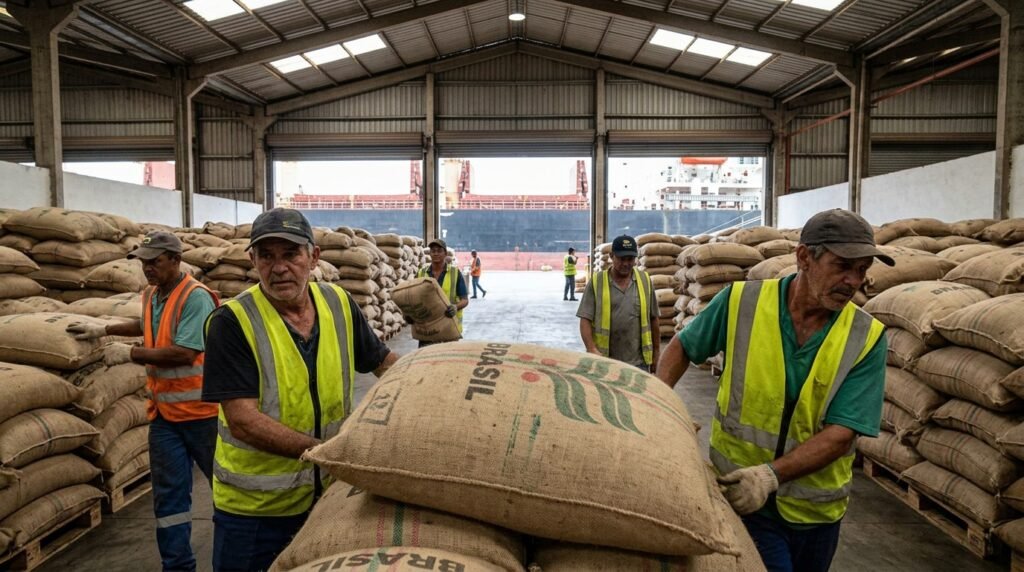
The first thing you’ll see is the origin. But “Brazil” or “Colombia” is just the beginning. As we explored in The Brazilian Powerhouse: Understanding the Soul of the World’s Largest Producer, a single country can produce vastly different flavors depending on the specific region.
-
Country: Gives you the general flavor family (e.g., Ethiopia for floral/fruity, Brazil for nutty/chocolatey).
-
Region/State: Narrowing it down further (e.g., Sidamo in Ethiopia or Sul de Minas in Brazil).
-
Farm/Estate or Washing Station: This is the most specific level. If a bag lists a single farm (Single Estate), it means every bean in that bag came from one piece of land. This offers the highest level of traceability and unique character.
If a bag just says “South American Blend,” it’s likely a commodity-grade coffee where beans from different countries were mixed to create a consistent, but often unremarkable, flavor.
2. The Altitude: Why “MASL” Matters
You will often see a number followed by MASL (Meters Above Sea Level). You might see ranges like 1,200 – 1,500m or even 2,000+m.
Why does the height of the mountain matter for your breakfast? It’s all about the temperature and oxygen.
-
High Altitude (1,500m+): The coffee cherries grow more slowly. This slow growth allows the sugars to become more complex and the organic acids to develop. High-altitude coffees are typically brighter, more acidic, and more floral.
-
Low Altitude (Below 1,200m): The cherries grow faster in the warmer air. These coffees tend to be lower in acidity and higher in “earthy” or “nutty” flavors.
If you love a bright, tea-like coffee, look for high MASL. If you prefer a smooth, low-acid cup, look for lower altitudes.
3. The Variety: The “Breed” of the Bean
Just as a “Granny Smith” apple tastes different from a “Fuji,” different varieties of Arabica have distinct flavor profiles.
-
Bourbon/Typica: The “ancestor” varieties. They are known for their sweetness and balance.
-
Geisha/Gesha: The “royalty” of coffee. Famous for intense floral aromas (like jasmine) and a tea-like body.
-
Caturra/Catuaí: Common in Latin America, offering a solid, reliable sweetness and medium acidity.
-
SL-28/SL-34: Famous Kenyan varieties known for their “blackcurrant” and “grapefruit” zing.
When you see “Heirloom” on an Ethiopian bag, it means the coffee is a mix of thousands of wild varieties that have grown there for centuries. This is what gives those beans their mysterious and complex profiles.
4. The Process: How the Fruit Was Removed
This is perhaps the most important word on the bag for predicting mouthfeel. The “process” describes how the seed (the bean) was separated from the fruit (the cherry).
-
Washed (Wet Process): The fruit is scrubbed off with water before drying. These coffees are “clean,” bright, and highlight the acidity of the bean. If you enjoy Mastering the Hario V60: The Art and Physics of the Perfect Pour-Over, washed coffees are your best friend.
-
Natural (Dry Process): The cherry is dried whole, like a raisin. This allows the fruit sugars to ferment slightly and soak into the bean. Natural coffees are heavy-bodied, low-acid, and often taste like “fruit bombs” (strawberry, blueberry, or wine).
-
Honey/Pulped Natural: A middle ground where some fruit is left on the bean. This results in a syrupy sweetness and a balanced profile.
5. Tasting Notes: Expectations vs. Reality
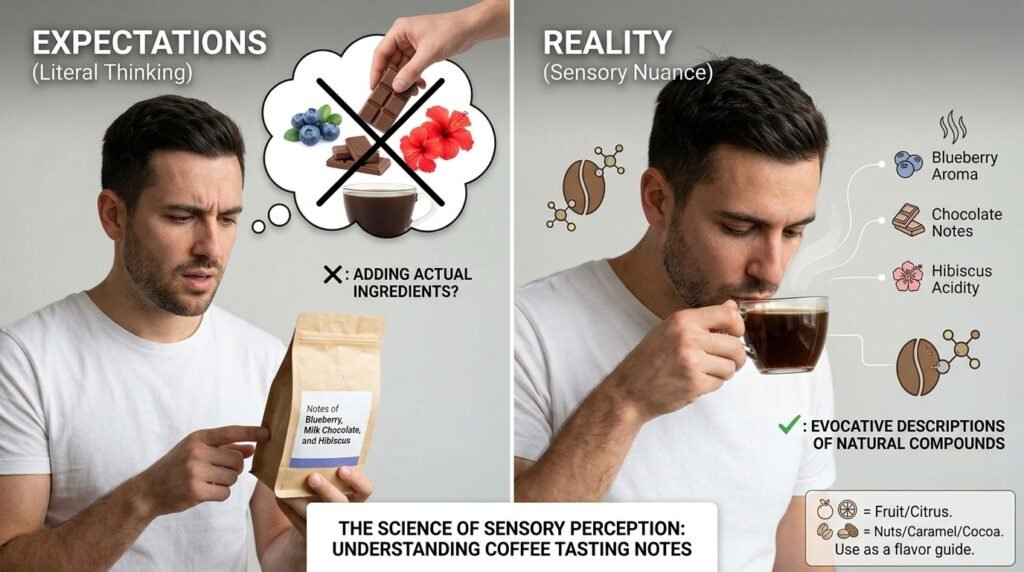
“Notes of Blueberry, Milk Chocolate, and Hibiscus.”
Does the roaster add these flavors to the coffee? No. These are evocative descriptions based on the chemical compounds naturally found in the bean.
If a bag says “Blueberry,” it doesn’t mean it will taste like a blueberry muffin. It means that the acidity and aroma of the coffee remind the taster of the tart sweetness found in blueberries.
These notes are a guide. If you hate fruity flavors, stay away from bags with “Citrus” or “Berry” notes and look for “Caramel,” “Toasted Nuts,” or “Cocoa.” Understanding these notes is the final step in The Science of Sensory Perception: How Our Brains Taste Coffee.
6. The Roast Date: The Clock is Ticking
In the specialty world, the “Roast Date” is the only date that matters. Coffee is a fresh agricultural product.
-
0–7 Days: The coffee is still “degassing” (releasing CO2). It might taste a bit metallic or “fizzy” if brewed too soon.
-
7–21 Days: The “Golden Window.” This is when the flavors are at their peak.
-
30+ Days: The volatile aromatics begin to fade. The coffee will start to taste “flat” or “woody.”
If a bag only has a “Best Before” date and no “Roast Date,” it’s a sign that the roaster isn’t prioritizing freshness. Always look for the specific day the beans came out of the roaster.
7. Roast Level: Light, Medium, or Dark?
While specialty roasters often aim for a “Medium-Light” roast to preserve the bean’s character, your personal preference matters.
-
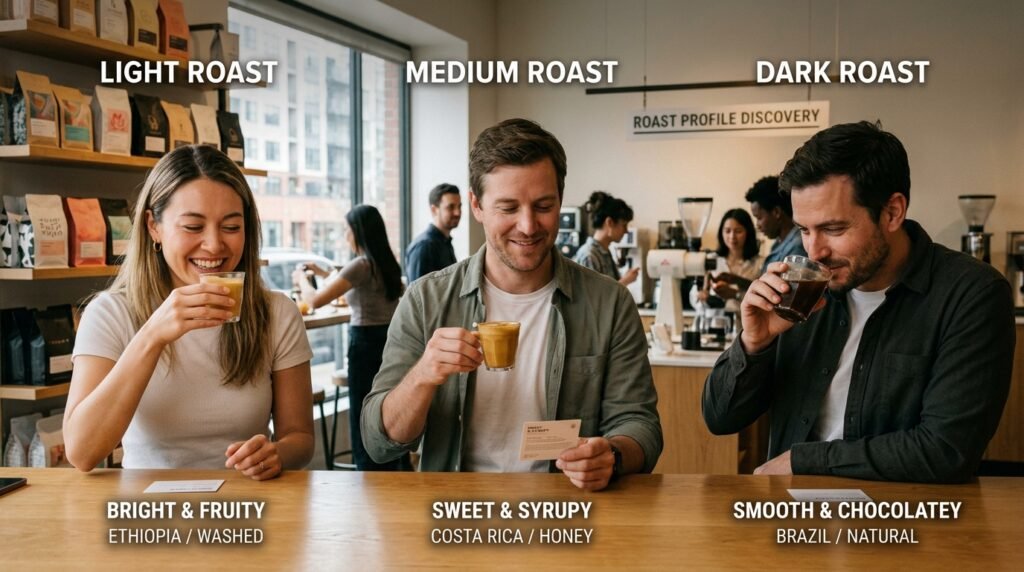
Light Roast: High acidity, tea-like body, highlights the farm’s terroir.
-
Medium Roast: Balanced sweetness and acidity. The “chocolate” and “caramel” notes start to appear.
-
Dark Roast: Low acidity, heavy body, notes of smoke and dark cocoa. You are tasting more of the roaster’s fire than the farmer’s soil.
Summary: Your Buying Cheat Sheet
| If you like… | Look for these keywords on the bag: |
| Bright & Fruity | Washed, High Altitude (1,600m+), Light Roast, Ethiopia/Kenya. |
| Sweet & Syrupy | Honey Process, Yellow Bourbon, Medium Roast, Costa Rica/El Salvador. |
| Smooth & Chocolatey | Natural Process, Brazil/Guatemala, Medium-Dark Roast, Lower Altitude. |
| Wild & Funky | Natural Process, Anaerobic Fermentation, “Fruit Bomb” notes. |
Why “Specialty” Isn’t Just a Buzzword
You might see the “SCA Score” on some bags. For a coffee to be officially called “Specialty,” it must score 80 points or higher on a 100-point scale by a certified Q-Grader.
This isn’t just a badge of honor; it’s a guarantee of quality. It means the coffee is free of primary defects (like moldy or sour beans) and has a distinct flavor profile. Buying specialty coffee also usually means that the farmer was paid a “Premium” far above the global commodity price, making your morning cup a vote for a more sustainable industry.
Final Thoughts
The next time you stand in front of that coffee shelf, don’t feel overwhelmed. Take a breath. Look for the Roast Date first. Then, look at the Process to decide on the mouthfeel you want. Finally, check the Tasting Notes to see if they match your mood.
A coffee bag is a map. It tells the story of a seed that traveled thousands of miles, through the hands of farmers, pickers, processors, and roasters, just to get to your kitchen. When you learn to read that map, every cup becomes an adventure.
Don’t be afraid to ask the barista questions, either. They love talking about MASL and varieties as much as we do. The more you know, the better your coffee will taste—because the most important ingredient in any cup of coffee is the person who chose it.
Happy hunting, and may your next bag be your best one yet!
Marcelo Clark combines professional industry experience with a passion for democratizing coffee knowledge. Specialist in extraction techniques and an advocate for single-origin beans, Marcelo uses this space to teach beginners how to appreciate the subtle notes of a well-crafted brew. His goal is to make learning about methods and origins simple, relevant, and inspiring for every reader’s daily routine.