
We have all been there. You buy a bag of expensive, specialty beans with tasting notes like “jasmine,” “apricot,” and “honey.” You go home, brew your morning cup with excitement, and take a sip—only to find it tastes like liquid wood or, worse, a piece of burnt toast.
Where did the fruit go? Why is the bitterness so overwhelming that it coats your tongue in a dry, ashy film?
Bitterness is the most misunderstood element of coffee. For many, it is the defining characteristic of the drink. For others, it is a defect to be avoided at all costs. The reality is that bitterness is essential. It provides the “spine” of the coffee, balancing out the sugars and the acids. Without a hint of bitterness, coffee would taste hollow and thin.
But when bitterness takes over, it’s a sign that the chemistry of your brew has gone off the rails. In this guide, we are going to dive into the molecular world of bitter compounds, look at the difference between “good” and “bad” bitterness, and show you exactly how to fix a brew that has gone over the edge.
1. The Chemistry of the “Kick”: What Makes Coffee Bitter?
Most people assume that caffeine is the primary source of bitterness in coffee. While it’s true that caffeine is naturally bitter, it only accounts for about 10% to 15% of the total bitterness in your cup.
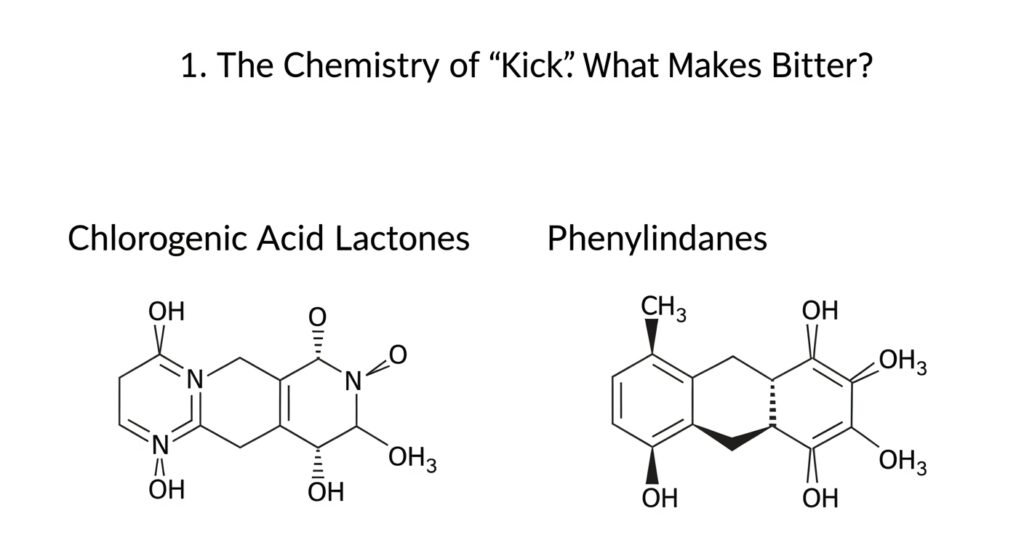
The real culprits are two families of compounds: Chlorogenic Acid Lactones and Phenylindanes.
-
Chlorogenic Acid Lactones: These are created during light to medium roasts. They provide a “pleasant,” crisp bitterness that helps define the coffee’s structure.
-
Phenylindanes: These are created as the roast gets darker. They are the result of chlorogenic acids breaking down further under high heat. These are the compounds responsible for the harsh, lingering, and “burnt” bitterness found in dark roasts.
This chemical transition is why The Science of Coffee Freshness: Why ‘Degassing’ is a Roaster’s Secret Weapon is so important. If the beans haven’t rested, the CO2 can interfere with how these compounds dissolve, often making the bitterness feel sharper and more “fizzy” than it actually is.
2. The Over-Extraction Trap
If your beans are high-quality and not over-roasted, but your coffee still tastes like burnt toast, the problem is likely Over-Extraction.
Extraction is a marathon, not a sprint. When water hits coffee grounds, it dissolves compounds in a very specific order:
-
Acids and Fats: These come out first (sour/bright).
-
Sugars: These come out second (sweet/balanced).
-
Plant Fibers and Tannins: These come out last (bitter/dry).
If the water stays in contact with the coffee for too long, it starts to “chew” on the woody cellulose of the bean. This is why The Chemistry of Extraction: Balancing Acid, Sweet, and Bitter is the most important lesson for any home barista. Bitterness is the signal that you have gone too far; you have extracted the “good stuff” and moved into the “trash.”
3. The Temperature Variable: Why Boiling Water is a Hazard
One of the most common reasons for “burnt toast” coffee is the temperature of the water.
Many people brew with water that is at a rolling boil (100 degrees Celsius). This is almost always a mistake. High heat increases the “solubility” of coffee, meaning it pulls those heavy, bitter Phenylindanes out of the grounds much faster than cooler water would.
Think of it like cooking a steak. If you use a flamethrower, you will char the outside before the inside even gets warm. In coffee, water that is too hot “chars” the flavor. By dropping your temperature to 91 or 93 degrees, you slow down the extraction of the bitter compounds, allowing the sweetness to catch up.
4. Grind Size: The Surface Area Problem
If your grind is too fine, you are creating a massive amount of surface area for the water to hit. This is the equivalent of taking the marathon of extraction and turning it into a 100-meter dash.
Because the water can reach the center of the tiny particles so easily, it extracts the bitter tannins almost instantly. This is a primary reason why The Science of the Burr: Why Blade Grinders are Killing Your Coffee is such a focus in specialty coffee.
A blade grinder creates “dust” (fines) along with larger chunks. Those tiny dust particles over-extract and turn bitter within seconds, while the large chunks stay under-extracted and sour. The result? A “bipolar” cup of coffee that is somehow both sour and bitter at the same time.
5. Channeling: The Secret Path to Bitterness
In methods like espresso or pour-over, we often face a physical problem called Channeling.
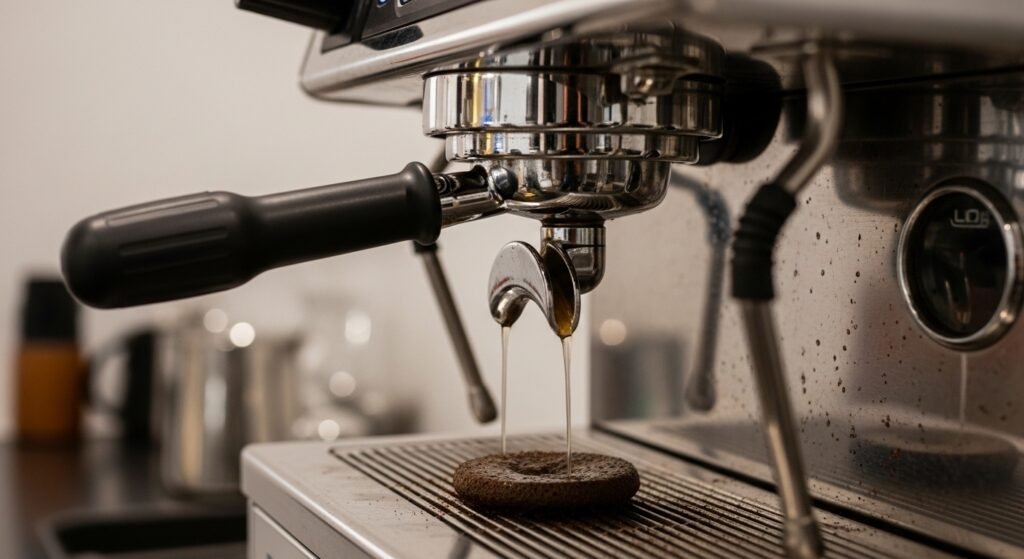
Water is lazy; it always looks for the path of least resistance. If your coffee bed isn’t perfectly level or if there are cracks in the “puck,” the water will rush through those specific areas. Because so much water is passing through such a small amount of coffee, those grounds become “super-extracted.”
Even if 90% of your coffee is brewed perfectly, that 10% of channeled coffee will produce enough bitterness to ruin the entire cup. This is why baristas obsess over “puck prep” and even water distribution. A clean, even flow is the only way to avoid the “burnt” taste.
6. The Difference Between Bitter and Astringent
Often, when people say a coffee is “bitter,” they actually mean it is Astringent. While they feel similar, they are chemically different.
-
Bitterness: Is a flavor detected by the taste buds at the back of the tongue.
-
Astringency: Is a physical sensation of dryness. It feels like your tongue is being “sandpapered” or like you just drank a very strong, dry red wine.
Astringency is almost always a sign of “fines” (dust) migrating to the bottom of your filter and clogging the flow. The water gets stuck, and the tannins build up to the point where they start to bind with the proteins in your saliva, creating that “dry” feeling. If your coffee leaves your mouth feeling like a desert, you need to coarsen your grind.
7. The Quality of the Roast: Can You Fix a Bad Bean?
Sometimes, the bitterness isn’t your fault. If a roaster has used low-quality “Past Crop” beans or if they have roasted the coffee too fast (causing “tipping” or “scorching”), the bitterness is baked into the bean.
If the bean itself is charred on the outside, no amount of temperature control or grind adjustment will save it. This is often the case with “Supermarket” dark roasts, where the goal is a consistent “charcoal” flavor rather than a specific origin profile.
However, if you are working with a high-quality roaster, the bitterness is usually a “dial-in” issue. It means the beans have more to give, but you are asking for too much, too fast.
8. How to “Rescue” a Bitter Brew
If you take a sip of your coffee and it’s unpleasantly bitter, don’t throw it away just yet. There are a few “emergency” fixes:
-
The Salt Trick: A tiny, tiny pinch of salt (not enough to make it taste salty) can chemically suppress your tongue’s ability to taste bitterness. It works by interfering with the bitter receptors on your palate.
-
Dilution: If you made an Americano or a French Press that is too strong, adding a bit of hot water can “open up” the flavors and make the bitterness less concentrated.
-
Temperature Drop: If you are drinking a hot cup and it’s bitter, let it cool down. Our perception of bitterness changes with temperature. Often, as a coffee cools, the sweetness and acidity become more apparent, balancing out the “burnt” notes.
9. Choosing the Right Origin for Low Bitterness
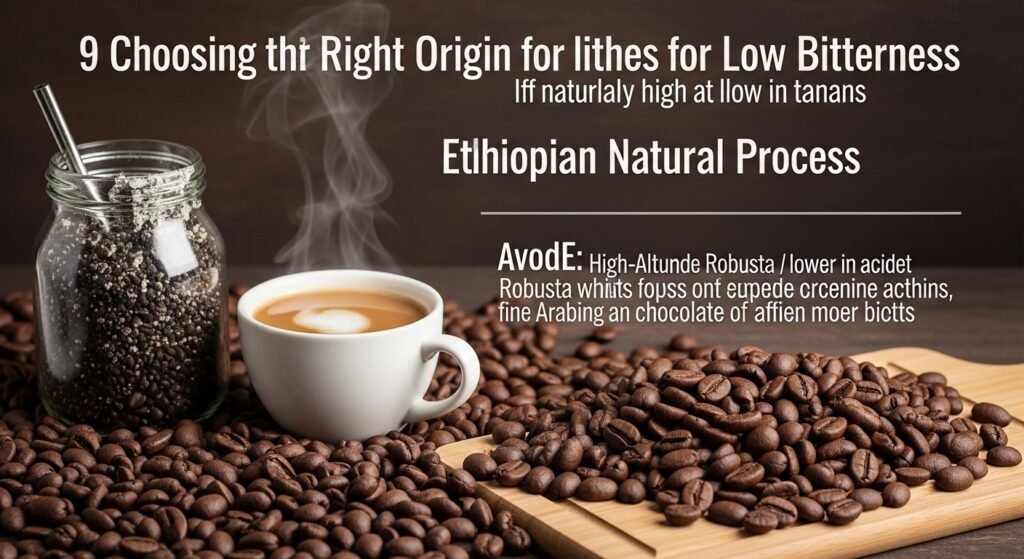
If you are particularly sensitive to bitterness, you should look for coffees that are naturally high in sugars and low in tannins.
-
Brazilian Beans: Generally lower in acidity and bitterness, focusing on chocolate and nut tones.
-
Ethiopian Natural Process: These are often so sweet and fruity that the bitterness is almost undetectable.
-
Avoid: High-Altitude Robusta. While some Robusta is “fine,” it naturally contains about double the caffeine of Arabica, making it inherently more bitter.
By selecting beans that align with your palate, you reduce the “battle” you have to fight during the brewing process.
Summary: Troubleshooting Bitterness
| Symptom | Likely Cause | The Fix |
| Harsh/Ashy Taste | Water too hot | Drop temp to 91°C – 93°C. |
| Dry/Sandpaper Feeling | Too many “fines” | Use a better grinder or coarsen the grind. |
| Metallic/Sharp Bitter | Under-rested beans | Let the beans degas for 5 – 10 days. |
| Heavy/Woody Bitter | Long brew time | Shorten the contact time or use less water. |
| Constant Bitterness | Dirty Equipment | Clean your machine! Old oils are very bitter. |
Final Thoughts
Bitterness is not the enemy; imbalance is.
In a perfect cup of coffee, bitterness acts like the bass player in a band. You don’t necessarily want it to take a solo, but if it wasn’t there, the music would feel thin and foundationless. It provides the depth that allows the “higher” notes of citrus and florals to feel grounded.
If your coffee tastes like burnt toast, it’s simply a message from the beans. They are telling you that the water was too hot, the grind was too fine, or the time was too long. By listening to that bitterness and making small, incremental changes, you can move away from the “ash” and back into the “fruit.”
Coffee is a balance of thousands of chemicals. Don’t be afraid to experiment. Turn down the heat, widen the grind, and find the point where the bitterness stops being a distraction and starts being the perfect frame for a beautiful cup.
Happy (and balanced) brewing!

Marcelo Clark combines professional industry experience with a passion for democratizing coffee knowledge. Specialist in extraction techniques and an advocate for single-origin beans, Marcelo uses this space to teach beginners how to appreciate the subtle notes of a well-crafted brew. His goal is to make learning about methods and origins simple, relevant, and inspiring for every reader’s daily routine.