
If you were to draw a map of the perfect environment for coffee, it would look exactly like the highlands of Central America. This narrow strip of land, connecting North and South America, is defined by a spine of dramatic, active volcanoes. For a coffee tree, these volcanoes are a gift. They provide mineral-rich soil, high altitudes that slow down fruit maturation, and a microclimate where the Atlantic and Pacific breezes collide.
Among the many producing nations in this region, Guatemala and El Salvador stand out as the “Volcanic Soul.” These are countries where coffee isn’t just an export; it is woven into the history, the economy, and the very identity of the people.
While they are neighbors, their approach to coffee is beautifully different. Guatemala is the land of diversity, with eight distinct regions ranging from humid rainforests to arid plateaus. El Salvador, the “Tom Thumb” of the Americas, is the land of tradition, having preserved some of the rarest heirloom varieties in the world.
In this guide, we are going to journey through the volcanic estates of these two giants and discover why their beans are the essential foundation for any serious coffee lover’s collection.
1. Guatemala: A World of Eight Origins
Guatemala is a geographic masterpiece. Because of its varied topography, the country doesn’t have one “signature” flavor; it has eight. The National Coffee Association (Anacafé) has meticulously mapped these regions, and each one offers a different chemical profile based on the local soil and rainfall.
The Antigua Profile:
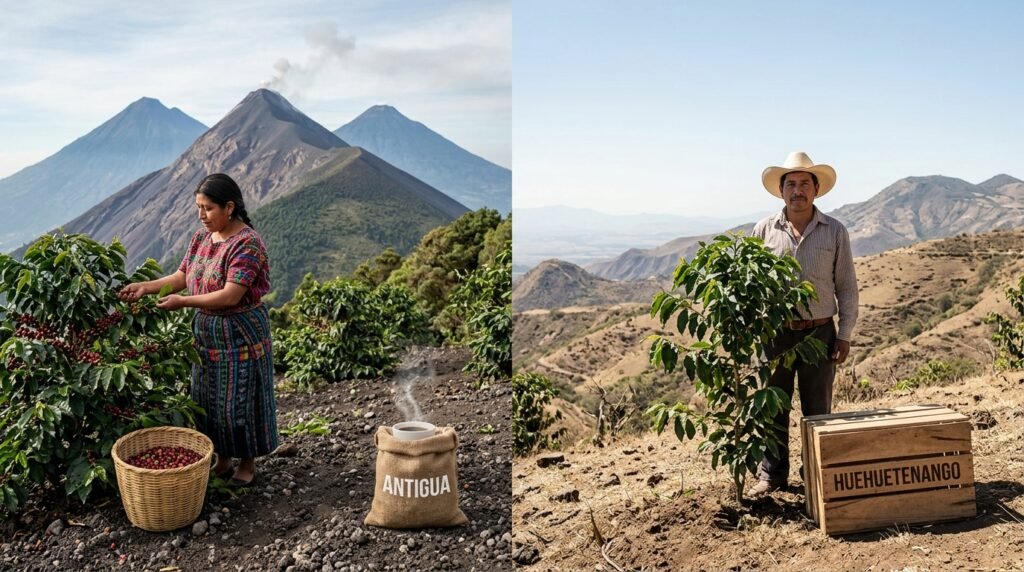
This is perhaps the most famous coffee region in the world. Nestled between three massive volcanoes (Agua, Fuego, and Acatenango), the soil here is incredibly rich in pumice. The coffee is known for its intense sweetness, elegant acidity, and a distinct “smoky” or “spicy” undertone. It is a classic profile that shines in How to Choose the Best Coffee for Each Brewing Method, particularly when prepared as a pour-over or a balanced espresso.
Huehuetenango:
Located in the north, Huehuetenango (often called “Huehue”) is the highest and driest region. The hot winds from the Mexican plains protect the trees from frost, allowing them to grow at extreme altitudes. This results in a coffee with a complex, wine-like acidity and deep fruit notes that rival the best African coffees.
2. The Volcanic Advantage: Chemistry in the Soil
Why does volcanic soil matter? It’s all about the minerals. Volcanic ash is packed with phosphorus, nitrogen, and potassium—the “big three” nutrients for plant growth. But more importantly for coffee quality, it is rich in trace elements like Magnesium and Calcium.
As we explored in Water Quality: The Invisible Ingredient in Your Coffee, these minerals are essential for the extraction process. When a coffee tree grows in mineral-rich volcanic soil, it concentrates those elements in the bean. This creates a “buffer” that protects the sweetness of the coffee even when the roast gets darker. This is why Guatemalan coffees are so famously forgiving to brew; they have a chemical “sturdiness” that makes them delicious across a wide range of temperatures and techniques.
3. El Salvador: The Heirloom Garden
El Salvador’s coffee story is one of resilience. Unlike many other nations that pulled up their old trees to plant modern, high-yield hybrids, El Salvador kept its “heirloom” varieties. Specifically, the Bourbon variety is the king of El Salvador.
Bourbon trees are delicate and produce less fruit than modern hybrids, but the quality is unparalleled. They are known for their buttery mouthfeel and an incredible, caramel-like sweetness. When you drink a high-quality El Salvadorian coffee, you are often tasting a genetic lineage that has remained unchanged for over a century.
This preservation of tradition is what allows for the incredible flavor persistence we see in The Science of Aftertaste: Why Great Coffee Lingers. The natural density and sugar content of the Bourbon variety are designed by nature to leave a lasting, pleasant impression on the palate.
4. The Pacas and Pacamara Revolution
While El Salvador respects tradition, it is also a land of innovation. In the mid-20th century, a natural mutation of the Bourbon tree was discovered on the Pacas family farm. This became known as the Pacas variety—a smaller, hardier tree.
Later, researchers crossed the Pacas with the Maragogype (an enormous “elephant bean” from Brazil). The result was the Pacamara.
The Pacamara is one of the most exciting varieties in the specialty world today. The beans are huge, and the flavor is wild. It often tastes like savory herbs, tropical fruits, and dark chocolate all at once. It is a “love it or hate it” coffee that has become a favorite for competitors in the World Barista Championships.
5. Shade-Grown: A Vertical Forest
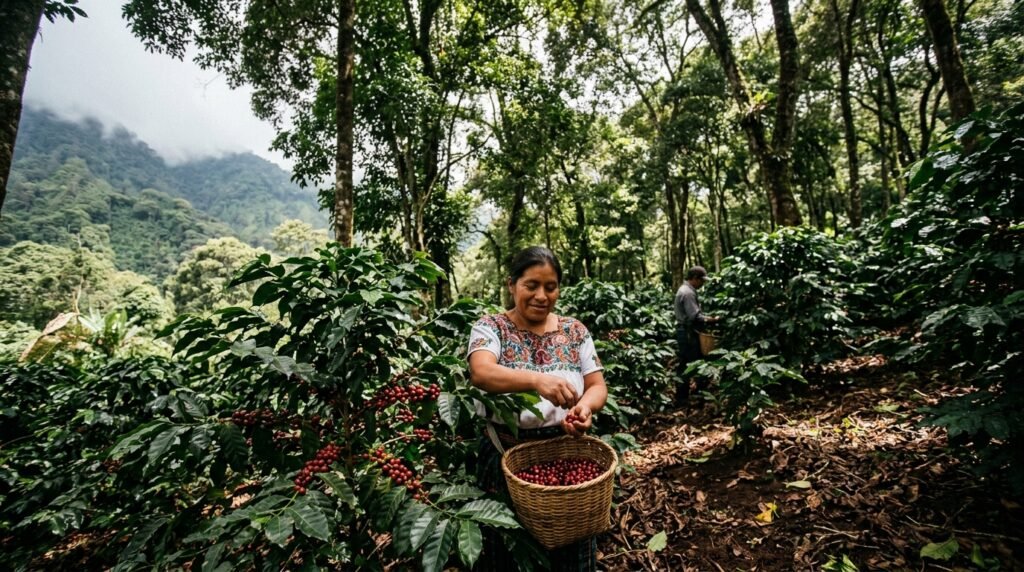
In both Guatemala and El Salvador, coffee is almost exclusively “shade-grown.” Because the sun in the tropics is so intense, farmers plant coffee under a canopy of native trees (like Inga or Gravillea).
This isn’t just good for the birds; it’s essential for the flavor.
-
Cooler Temperatures: The shade keeps the coffee cherries cool, which slows down the ripening process. A slow ripen means more time for the plant to pump sugars into the bean.
-
Natural Fertilizer: The leaves from the shade trees fall and decompose, providing a natural mulch that keeps the volcanic soil moist and nutrient-rich.
-
Density: As we discussed in our study of High Altitude Coffee, density is the primary indicator of quality. Shade-grown volcanic coffee is among the densest in the world.
6. Processing: The “Washed” Standard
Central America is the spiritual home of the “Washed” process. In this method, the fruit is removed from the bean using water, and the beans are then fermented in tanks before being dried on “patios.”
The goal of the washed process in Guatemala and El Salvador is Cleanliness. It removes all the “funk” of the fruit, leaving you with the pure taste of the seed and the soil. This results in a cup that is transparent, bright, and incredibly balanced.
However, in recent years, both countries have begun experimenting with “Honey” and “Natural” processes to cater to the modern palate. A “Honey” processed El Salvadorian Bourbon is a revelation—it tastes like a piece of fruit dipped in liquid caramel.
7. The Social Impact of the Bean
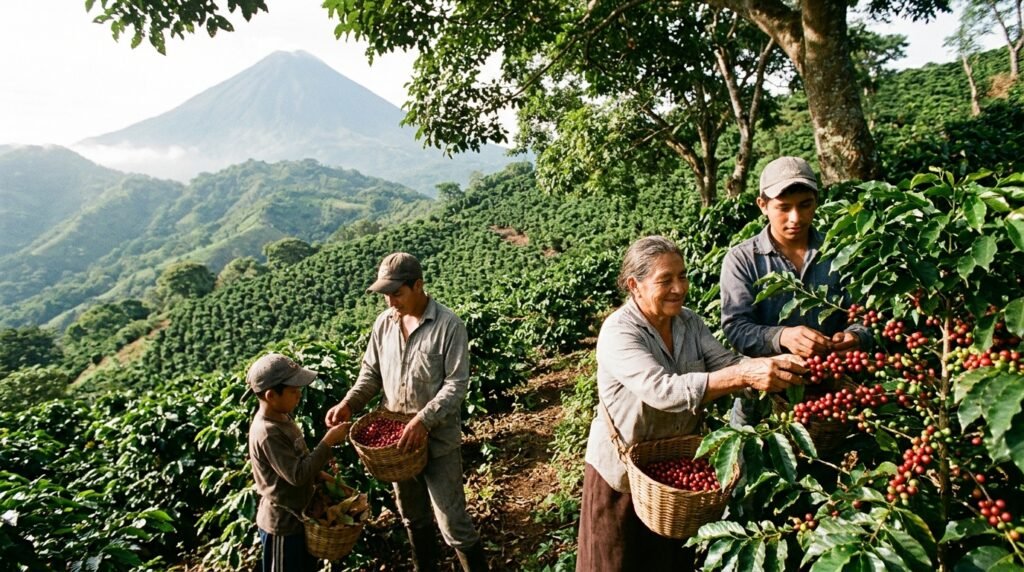
Coffee is the lifeblood of the rural communities in these countries. In El Salvador, the “Cordillera del Tecapa-Chinameca” and the “Santa Ana” volcano regions support thousands of smallholder families. In Guatemala, coffee accounts for a significant portion of the agricultural GDP.
When we talk about the technical side of the Moka Pot Ritual or the physics of a grinder, we are at the end of a very long chain. Supporting these volcanic origins means supporting a tradition of “Hand-Picking.” In these steep, volcanic terrains, machinery is impossible. Every single bean in your bag was picked by a human hand that knew exactly which shade of red indicated perfect ripeness.
8. Brewing the Volcanic Soul: Tips for Success
Because these coffees are so balanced, they are the perfect “testing ground” for your technique.
-
For Guatemala: Use a V60 or Chemex. The paper filter will highlight the sparkling acidity and the “clean” finish of the washed process. If it’s an Antigua coffee, look for that cocoa-powder finish.
-
For El Salvador: Try it in a French Press or a flat-bottom brewer (like a Kalita Wave). The immersion/flat-bottom style will accentuate the buttery body and the deep caramel sweetness of the Bourbon variety.
-
The Temperature: Because these beans are dense, don’t be afraid to use slightly higher water temperatures (94°C to 96°C) to fully unlock those deep volcanic minerals.
Summary: Guatemala vs. El Salvador
| Feature | Guatemala | El Salvador |
| Primary Regions | Antigua, Huehuetenango, Atitlán | Santa Ana, Chalatenango |
| Signature Variety | Caturra, Bourbon, Typica | Bourbon, Pacas, Pacamara |
| Flavor Profile | Bright Acidity, Chocolate, Spice | Buttery, Caramel, Nutty, Sweet |
| Soil Type | Pumice/Volcanic Ash | Deep Volcanic Loam |
| Best Brewing | Pour-Over / Filter | French Press / Espresso |
Final Thoughts
The volcanic coffees of Guatemala and El Salvador represent the “Goldilocks” of the coffee world. They aren’t too acidic, they aren’t too heavy, and they aren’t too wild. They are just right.
They are the coffees that remind us why we fell in love with this drink in the first place. They offer a sense of place—a “terroir”—that you can actually taste. When you sip a cup of Huehuetenango or a sweet Santa Ana Bourbon, you are tasting the minerals of an ancient volcano and the cool air of a shaded mountain forest.
In an industry that is constantly chasing the next “funky” trend, these Central American origins remain the anchor. They are proof that when you combine perfect geology with generations of human expertise, the result is something timeless.
Happy brewing, and may your cup always be as soulful as a Guatemalan sunrise!

Marcelo Clark combines professional industry experience with a passion for democratizing coffee knowledge. Specialist in extraction techniques and an advocate for single-origin beans, Marcelo uses this space to teach beginners how to appreciate the subtle notes of a well-crafted brew. His goal is to make learning about methods and origins simple, relevant, and inspiring for every reader’s daily routine.